Categories
Blog Quality

Asking the right questions

Questions are vital in our work with children. The Early Years Framework (EYLF) and the Framework for School Age Care (FSAC) encourage us to view children’s learning holistically – not as a block of knowledge to be “transmitted” to each child, but as a complex creation of relationships, interests and meaning.

Questioning is a valuable strategy to encourage children’s curiosity and search for understanding. Providing the correct answer to a child is the well-trodden road to knowledge. Responding to children’s questions with questions or curiosity of our own takes us off the main road to the wild lands of imagination and discovery. These are the paths that take us to where none have walked before.

We value questions – but how often do we question our own roles, and our identity as professionals? If we do – are we asking the right questions?

Here’s a question we often hear: Why did you start working in children’s services?

This is a great icebreaker, and we love to tell those stories. I’m fond of mine. I was in the first year of a Media Production degree, and needed a part-time job to fund the meagre lifestyle of a university student.

That’s my answer to that question – but now I know that it’s the wrong question. Our first step doesn’t tell us much about the journey that lies ahead. Other answers I’ve heard include “I always thought children were just cute”, or “it was just an easy job to get”.

The question we need to start asking ourselves is: Why are you still working in children’s services?

This is the question that unlocks our identity as professionals. Working in children’s services is challenging and complex. We know that turnover is a significant issue, as is burnout. People leave our work regularly – but crucially people stay. The reason why we are still here can tell us a lot about our professional identity.

The status of early childhood education has raised significantly in the last decade. Providing children with individual, play-based learning experiences before they start school is now seen as critical to reducing inequality and ensuring that every child has the opportunity to succeed in life.

Australia has acknowledged this with the introduction of the National Quality Agenda. For the first time the entire country came under the same system of regulation and quality support. In particular, the introduction of the EYLF and the FSAC provided a national curriculum framework to support the learning of every child attending a children’s service.

This makes the role of an educator more important than ever before. We know that quality children’s services can dramatically improve children’s chances in life – particularly for children experiencing disadvantage.

All children can benefit from the work we do, but as professionals we must be particularly mindful of how our work can affect individual children. For a number of children that we work with every day, the children’s service they attend may be the most stable, safe and consistent environment available to them. For children of families experiencing poverty, violence, mental health issues, the time they spend with us is critical – not just for their education, but for their overall wellbeing.

The work we do is complex, demanding and incredibly busy. But it is essential that we all regularly take a step back to remind ourselves not why we started, but why we’re still here. We have a powerful role to play in the future lives of children, whether it is fully recognised by society or not.

Ask some of your colleagues why they still do the work they do – the answers might surprise and inspire you.

This article originally appeared in the Winter 2015 edition of InSights, published by Communities@Work’s Centre of Professional Learning and Education.


Categories
Advocacy Blog

What is our collective responsibility for children?

As Early Childhood educators and teachers, what is our collective responsibility for children? Australian children? Children born overseas? What about children locked in Australian-run immigration detention facilities on Nauru and Manus Island?

The Guardian reports today that Transfield, the company that has overseen shocking abuses of human rights in those facilities, is the Government’s “preferred tenderer” to oversee operations on Nauru and Manus for another five years.

It’s worth considering exactly what Transfield’s record has been, thanks to Ben Doherty in the Guardian:

Thirty-three asylum seekers on Nauru have alleged rape or sexual assault and a further five say they have been asked for sexual favours in return for contraband. Some of those allegations have been made against Transfield staff.

Transfield subcontractors, in particular Wilson Security, have been accused of a series of abuses, including handcuffing childrenspying on a senator when she visited the island on an official trip, assaulting asylum seekers who were handcuffed, and running a secretive solitary confinement facility on Manus.

The idea of Transfield continuing in its role in these facilities is monstrous. But for the children in these camps, it could be even worse.

Guardian Australia understands the announcement from the government means that Save the Children, which was providing welfare services for children and families on Nauru, will no longer operate on the island. That role will be taken over by Transfield.

There is plenty of evidence that Australia’s immigration detention facilities are abusing children. The idea that the “welfare services” currently operated by Save the Children will be handled by Transfield is chilling. This would be a catastrophic outcome for children.

The Government has worked this year to strip away rights for those imprisoned in this facilities, including provisions that would make it illegal to report instances of child harm within them. Replacing Save the Children with Transfield would entrench the secrecy and lack of accountability of these practices.

Putting it mildly, those of us who work in the ECEC sector are not the first to put their hands up when it comes to political battles. We’re staring down the barrel of a terrible Government reform package (for the details of which I direct you to the incredible writer Lisa Bryant), and even this has barely caused a titter in the sector.

But our roles are directly tied to the ongoing wellbeing of children. We should be Australian children’s first line of defence. When atrocities such as those on Nauru and Manus are allowed to continue, we should be the first to stand and say “not on our watch”.

It can be difficult to know where to start – and what to do. But there’s a couple of small things you can do soon.

Categories
Advocacy Blog

Early childhood education and Indigenous Australia: what is our responsibility?

You may have missed it in the general political chaos of the last couple of weeks, but a new Government report has revealed some truly alarming statistics regarding Aboriginal and Torres Strait Islander children.

According to the Report on Government Services, 14 991 Indigenous children are currently in out-of-home care. This represents almost 35 per cent of children in the out-of-home care system, despite the fact that Indigenous children only represent around 4 per cent of the total number of Australian children.

Over-representation of Indigenous children in both the out-of-home care system and the juvenile detention system (where, according to ARACY, Indigenous children are also 10 times more likely to be represented) appears to now be embedded in Australian society. As SNAICC points out, these statistics have increased by 65 per cent since Kevin Rudd’s Apology to the Stolen Generations, which was meant to mark a turning point in reconciliation within our country.

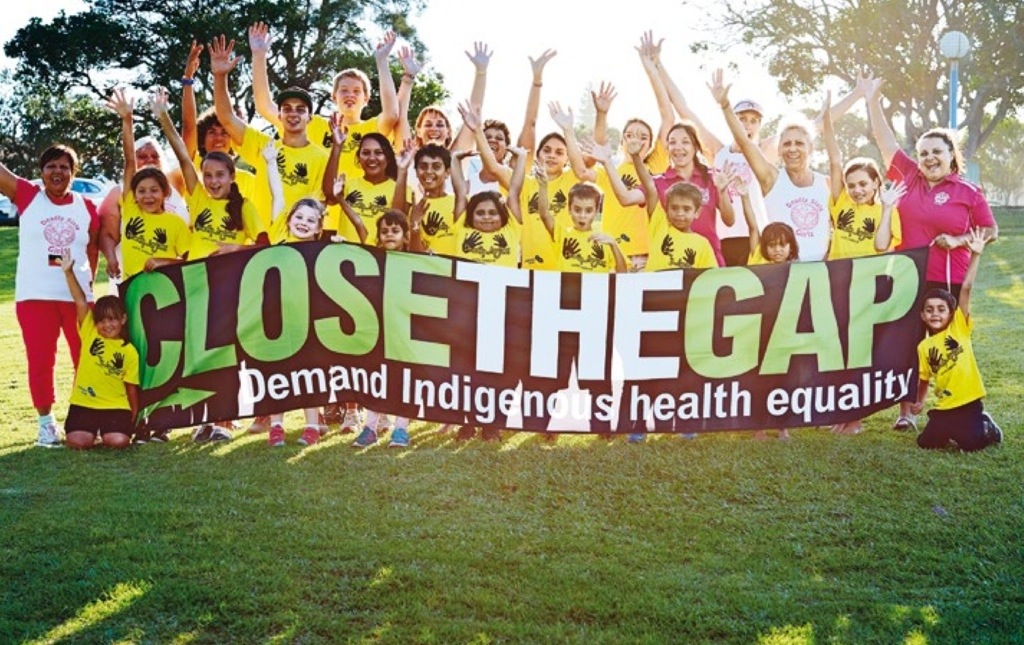
The annual Closing the Gap Report released this week has confirmed that work towards a number of targets, including early childhood education enrolments, is not progressing.

Leadership is sorely missing from this issue in Parliament. Nearly 40 years after Gough Whitlam travelled to Wave Hill Station and symbolically handed the land back to Vincent Lingiari and the Gurindji people, it is difficult to see any of our current crop of leaders as capable of such leadership.

At first glance it may seem that those of us who work in early education and care cannot do anything about this. Surely this is a political issue. Why do we have to do anything? What can we do?

We can start with the National Quality Framework. This large-scale reform of the sector was based on a key foundational document, the Melbourne Declaration on Educational Goals for Young Australians which, as quoted in the Early Years Learning Framework (EYLF), ‘commits to improved outcomes for Aboriginal and Torres Strait Islander young people and strengthening early childhood education’. The EYLF also directly states that ‘early childhood education (with educators who are culturally competent) has a critical role to play’ in achieving this goal.

We know that addressing structural disadvantage and vulnerability must start in the early years. The Australian Institute of Health and Welfare has conducted a significant amount of research demonstrating the necessity of early childhood being a critical part of the Closing the Gap strategy.

Quality early learning experiences can support all children to get the best start in life. Given Australia’s past and our responsibility to Indigenous Australians, there needs to be a significant and sustained focus on embedding Indigenous perspectives in early childhood education and care—first with educators, and through them young children and families.

We can draw a direct line between our work as professionals in the early education sector and the potential for improved outcomes for young Indigenous children. A quality start to primary and secondary school could be the difference for any number of children and their families.

Addressing disadvantage and vulnerability is our responsibility because it is happening on our watch.

Nelson Mandela once said that ‘there can be no keener revelation of a society’s soul than the way in which it treats its children.’ Australia has a long way to go in closing the gap for Indigenous children. As professionals, we should not have to be forced to take ownership or responsibility for this issue—we should embrace the opportunity to influence change with both arms.

Regardless of your own background, your own community, your own cultural competence—what will you do to be part of the solution?

I state clearly here that I do not and would not presume to speak for Aboriginal and Torres Strait Islander people. I am a white, middle-class, Anglo-Saxon male and as such am representative of many of the past and continuing struggles that face the First Australians on this land that was, is and shall always be Aboriginal Land.

For the perspectives of Indigenous people regarding these issues, I recommend visiting the websites of SNAICC and Reconciliation Australia, as well as the specific support of your local Indigenous Professional Support Unit.

This article was originally posted on Early Childhood Australia’s blog The Spoke.

Categories
Advocacy Blog

Numbers of Indigenous children in out-of-home care continues to increase

The recent Report on Government Services has revealed some truly alarming statistics regarding the numbers of Indigenous children in out-of-home care. SNAICC report that:

The Report on Government Services (ROGS) released this week by the Productivity Commission reveals that 14,991 Aboriginal and Torres Strait Islander children were in out-of-home care on 30 June 2014 — accounting for almost 35 per cent of all children in care. This is despite the fact that our children comprise only 4.4 per cent of the nation’s child population.

It’s safe to assume that today, seven months on from the June 2014 figures, well over 15,000 of our children are living in protective care. The bewildering reality is that since Prime Minister Rudd’s apology to the Stolen Generations in 2008, the number of Aboriginal and Torres Strait Islander children placed in out-of-home care has increased by 65 per cent.

The report is a damning indictment on political and policy failure to address these challenging and complex issues. Both sides of politics have failed, but it is telling that the Government which is now determined to “reset” its approach to families and social services started its life in Parliament House by slashing services to Indigenous children and families.

Over-representation of Indigenous children in both the out-of-home care system and the juvenile detention system appears to now be embedded. As SNAICC points out, these statistics have significantly increased since Kevin Rudd’s Apology to the Stolen Generations, which was meant to mark a turning point in Australia’s identity.

Leadership is sorely missing from this issue in our Parliament. Nearly 40 years after Gough Whitlam travelled to Wave Hill Station and symbolically handed the land back to Vincent Lingiari and the Gurindji people, it is difficult to see any of our current crop of leaders are capable of such leadership.

Categories
Advocacy Blog

Australia’s business community should be thinking long-term about childcare investment

We didn’t get a lot more information about the Government’s planned “families package” at the Press Club yesterday, but we do now know that Tony Abbott’s signature Paid Parental Leave scheme is – to coin a phrase – dead, buried and cremated.

Which leaves a rather large sum of money now up for grabs, funded by a 1.5% levy on some of Australia’s largest companies. Predictably, the business community has insisted that since the PPL is gone, the levy should be gone as well.

The Government has made no mention of what will become of this levy, though it seems reasonably clear given Tony Abbott’s address and Scott Morrison’s recent media comments that it will be kept and redirected in some way to the childcare budget.

The members of the business community quoted are flatly stating that any additional funding of childcare is the Government’s responsibility. I am fine with this argument in a broad sense, and indeed strongly advocate for full Government funding of all forms of early childhood education and care.

But this is still a cop-out from Australia’s businesses. The potential short-term increases to workforce participation (particularly for women), and the enormous long-term improvements to the economy are now almost universally accepted. Business has a chance to be a real part of the solution in ensuring that childcare is affordable, accessible and of high quality.

In the heady days of 2014, when members of the Government tended to laugh until they cried when anyone suggested they increase investment in childcare, I wrote that the sector may find a possible partner in Australia’s business community. This sprung from the Business Council of Australia’s submission to the Productivity Commission enquiry into the sector which strongly advocated for a much stronger childcare sector.

For the business community to now simply turn around and say “not our problem”, while demanding that the Government provide billions of dollars worth of tax breaks, incentives and other financial palliatives to support them is more than a little hypocritical.

Business leaders have made a habit recently of complaining about the short-term nature of politics, which doesn’t look beyond the next term. They should start looking beyond the scrapping of a levy that isn’t even in place yet, and think long term about what sensible structural reform to Australia’s childcare sector could mean for the entire community.

Categories
Blog Policy

The Curious Case of Scott Morrison

It’s been a whirlwind week. Almost every political analyst in the country is predicting the end of Tony Abbott’s Prime Ministership, sooner rather than later. After years of crowing over the ALP’s internal squabbles, the LNP is finding out firsthand how quickly things can implode.

But I may have just reached the level of my credulity. Minster for Social Services Scott Morrison has made policy decisions that are sensible, obvious and may possibly result in better outcomes for children and families. I’m pinching myself to make sure I’m not dreaming.

In quick succession, Morrison has all but confirmed that the 1.5% levy on large businesses initially earmarked to pay for Tony Abbott’s signature Paid Parental Leave scheme will be redirected to better targeted childcare assistance. He has cancelled the ridiculous (and ridiculously expensive) “Stronger Families” program and will redirect the $17M to frontline social services. He has also postponed proposed changes to Family Day Care regulations that would have affected FDC educators enrolling their own children.

When Scott Morrison was announced in December as the new Minister responsible for childcare (as part of a revamped Social Services portfolio), it is fair to say that positive and reasoned decision-making was not the first thing that we were expecting. His time as Minister for Immigration and Border Protection was marked by the relentless and harsh treatment of vulnerable asylum seekers, including children. Using blunt force and operating largely outside of Australia’s ethical, moral and possibly legal obligations, Morrison is credited with “solving” the problem of the boat people.

Given dominant Australian attitudes to asylum seekers, this was never going to cause him any real problems. Most Australians wanted this to happen, and Morrison seemed to revel in the backlash amongst social justice campaigners and advocates.

My initial thoughts in December was that this approach would fall flat on its face with social policy. Australians have no problem at will harsh and damaging measures directed at “irregular maritime arrivals”, but would not countenance similar measures at home. To my surprise, Morrison seems to have quickly realised this.

There are few potential options worth considering with regards to these seemingly significant change of approach. The first is that Morrison is the first real indication of the Government’s overall “reset” to its political approach. Working closely with Tony Abbott and the rest of the Cabinet, Morrison is evidence that the Government will significantly and fundamentally recalibrate its way of doing business.

The second (and, to my mind, far more likely given the last week), is that Morrison is re-positioning his political image as a moderate as part of a potential run at the Liberal leadership. Morrison is considered one of the only three real contenders to replace Abbott, along with Julie Bishop and Malcolm Turnball. Of the three he’d be last in the running by most estimates. Positioning himself as a moderate on these issues during this time is a politically smart move for Morrison, particularly if Abbott is determined to dig in on his current approach.

We’ll know more after Tony Abbott’s address to the National Press Club tomorrow, but regardless of all the speculation in this post, we can at least be certain that Scott Morrison may be very surprising in his new role – and not in the way we had all assumed.

Categories
Blog Policy

Accentuating the positives

Early childhood education and care has been moved out of the education portfolio. Our new Federal Minister has a track record in blunt, non-consultative decision making (as well as locking up children on remote island prisons). In general, the Federal Government is buffeted by distractions and “gaffes” of its own making.

On the face of it, it’s hard to be positive about the likelihood of any positive reform to Australia’s children’s education and care sector. The current Government is firmly opposed to any budget increase to this area, and appear far more focused on “crackdowns” on a minority of operators and services engaging in financial misbehaviour.

However, despite the noted cynic I am, I determined to find some positives. And it turns out, there’s a big one.

The Government has to get this right, or their current woes will seem tame by comparison.

Australia’s child care sector is one of the most expensive for families in the OECD. This has inevitable flow-on effects to workforce participation (particularly for women), and has a demonstrated impact on Australia’s overall economic performance.

The Coalition may be ideologically opposed to Government funding of child care (as Mums have always done it for free), but they are now in the absolute minority on this issue. Access to affordable, high quality child care is now a necessity. In a short space of time, it will be seen as a right.

The Government have repeatedly laid the blame for the sector’s woes at the feet of the previous Labor Government, but that window of opportunity has now closed. This is now firmly the problem of this Government.

Given their current woes, they will be desperate for a big win. What better area than the one that is a pressing issue for a huge number of families? Medicare backflips, knighthoods and all the rest would recede pretty rapidly into the distance if the Government announced sweeping reforms to the child care sector that maintained (and extended) quality outcomes for children, while improving accessibility and affordability.

Is this likely? Perhaps not. But it should be remembered that Tony Abbott has already had to back down from his “signature” Paid Parental Leave policy, with the expectation that some of this money will go to addressing child care issues.There are even reports on the day I post this that the Government is still working through its plans on this.

If we’ve learned anything about this Government, months and months of hard-faced insistence that their policies will be enacted are pretty easily forgotten when they are backed into a corner.

Over a million children are now utilising some form of child care in this country. All of them have their own challenges (major and minor) navigating Australia’s complex system. That’s a lot of voters ready to put pressure on the Government.

Failing to adequately address accessibility and affordability issues will be an unmitigated disaster, both for the sector and for the Government. Even maintaining the status quo with some tinkering at the edges won’t cut it, given that Abbott has committed 2015 to being the year of family policy.

But positive reform of the sector, improving accessibility and affordability for all and bringing the child care sector into the 21st Century would be a huge victory for Tony Abbott on this front. It’s not hard to imagine that a win that size would not be tempting for him.

So keep that flicker of positivity alive in 2015 – and keep an eye on the Government’s desperation levels.

Categories
Blog Policy

Government arrives at policy position the rest of Australia arrived at 18 months ago

In what is presumably another example of the Prime Minister tackling the numerous barnacles that seem to be stubbornly attached to the ship of Government, Tony Abbott has foreshadowed that 2015 will see some tinkering to his signature Paid Parental Leave scheme. This will apparently see a focus on low- and middle-income families, as well as “more available and more affordable child care as well.”

As in many policy areas with this apparently “consultative” and “listening” Government, it seems that everyone else in Australia (including the majority of his own party) came to this realisation many, many months ago. Tony Abbott’s stubborn determination to hang on to the original “Rolls-Royce” version of the PPL was turning in to some sort of ongoing performance-art piece on political incompetence.

It’s important to note however that no actual details have been provided regarding any redistribution of funds from PPL to childcare. Presumably Cabinet s sifting through the Productivity Commission’s report into the sector, utilising its incredibly broad and diverse breadth of experience in these kind of issues to develop sensible and considered policies.

(Quick reminder below of the immense diversity and breadth of life experience in Cabinet. I dare anyone to find a group of old white guys more reflective of today’s Australian community than that bunch below.)

Various media outlets are reporting that the “tinkering” will see significantly less money spent on women earning $150,000 and over, with the savings essentially redirected into funding nannies and other in-home care arrangements.

I’ve written before about the complications that would ensue from simply pushing for more nannies. Clearly, the best solution to the issues facing the childcare sector is a well-funded, high-quality and easily accessible early childhood education and care sector. A significant redirection of funds into Long Day Care in particular could reap significant benefits.

We’ll likely know a lot more in early 2015. But given the Government’s track record in other policy announcements, we’ll likely wish we didn’t know a lot more in early 2015.

Categories
Advocacy Blog Policy

The biggest issue facing the sector

I was fortunate enough to attend the 2014 Early Childhood Australia Conference in Melbourne this year, and I was amazed by the quality of the presentations from truly inspirational speakers.

But the session that is still rattling around in my brain is not the one I was expecting. It was a working session with a senior representative of the Department of Education. We were invited to put forward what we thought were the biggest issues facing the early childhood (EC) sector.

Not a simple question! In 2014 alone there have been at least four separate inquiries into various aspects of Australia’s EC sector (Productivity Commission, NQF Review, two Senate inquiries). All of these have reflected the complicated work we do and the challenging regulatory frameworks we do it in.

So I was a little surprised when one issue quickly and decisively trumped all the others.

Documentation.

At least two-thirds of the questions raised were around documentation requirements. How much do we need to do? Per child, per day? Should we reference every learning outcome in an observation? How many observations?

I have to be honest – this really disappointed me. This was a rare and valuable opportunity for practitioners and professionals to directly address a senior figure in the sector, with the capacity to make far-reaching decisions affecting our works. She was asking us to represent all of those who do our work, and let the Department know what we think the most pressing issue facing us right now is.

She left that room thinking it was documentation.

Really? With every challenge and frustration we face, how many observations we have to do a month is the biggest single thing affecting our work?

I find this difficult to believe, given the challenges I observe in my work. Trying to recruit and retain qualified early childhood teachers and educators. Supporting the inclusion of children with disabilities. Ethically and respectfully incorporating Indigenous perspectives in our work with young children. Having to balance operational costs with the inclusion of vulnerable children.

I can’t help but think that we might have made even a tiny amount of progress on some of those tricky issues if they had been the focus of discussions.

Documentation is a challenging issue for services, and does require a lot of thought and reflection.

But we are also nearly 3 years into the new National Quality Framework. Support for services to work on their documentation is everywhere, from ECA’s website to your local Professional Support Coordinator.

In forums I attend, documentation is still the key issue that is raised. Imagine how much progress we might be making on some of the issues I listed above if we were constantly and consistently raising them.

That really would make a difference in the lives of Australia’s children.

This article was originally posted on Early Childhood Australia’s blog The Spoke.

Categories
Blog Quality

The Most Wonderful Time of the Year?

It’s hard to believe that Christmas has almost rolled around once again. All around the country early childhood services will be madly scrambling to finish portfolios and be dusting off the boxes of Christmas decorations that were unceremoniously shoved in the back of the shed in mid-January.

It’s also the time of the year when I start to question how we approach celebrations in Australian ECEC services, and get called “Grinch” a lot.

So, I’ll have to start this post off the same way I start off conversations I have with people in person.

I don’t hate Christmas. Actually, I like it! I loved it as a child, and we celebrate it at home with our two children.

I don’t think Christmas should be banned from centres. Outright bans on anything we do should always be critically questioned.

Suitably prepared, here comes the “but…”

(This is normally when the people I’m talking to tense up and clutch their tinsel and reindeer antlers protectively.)

Here are my problems with how I have seen Christmas (and a number of other celebrations) explored in children’s services.

  1. It’s by default. December 1st (or thereabouts) rolls around on the calendar, and we start doing “Christmas things”. The Early Years Learning Framework challenges us to be intentional and meaningful in our teaching. Transforming your service into Santa’s Grotto just because of a date is neither intentional nor necessarily meaningful.

    That is not to say that you cannot find intentional teaching opportunities in the themes, rituals and community connections of Christmas – but if we are truly honest with ourselves, is that why we are doing it? Or are we doing it because we’ve always done it, and everyone else is doing it?

  2. It’s limiting. Yes, Christmas is the dominant cultural celebration in our country. Ignoring it is not reflective of the lives of the children in our service. But it is not the only important event happening for children in December. By prioritising Christmas, what are we missing? As the EYLF asks, who is advantaged and disadvantaged when we work in certain ways?

    Christmas is everywhere – children will experience it regardless of what we do. But will every child learn about Ramadan, or Eid, or other significant events for other children around the world if we ignore it? What might that mean to the children and families in your community who do celebrate those events?

  3. It’s overwhelming. Christmas takes over everything. Decorations are out and activities usually start at the beginning of December and don’t stop until the end of the year. No other event on the calendar gets that focus. Imagine if NAIDOC Week was a month-long event for centres, with weeks of preparation leading up to it? What if centres took International Day of the Girl Child as seriously?

    Many will disagree with me, but I think both of those two examples are richer, more meaningful provocations for learning with children. (I’ll quickly note that there will undoubtedly be centres who are doing those things, but it is certainly not the norm.)Again, what are we missing out on by turning over our entire program to one event – that is celebrated in every other part of the community?

I know that even these three points will provoke fierce debate. I’m fully prepared to wear the Grinch label once again. But to say again – I am not calling for “bans on Christmas”. But I absolutely will say that for services that strive for high quality programs, ask questions about your celebrations.

What are children learning, and what are they not learning? Who is advantaged, who is disadvantaged? What could we do differently this year?

This article was originally posted on Early Childhood Australia’s blog The Spoke.