Categories
News

NSW educators rally over Government funding plans

Early childhood educators in NSW have rallied outside State Parliament to protest the NSW Government’s planned changes to funding early childhood education.

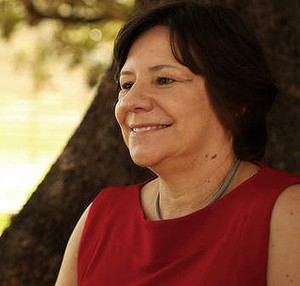
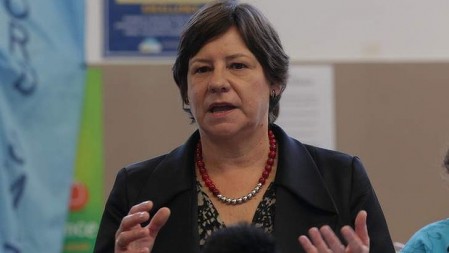
Leanne Gibbs helped organise a rally of childcare workers held outside State Parliament this morning.

“What essentially we’re asking for is a proper model of funding that ensures that children have access and that means three-year-olds as well,” Ms Gibbs said.

“We’re looking for a visionary approach to policy in this state and to funding early childhood education, so we want to see more money going into the childhood sector.

“We’re looking at a sector that could become unviable.”

Source: ABC News Online

You can check out more information on the proposed policy at http://www.earlyeducation.org.au.

Categories
News

Education and care Vs. economic imperatives


Interesting piece from Yvonne Haigh up at The Conversation that explores the tension between a “caring” society and the political desire to be seen as “strong” on the economy. She touches on ECEC policies:

The Labor government introduced the National Quality Framework (2012) to ensure quality of educative and care services and it tinkered with rebates and family benefits to the tune of A$7,500 rebate for many families per child. But this does not cover the total costs for children attending day-long or out-of-school child care.

The Coalition has proposed a Productivity Commission inquiry into child care: one that takes into account costs, rebates and subsidies but does not target funding for child care centres.

As proposed solutions, these positions reinforce the tension between policies that “care” and enhancing the economic bottom line. The Coalition’s paid parental leave policy has been criticised for reinforcing inequality and discrimination against women; the Labor Party’s approach has been criticised for excluding superannuation. In both positions, the importance of care is lost in the rhetoric that focuses on time periods and amounts of financial assistance.

The article is worth a read, and also touches on disability, aged care and family policy.

Categories
News

Eva Cox: Fund ECEC directly

Long-time champion for early childhood education and care has written in Women’s Agenda today with her practical approaches to “fixing” the childcare crisis. Well-worth a read.

The Government needs to completely re-jig the funding system so it set up conditions and costs, as happens with nursing homes. They need to control and fund services that are in appropriate locations, places for different age groups and locally appropriate flexible hours of operating. This should also include some levels of fee control, to allow break even or profit levels but not excessive returns. The market model has shown it cannot meet diverse consumer needs under the current system so this industry should be deemed a market failure in need of more government intervention.

My only point of disagreement with Eva would be that her plan doesn’t go far enough. The Early Years needs to be fully integrated in to the education system, entirely free-to-access and entirely funded by Government.

Categories
News

Coalition now supporting the NQF?

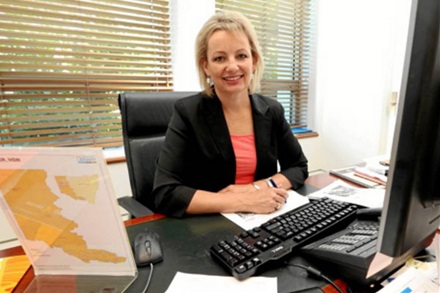
Sussan Ley, the Coalition’s spokesperson for childcare and early learning, has signalled that if elected her party will ensure the implementation of the National Quality Framework.

The Coalition has promised if it wins the election to convene a meeting with state and territory ministers to fine-tune the NQF to remove excessive regulation, but will maintain the quality aspects of the reforms to a sector dominated by low-paid female workers.

“Rollback of the reforms is not a term I have ever used and, by law, any slowdown would be a decision for the state and territory governments, individually or collectively,” opposition childcare spokeswoman Sussan Ley told The Australian.

“If we’re elected, we will sit down with state and territory ministers to work out what aspects of the NQF could work better than they are at present,” she said.

“In particular, we will focus on where excessive regulation adds to compliance and cost but not to quality.”

Source: The Australian

This is a fairly significant backdown after years of dramatic recitations of “the dead hand of government red tape”. The Coalition will also apparently accept the verdict of Fair Work Australia on any wage increases for educators. Taking Ms Ley at face value, this is good news for the sector.

It is important to remember, however, that the Coalition has been feeling political pressure on childcare and early learning, and the Australian has been very accommodating to their views on government regulation.

Also importantly, in the article Ms Ley claims that she has never stated that the Coalition would “roll back” reforms. This is disingenuous at best, and an outright falsehood at worst.

A good comparison on Ms Ley’s apparent change of heart can be found be reading this article “Coalition plans for childcare rollback” from 2012.

Ms Ley told The Australian the regulation was killing the sector and must be abandoned.

“Family daycare is becoming incredibly inflexible under the National Quality reforms,” she said. “I’m really feeling the frustration of the sector because every childcare roundtable I attend brings forward more examples of the dead hand of government regulation in a sector that absolutely doesn’t need it.

Categories
News

Greens plan to lower childcare fees

The Australian Greens are today releasing their plan to combine the Child Care Benefit (CCB) and Child Care Rebate (CCR) payments and increase the amount paid to some families. The plan is costed at $2.3 billion over 4 years.

Some families, however, would get little new assistance, while others stand to gain more because the system would be skewed to help those who need it most.

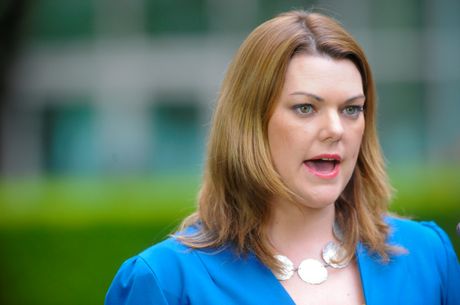
Greens childcare spokeswoman Sarah Hanson-Young said there was a clear need to streamline funding mechanisms to provide assistance to more parents who need it and promote higher standards of care.

”The crisis in childcare means fees are skyrocketing and availability is dropping, especially in high-need areas,” she said.

”If Australian children are going to be cared for in centres with sufficient numbers of qualified staff, the government must commit to increasing support to the sector.

”Without increased funding to childcare, families won’t be able to have the high-quality, affordable, flexible care that they need.”

Source: The Age

Streamlining the assistance payments makes sense, but it’s disappointing to see yet another policy announcement from a major party that fails to address the structural problems facing the sector.

For a great look at how the sector needs structural reform, check out this great story from ABC Radio National.

UPDATE: Green’s policy detail now up here.

Categories
News

Judith Sloan on Q&A

Judith Sloan appeared on ABC’s Q&A program on Monday, as was asked a question about her comments on “dim-witted” educators from “second-rate” universities.

Her “defense” of the comments is certainly worth a watch.

Sloan is clearly unapologetic, and as her comments were clearly designed to provoke a response and raise her own profile this is hardly a surprise.

Categories
News

The terrifying reality of American “daycare”

Trusting your child with someone else is one of the hardest things that a parent has to do—and in the United States, it’s harder still, because American day care is a mess. About 8.2 million kids—about 40 percent of children under five—spend at least part of their week in the care of somebody other than a parent. Most of them are in centers, although a sizable minority attend home day cares. In other countries, such services are subsidized and well-regulated. In the United States, despite the fact that work and family life has changed profoundly in recent decades, we lack anything resembling an actual child care system. Excellent day cares are available, of course, if you have the money to pay for them and the luck to secure a spot. But the overall quality is wildly uneven and barely monitored, and at the lower end, it’s Dickensian.

Jonathan Cohn, New Republic (15/4/2013)

Equal parts fascinating and horrifying, this lengthy and in-depth article on the shocking inadequacies of the American system of early childhood care and education is recommended reading for anyone working in the ECEC field. This article serves as the counter-balance to any push for less regulation and lower standards in Australia.

Well worth putting aside half an hour and reading.

Categories
News

A Reggio approach to Australian early education

In a radical rethink of South Australia’s education system, Italian early childhood expert Carla Rinaldi says that funding and resources should be focused on the time from birth to age six rather than the later years of school.

She said care and education were inseparable, so day care centres must not simply act as babysitters for busy parents. Centres also need to be accessible to all families, regardless of wealth. Dr Rinaldi also wants to see an end to the term “preschool” as she says it is not “pre” anything.

Sheradyn Holderhead, The Australian (9/4/2013)

Interesting piece on the need for a re-conceptualisation of early education in Australia. We are still pretty firmly locked into the notion that “real learning” and “real education” start at school, despite all the evidence that foundational and integral learning begins from birth.

Categories
News

National Children’s Commissioner to focus on hearing the voices of children

“We must learn from the mistakes of the past, when children’s voices were ignored with devastating consequences,” [Megan Mitchell, Australia’s National Children’s Commissioner] said at the Melbourne Convention and Exhibition Centre.

“The Royal Commission into Institutional Responses to Child Sexual Abuse will, I am sure, uncover stories where children’s voices were unheard, and even when heard, were deliberately not taken into account.

“We need to make sure our attitudes and our systems respect the child’s voice. This is one of the essential ways that we can help children to be safe, to realise their potential, and to live full and happy lives.”
Rachel Browne, SMH (15/4/2013)

The importance of listening to the voices of children is an integral part of our work with children in the early childhood education sector, and it is wonderful to hear that this will also be a focus for the Children’s Commissioner.

Categories
News

Priorities for Australia’s new Children’s Commissioner

On her first day at the Australian Human Rights Commission, the incoming National Children’s Commissioner, Ms Megan Mitchell, has said she would like children’s voices to feature more prominently in the issues that affect them.

“I want to see governments pay greater attention to the needs of children, including through listening directly to their aspirations. I want to ensure that their efforts are focused on creating independence, instilling confidence, ensuring children’s safety and focusing on the most vulnerable and marginalised,” said Commissioner Mitchell.

“Engaging with children and child advocates around the country to hear what children have to say and what they see as important for their futures, will be one of the first things I would like to do,” said Commissioner Mitchell.

humanrights.gov.au (26/3/2013)

It will be very interesting to see where this national focus on children’s rights and issues will go. Megan Mitchell is a fantastic choice as Australia’s first National Children’s Commissioner, and will strongly champion the rights and voices of children.