Categories
News

Coalition now supporting the NQF?

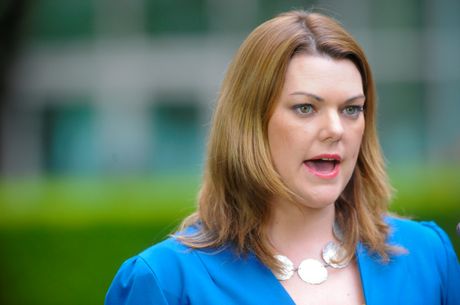
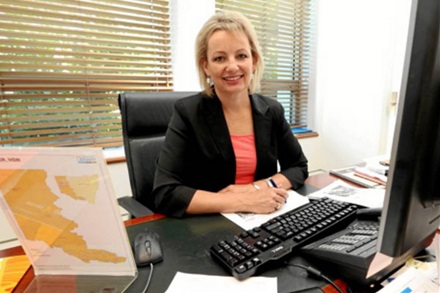
Sussan Ley, the Coalition’s spokesperson for childcare and early learning, has signalled that if elected her party will ensure the implementation of the National Quality Framework.

The Coalition has promised if it wins the election to convene a meeting with state and territory ministers to fine-tune the NQF to remove excessive regulation, but will maintain the quality aspects of the reforms to a sector dominated by low-paid female workers.

“Rollback of the reforms is not a term I have ever used and, by law, any slowdown would be a decision for the state and territory governments, individually or collectively,” opposition childcare spokeswoman Sussan Ley told The Australian.

“If we’re elected, we will sit down with state and territory ministers to work out what aspects of the NQF could work better than they are at present,” she said.

“In particular, we will focus on where excessive regulation adds to compliance and cost but not to quality.”

Source: The Australian

This is a fairly significant backdown after years of dramatic recitations of “the dead hand of government red tape”. The Coalition will also apparently accept the verdict of Fair Work Australia on any wage increases for educators. Taking Ms Ley at face value, this is good news for the sector.

It is important to remember, however, that the Coalition has been feeling political pressure on childcare and early learning, and the Australian has been very accommodating to their views on government regulation.

Also importantly, in the article Ms Ley claims that she has never stated that the Coalition would “roll back” reforms. This is disingenuous at best, and an outright falsehood at worst.

A good comparison on Ms Ley’s apparent change of heart can be found be reading this article “Coalition plans for childcare rollback” from 2012.

Ms Ley told The Australian the regulation was killing the sector and must be abandoned.

“Family daycare is becoming incredibly inflexible under the National Quality reforms,” she said. “I’m really feeling the frustration of the sector because every childcare roundtable I attend brings forward more examples of the dead hand of government regulation in a sector that absolutely doesn’t need it.

Categories
News

Greens plan to lower childcare fees

The Australian Greens are today releasing their plan to combine the Child Care Benefit (CCB) and Child Care Rebate (CCR) payments and increase the amount paid to some families. The plan is costed at $2.3 billion over 4 years.

Some families, however, would get little new assistance, while others stand to gain more because the system would be skewed to help those who need it most.

Greens childcare spokeswoman Sarah Hanson-Young said there was a clear need to streamline funding mechanisms to provide assistance to more parents who need it and promote higher standards of care.

”The crisis in childcare means fees are skyrocketing and availability is dropping, especially in high-need areas,” she said.

”If Australian children are going to be cared for in centres with sufficient numbers of qualified staff, the government must commit to increasing support to the sector.

”Without increased funding to childcare, families won’t be able to have the high-quality, affordable, flexible care that they need.”

Source: The Age

Streamlining the assistance payments makes sense, but it’s disappointing to see yet another policy announcement from a major party that fails to address the structural problems facing the sector.

For a great look at how the sector needs structural reform, check out this great story from ABC Radio National.

UPDATE: Green’s policy detail now up here.

Categories
Blog

Election 2013 – ECEC

We’re now into week three of the 2013 Election campaign. Early childhood education and care issues have bubbled into  few announcements and press releases, but as usual has not been a key priority for any of the major parties.

Labor has committed to continuing the work of the National Quality Framework reforms, but has not announced any measures to support the sector to meet the unrealistic qualification requirements due to commence in 2014. Labor will also continue to support the pay equity case at Fair Work Australia, and money from the Early Years Quality Fund has already begun to roll out.

The Coalition will instigate a Productivity Commission into childcare affordability. Beyond that, no idea.

The Greens have announced $200 million “expanding and upgrading existing community childcare facilities”. The Greens have also committed to the NQF.

All in all, a disappointment. Politically, we are miles and miles away from where we should be as a sector.

At the moment I’m reading “Children’s Chances: How Countries Can Move from Surviving to Thriving” by Jody Heymann. It’s a great, recently-published and up-to-date analysis of data from almost every country in the world. It looks at a variety of metrics on children’s chances to survive and thrive, and has a couple of great chapters on education.

It highlights to importance of early childhood education on long-term outcomes for children. In Australia, the policy debate is still stubbornly framed around waiting lists, fees and council zoning issues.

As I have been saying despairingly to my colleagues over the last few weeks, the real driver of policies for children in this country is workplace flexibility. Ponder that and become depressed.

Until we can get the conversation back to children, and the potential benefits of investment on the early years, nothing is going to change.

Categories
Blog

2014 qualification requirements cannot be met without support

Over a million children are now in some kind of formal education and care, such as long day care, family day care or school-age care. But many of the organisations that provide these programs have a history of uneven and in some cases non-existent quality control. This was the case until the introduction of the Federal Government’s National Quality Framework (NQF) in January 2012.

The NQF aimed to unify disparate state and territory regulation and law. It also introduced a new framework for supporting children’s learning and wellbeing (the Early Years Learning Framework), increasing educator-to-child ratios and set up a new agency to assess and rate children’s education and care services.

Another key change (due to be phased in from the beginning of 2014) is the requirement for every educator to have a minimum qualification of a Certificate III in Children’s Services. In most cases, 50 per cent of all educators will be required to have at least a Diploma of Children’s Services.

All long day care centres will also be required to employ at least one university-qualified early childhood teacher. Larger centres will need more.

The evidence is clear that improving the qualification levels of early childhood educators significantly improves educational outcomes for children. It can also improve children’s likely performance in primary and secondary school.

I strongly support the requirement that anyone working towards the education of young children has a qualification. This represents a key shift in our professional work, and there is is no reasonable argument against it.

We wouldn’t trust anybody without a qualification to repair our drains, but up until now it has been appropriate for unqualified people to educate our youngest children.

Those who do argue against these requirements are either concerned about their profit margins (such as the Australian Childcare Alliance), or believe that childcare is essentially babysitting and can be handled by anyone with a police check and a caring nature.

But the Government has been slow to realise that matching philosophy with practice is going to be challenging.

The education and care sector has struggled for decades to attract qualified educators, particularly at the diploma level. High expectations and workloads, shift-style employment and laughable wages have not exactly had people stampeding to their local TAFE.

To put it into perspective, the wage rise from a Certificate III to a Diploma is in most cases only around $2 an hour. A diploma-trained educator is expected to manage a room, including other staff members; plan for the individual learning of every child attending in that room; be responsible for opening and closing the centre at some times; and dozens of other key responsibilities — two years of study for $2 extra an hour.

The situation with early childhood teachers is even more dire. A teacher who chooses to work in the Long Day Care sector is literally choosing to forgo around $20,000 in salary compared to their counterparts in the preschool system. They also have less time for documentation and planning, far less annual leave and will also most likely have extra responsibilities around mentoring their colleagues.

As with many other aspects of the NQF, The federal government seems determined to wilfully ignore the practical implementation issues.

Put simply there is no chance at all that the early childhood education sector will be able to meet the NQF qualification requirements by January 2014.

Unfortunately, the Government’s Early Childhood Workforce Strategy fails to provide any meaningful support for these requirements beyond limited funding for qualification scholarships and vague statements about supporting the professionalism of the sector.

Without immediate intervention in areas such as wages, professionalism and career pathways it is clear that these qualification requirements will be completely unreachable. Even that level of intervention right now would not be able to fix this issue by next year.

This will be unlikely to come from a Coalition government intent on either rolling back or halting the NQS reforms.

The Labor Government has made some small steps towards supporting educators, but as I have written before this has raised its own issues of equity. The only long-term solution to attracting, retaining and supporting early childhood educators and teachers — and through them, children — is to fundamentally change how we fund and value their work. This will require a national conversation around early education that would rival the Gonski debate, it needs to happen soon.

Ireland, which utilises a similar mix of private and not-for-profit operators, is currently reeling from media reports of serious misconduct in their education and care sector. Many have made the link between these incidents and an underpaid and undervalued workforce.

Without a fundamental review of how we support our early education sector, it is inevitable that similar issues will emerge here in Australia.

My only hope is that this is the start of the national discussion about the need for highly qualified teachers and educators to work with our youngest children, and the benefits to society as a whole that will flow from that work.

This article was originally published on the New Matilda website.

Categories
Blog

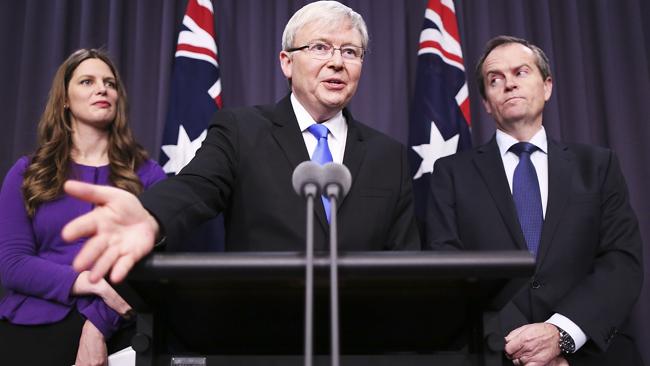
Where does Rudd’s return leave ECEC?

So, where does the rise of Rudd 2.0 leave early childhood education and care in Australia? As with most policy areas right now, we can only speculate (a very popular pastime right now).

The only certainty is that Peter Garrett has resigned his position as Minister for ECEC. Kate Ellis has not made any announcements, but has regularly voiced her clear support for Julia Gillard in the past. Unless she has changed her position to support for Kevin Rudd, it seems reasonable to assume that she may also choose to stand down in the near future.

Ellis and Garret have been the principal drivers of the National Quality Agenda within the Government, and their loss could signal that the NQA will be a low-priority during the period until the next election. The Department, DEEWR, will likely be sidelining any new work on it as well, awaiting the outcome of the election.

Rudd has voiced his general support for early learning before, particularly in the lead-up to the 2007 election where he shared his vision of “super-schools”, which incorporated early learning and K-12 in an integrated model.

This model was never really pursued, as economics and asylum seekers dominated the political agenda. It is completely unclear where Rudd would take ECEC if he is re-elected.

The most recent policy news for ECEC is the passing of the Early Years Quality Fund into law. This does not 100% guarantee that this will now be in place, but it does make it far more difficult to be halted.

This will be an interesting one – Rudd is no friend of the union movement, and may choose to back down in the face of a concerted push from the private operators to drop it.

Due to the fundamental inequity of the EYQF, as I have written before, this would be no terrible thing – but Rudd would need to swiftly announce a plan to replace it and address the wage inequity for educators.

Hopefully the commitment to a wage equity case at Fair Work Australia will remain – this seems very likely, as it is a relatively small commitment of many with almost no real detractors. It also allows Rudd to “kick the can down the road” for another couple of years.

The fundamental uncertainty is going to be around the continuation of the NQF reforms. The qualification requirements for 2014 are going to be a huge struggle for the sector, and it is entirely possible that the new-look Government may choose to put them on hold. Rudd will be looking to win over “working families”, and a commitment to push pack potential qualification-driven fee increases could be popular.

This will be a tricky one for the sector to manage. I am whole-heartedly committed to having people with the highest qualifications, but implementing them without structural reform to enable centres to actually recruit them seems ridiculous.

It may be better in the long run to push out the requirements – as long as a long-term plan to fundamentally reform the ECEC sector is also announced.

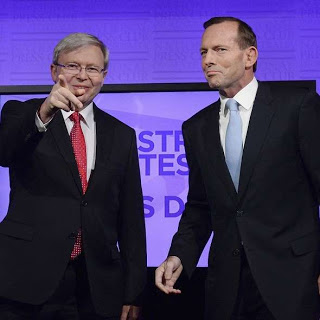
In the end, it seems likely that we won’t know what road ECEC will be taking until after the election, and potentially either a Coalition Government or a Rudd-led Labor one is installed. It is clear that Tony Abbott’s government would, if not completely roll back the reforms, freeze them as they are.

Labor will be stuck between the positives of the NQF reforms, and how generally unpopular they are with their link to fee increases. It is entirely possible they will adopt the same strategy.

UPDATED: Kate Ellis has confirmed that she will be remaining as a Government Minister until the election.

Categories
Blog

Sloan’s bizarre rant exposes broader conservative disdain for ECEC

What began as a short, strange and fairly callous blog post by Judith Sloan on “dim-witted” educators from “second-rate universities” has reached national attention thanks to the author’s appearance on ABC’s Q&A.

It hardly seems worth going into Sloan’s lack of apology, or indeed evidence for her assertion. The point of the article, assuming it had one, was surely to generate publicity for Sloan herself – wholly successfully.

I posted a fairly light-hearted and “snarky” response to the blog on Friday night, which was written less out of frustration with her view of my work than by confusion as to the frankly bizarre content.

But it’s worth taking a slightly more serious look at her published thoughts, as they showcase the fairly common conservative or right-wing perspective on early childhood education.

Sloan’s inclusion of the term “Stalinist straight jacket” is telling. The notion of universal access early childhood education (ECE) for all children is a direct attack on conservative “family values”.

The conservative argument is essentially that the best place for a child, any child, is in a stable home with Mum and Dad (certainly not two Dads, or two Mums, but we’ll save that for another entry).

Anything outside of that, particularly when it is run or funded by Government, is a left-wing form of social engineering, designed to produce Little Leftists. Coincidentally, the “second-rate Universities” Sloan casually mentions are also often accused of being Socialist-factories.

Now the view that children are better off with a loving Mother and Father (and more usually the Mother) is a deceptively simple one, and any arguments for and against are usually run with high emotions on both sides.

Proponents of universal access to ECE argue that it provides a level playing field for all children, regardless of their socio-economic backgrounds. These two viewpoints represent the nerve that Sloan hit on (with no regard to subtlety).

Those who argue, like myself, for universal access to high-quality ECE programs with highly qualified teachers and educators are usually hit back with the same arguments.

“So you’re saying that you can only be a good parent if you have a degree?” “So you’re saying if I don’t send my child to childcare I’m making them stupid?”.

To be clear, as I so often have to be, I am certainly not saying either of those things. Do I believe that high-quality ECE can be of benefit in the long-term to children? Yes.

But I never attended childcare when I was a young child. I still did well in school, have a University degree (admittedly not from one that would meet with Judith Sloan’s approval) and have a great job in a sector I love.

My parents had no degrees in early childhood education, but helped set my brother and I up to work hard in our studies (primary, secondary and tertiary) and in our work.

However, I was extremely fortunate to have two well-educated, stable and loving parents with no mental health issues or disabilities. I was given every chance to be successful.

But we are part of a society where not every child has those same opportunities. Some children will grow up in challenging and disruptive environments, where their parents are suffering immense challenges of their own.

Advocating for universal access to ECE is about ensuring that any child, no matter the circumstances of their home life, can be given the same head start I was given.

Such a system would mean that any child could even have the opportunity to attend a first-rate, Judith Sloane-approved University!

Individually-focused learning through fun and play, targeted work on social skills and developing a love of learning can be of immeasurable benefit to young children. These are the focuses of the “Stalinist” National Quality Framework (NQF) for Early Childhood Education and Care.

The main document we use to support children’s learning, the Early Years Learning Framework, actually encourages children’s learning to be unique, individual and contextual to each child and their community. It asks educators to consider diverse perspectives when supporting children’s learning.

About as far away you can get from teaching every child to think and act the same. It almost makes me wonder whether Sloan bothered to check it out all.

The NQF is also there to ensure children’s health and safety – surely a reasonable ask when you consider that the latest figures show that over a million children are now in some form of ECE program.

Ireland’s loose system of regulation and minimal oversight has resulted in terrible outcomes for children, and is rightly coming under increased scrutiny.

Considering that we have a similar system of lowly-paid, overworked and as evidenced so clearly by Sloan also a disrespected workforce of educators and teachers, tight regulatory controls are an absolute necessity to ensure children are safe.

ECE is not about replacing parents. It’s about recognising that supporting young children to reach their potential can have significant benefits to society as a whole, including lifting families out of generational disadvantage.

These arguments will never convince conservatives like Sloan, who instinctually see any Government work with children as the worst form of socialism.

But for people like myself, dim-witted or not, our work with children is vitally important. All children deserve the best possible start in life, and I will continue to advocate for the work do.

This article was originally published on the New Matilda website.
Categories
News

Judith Sloan on Q&A

Judith Sloan appeared on ABC’s Q&A program on Monday, as was asked a question about her comments on “dim-witted” educators from “second-rate” universities.

Her “defense” of the comments is certainly worth a watch.

Sloan is clearly unapologetic, and as her comments were clearly designed to provoke a response and raise her own profile this is hardly a surprise.

Categories
Blog

Why I cannot support the Early Years Quality Fund package

The Federal Government’s recent announcement of The Early Years Quality Fund (EYQF), a two-year, $300 million-funded program to lift the wages of early childhood educators, marked a significant turning point in the national discussion about those who work with young children.

Bill Shorten, Minister for Employment and Workplace Relations, succinctly put the government’s position:

“It is no longer enough, I think, for Australia to simply rely upon the emotional, the intellectual and indeed the physical efforts of Australia’s childcare workers and not adequately remunerate them.”
Shorten also raised the issue of gendered wage discrimination in the sector: “I don’t think anyone seriously believes in Australia that if all the childcare workers in Australia were men, the pay would be as low as it is.”

I have been fighting with my colleagues in the Big Steps campaign to raise the wages of early childhood educators for years. It was affirming to finally hear government ministers state unequivocally that we are underpaid, unsupported and disrespected. I have written and spoken publicly about the need for the community to recognise and support our work.

Despite all this, I believe that this funding package has the potential to disastrously undermine the Early Childhood Education ECEC sector and the campaign for professional wages.

The EYQF is a single pot of money, and will only last for two years from July 2013. To get a share, services and organisations must have an approved Enterprise Bargaining Agreement that factors in the wage increases, and will also need to evidence that they are actively working towards meeting the Federal Government’s new National Quality Standards for ECEC.

The wages increases range in scale from about $3 per hour for a Certificate III-qualified educator, to over $6 for an early childhood teacher.

The major catch is that only about 40 per cent of ECEC centres will be eligible for this funding. They will have to apply to the EYQF, meet the evidence criteria, and once the funding has run out – that’s it.

So the Government’s solution to the identified problem of gender-based wage inequity is an undignified race to see who can apply for the limited funds — putting ECEC organisations in the position of squabbling over the donation jar.

The Government concedes that the EYQF will be a short-term measure. The real focus will be to supporting a wage equity case at Fair Work Australia.

This is a worthy aim, but in the meantime the symptoms of this temporary scheme won’t help a struggling sector. Competition over a small pool of funds is likely to deepen the divide between not-for-profit and private providers, who are already fighting over an ever-dwindling number of qualified educators.

Staff will simply shift employers to those who have been fortunate enough to access funding, leaving huge staff shortages in other parts of the sector — directly disadvantaging children.

As I have written before, the ECEC sector is already split between community-based not-for-profit operations, and private operators.

The Government’s generous childcare subsidies have allowed private operators to grow and thrive. It’s also given them plenty to spend on advocacy against improvements to quality and educator-child ratios.

In effect, they’re is paying the private operators to work against them, allowing them to employ lobbyists and use conservative media connections to undermine attempts to reform the sector and provide greater outcomes for children.

It is understandable that the Government does not want additional funding going to those centres. However, the current structure of the sector as a free-market free-for-all is the direct responsibility of the government, who refused to heed the lessons of the 2008 ABC Learning collapse and repudiate the for-profit model of early childhood education and care.

United Voice, the union for early childhood educators (who negotiated this deal), are understandably keen to ensure that their members benefit as opposed to private operators who are uniformly anti-union.

I also firmly believe that early childhood educators should join their union and actively work towards the Big Steps campaign, as the power of collective action to address injustice has been demonstrated time and time again in other low-paid and low-valued work (such as nursing and aged care).

But celebrating a deal that segregates the sector reflects the failure of those involved to understand that this fight is not about individuals, but the role of an early childhood educator. This is bigger than any one campaign, or any one announcement.

As with Fair Work’s decision that the Social and Community Awards wage rate must rise, this is about valuing the work of those who work with young children and removing continuing wage discrimination on the basis of gender.

The government has publicly acknowledged (finally) that the early childhood educator role is undervalued. The professional standing and respect of the entire sector, not a select few.

We either value educators enough to treat all of them with the same respect and recognition, or we pick and choose — devaluing us all.

This article was originally published by New Matilda on April 22, 2013.

Categories
News

The terrifying reality of American “daycare”

Trusting your child with someone else is one of the hardest things that a parent has to do—and in the United States, it’s harder still, because American day care is a mess. About 8.2 million kids—about 40 percent of children under five—spend at least part of their week in the care of somebody other than a parent. Most of them are in centers, although a sizable minority attend home day cares. In other countries, such services are subsidized and well-regulated. In the United States, despite the fact that work and family life has changed profoundly in recent decades, we lack anything resembling an actual child care system. Excellent day cares are available, of course, if you have the money to pay for them and the luck to secure a spot. But the overall quality is wildly uneven and barely monitored, and at the lower end, it’s Dickensian.

Jonathan Cohn, New Republic (15/4/2013)

Equal parts fascinating and horrifying, this lengthy and in-depth article on the shocking inadequacies of the American system of early childhood care and education is recommended reading for anyone working in the ECEC field. This article serves as the counter-balance to any push for less regulation and lower standards in Australia.

Well worth putting aside half an hour and reading.

Categories
News

A Reggio approach to Australian early education

In a radical rethink of South Australia’s education system, Italian early childhood expert Carla Rinaldi says that funding and resources should be focused on the time from birth to age six rather than the later years of school.

She said care and education were inseparable, so day care centres must not simply act as babysitters for busy parents. Centres also need to be accessible to all families, regardless of wealth. Dr Rinaldi also wants to see an end to the term “preschool” as she says it is not “pre” anything.

Sheradyn Holderhead, The Australian (9/4/2013)

Interesting piece on the need for a re-conceptualisation of early education in Australia. We are still pretty firmly locked into the notion that “real learning” and “real education” start at school, despite all the evidence that foundational and integral learning begins from birth.