Categories
Blog

Welcoming men into ECEC

The most recent figures from the Australian Productivity Commission put the percentage of male educators working in the early childhood education and care (ECEC) sector at 3 per cent.

This is obviously an incredibly small amount, and is similar to other countries around the world. Why do so few men choose to work in early education?

There is no one simple answer to this question. Working with young children has traditionally been seen in society as a women’s role. The “traditional” roles of men and women were as “breadwinners” and “nurturers” respectively.

As child care and early education developed in Australia, there was a common societal understanding that the work would be performed primarily by women.

But as gender attitudes and preconceptions change, this is increasingly seen as the wrong way to look at the roles of men and women in early education.

Women have, and still are, fighting the battle to be seen as equally able to have a successful career and take powerful leadership roles in the business community.

This means that expectations around fathers have also slowly changed. Men can now expect to share the work of raising children, where once it was solely the women’s domain.

This cultural shift does not seem to have extended to early education though. The low percentage of male educators is evidence that the profession is still regarded in society as women’s work.

This, when combined with a national shortage of qualified educators and high rates of turnover, constitutes a serious problem for the ECEC sector.

Low wages and lack of professional recognition are a problem for all educators, male and female. The low wage is often given as a significant reason for the inability to recruit male educators. While this is certainly a factor, it is surely not the only reason.

The underlying problem lies in the perception of the work. When it is seen primarily as women’s work, men who choose to begin a career in ECEC can be viewed with suspicion by families and even by fellow educators.

Paul Sargent, a US-based education researcher, has collected many stories of male educators suffering prejudice and suspicion. He notes that even if they manage to avoid the worst of this, they are often expected to perform their roles in particularly “masculine” ways – for instance, focusing on outdoor play and physical development activities.

This can be problematic for men who work with children in different ways, such as being nurturing and caring. Men who act outside “the way men should act” are likely to be viewed as “different”, if not viewed with outright suspicion.

Anecdotally however, there are many examples of services wishing for more male educators. They are often described as a bringing a different perspective to the work environment, particularly among teams that have always been completely staffed by women.

Research has also shown that positive male role models in the early years can deliver benefits to children and families in disadvantage.

Yet this has not translated into higher numbers of men entering the ECEC sector as educators and teachers.

With the staffing crisis currently in evidence around the country, it is clear that breaking down the barriers to men choosing a career in the sector can only be of positive benefit to ECEC centres.

If the percentage could be raised even slightly, to 10 or 15 per cent, this would constitute a large number of new educators and teachers working with children.

So what can ECEC organisations, managers and directors do to encourage more men to apply for one of the vacancies in their centres?

A good place to start is in the centre itself. How are male role models portrayed in your learning environments? Is there evidence of fathers and male teachers and educators positively engaging in the lives of children? Do men feel welcomed into your space?

Make a decision to include a positive male image in all centre marketing and published materials. This works to reinforce in the minds of potential applicants that they have a place in your organisation. It also actively counteracts negative and damaging prejudices in society about men working with young children.

A great example of this is with the NSW-based organisation Big Fat Smile, which clearly sets out in its marketing that men are encouraged to work in their ECEC centres. This is a very inclusive approach to marketing a career in the sector.

Get involved with local schools, colleges and careers fairs and talk to young men about the rewarding career opportunities that come from working in ECEC.

Include positive stories from men already working in your organisation in newsletters and updates to families and the wider community.

Retaining men in the sector is just as important as recruitment, so it is important that men (as with all educators) are supported during induction and probation periods.

Issues that may arise with families (usually in the Infants rooms) need to be sensitively and respectfully managed. Leaders in the ECEC organisation need to take a proactive role in working with families to challenge bias and prejudice, and not simply move a male educator out of an Infants room.

It is also important that organisations, leaders and educators reflect on diverse ways of working with children, and ensure that men feel comfortable teaching and educating children in a way that works for them.

This is also important to share with children. The Early Years Learning Framework encourages us to work with children on challenging gender bias and assumptions. We need to remind children that boys can play with dolls, and girls can engage in construction activities (to use two simple examples).

Breaking down gender stereotypes with young children can give them a positive attitude to their own potential and those of their peers, and work to change the broader views of society.

Just as we are still working to embed the idea in society that girls can grow up to be and do anything they choose, in ECEC settings we need to see organisations demonstrating and advocating that teaching and educating is not “women’s work”, but a rewarding profession for all.

This article was originally published April 16 2013 on the website careforkids.com.au.
Categories
News

National Children’s Commissioner to focus on hearing the voices of children

“We must learn from the mistakes of the past, when children’s voices were ignored with devastating consequences,” [Megan Mitchell, Australia’s National Children’s Commissioner] said at the Melbourne Convention and Exhibition Centre.

“The Royal Commission into Institutional Responses to Child Sexual Abuse will, I am sure, uncover stories where children’s voices were unheard, and even when heard, were deliberately not taken into account.

“We need to make sure our attitudes and our systems respect the child’s voice. This is one of the essential ways that we can help children to be safe, to realise their potential, and to live full and happy lives.”
Rachel Browne, SMH (15/4/2013)

The importance of listening to the voices of children is an integral part of our work with children in the early childhood education sector, and it is wonderful to hear that this will also be a focus for the Children’s Commissioner.

Categories
News

Priorities for Australia’s new Children’s Commissioner

On her first day at the Australian Human Rights Commission, the incoming National Children’s Commissioner, Ms Megan Mitchell, has said she would like children’s voices to feature more prominently in the issues that affect them.

“I want to see governments pay greater attention to the needs of children, including through listening directly to their aspirations. I want to ensure that their efforts are focused on creating independence, instilling confidence, ensuring children’s safety and focusing on the most vulnerable and marginalised,” said Commissioner Mitchell.

“Engaging with children and child advocates around the country to hear what children have to say and what they see as important for their futures, will be one of the first things I would like to do,” said Commissioner Mitchell.

humanrights.gov.au (26/3/2013)

It will be very interesting to see where this national focus on children’s rights and issues will go. Megan Mitchell is a fantastic choice as Australia’s first National Children’s Commissioner, and will strongly champion the rights and voices of children.

Categories
News

New report card released on children’s wellbeing in Australia

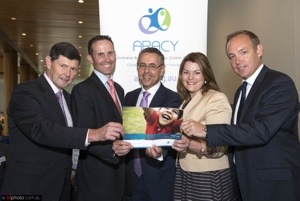
Board member, lawyer and Yuin man, Tim Goodwin, spoke about the implications of this [ARACY] Report Card for our Indigenous people, noting Aboriginal and Torres Strait Islander young people are doing worse than average on 100% of the indicators. Mr Goodwin drew a moving connection between this Report Card and the narratives we Australians can pass on to the next generations, beseeching the audience, “Let’s write a new story, to read a new story to our children”.

Australian Research Alliance for Children and Youth (25/3/2013)

The launch of this updated Report Card on the Wellbeing of Young Australians shows that we still have a lot of work to do on improving opportunities for our children, particularly our Indigenous children.

Labor MP Andrew Leigh also makes the sound point that programs and intervention need to be evidence-based, and not rooted in ideology.

Categories
News

ECEC centre offers “lovebird package” to families with night-time “babysitting”

The lovebirds special, which costs $95 and operates from 5pm to midnight at the NSW Academy of Early Learning in Casula, says an added bonus is that it is eligible for government rebates.

Owners Antony and Marc Elazzi said late-night care was much cheaper than hiring a babysitter.

“We believe that night care is the way of the future for the childcare industry,” Antony Elazzi said.

“We have created such a complicated world, where people have to work at night. The industry can provide a safe environment for children to stay which is regulated by the government, so that parents can work at night.”

Laura Speranza, Daily Telegraph (24/3/2013)

Well. It’s hard to know where to begin with this one.

This is where the for-profit chains, operators and advocates want to see the sector heading. This is “the future of the childcare industry”, according to Mr. Elazzi.

It’s a continuation of a trend that views ECEC as service for families, not as a right for children. The audacity of this proposal is shocking, and will of course be popular with some families. There will be no doubt some in the sector, perhaps even some of my own colleagues, who view this as a reasonable thing to do for some families.

But it needs to be completely clear that the view of ECEC as a learning and social right for children is completely incompatible with the view that “childcare” is a service for working families that can be twisted into any form that suits.

This is where the flexibility trials announced by Government will inevitably head, make no mistake. Any move to flexibility plays into the hands of profiteering private operators and fundamentally disadvantages children.

Advocates for children and for early learning and education in ECEC need to unite and take a stand on these kinds of issues. With 70% of the sector in the hands of private operators, this is an uphill battle – and we are losing.

Supporting working families and providing options for families is not the issue here. This needs to be worked through with a range of social and workforce policy measures – relying on ECEC to be all things to all families will be the end of any quality reforms we have started.

As for the educators of NSW Academy of Early Learning, any of them who have read this article must be thrilled to know their owners have such respect for them that they are being used as an option “cheaper than babysitting.”

What a lucky team.

Categories
News

ECEC wage funding only a small part of much-needed wage reform

The childcare sector is 98% composed of female staff. Increasing pay equity in this profession symbolises the ALP strategy to combat decreasing productivity growth by tackling the complexities of our labour market.

But it also speaks to the necessity of attracting women into the workforce more generally.

This is a problem conservatives do not appear to have analysed sufficiently. Tony Abbott leaves himself open to criticism that he is propping up antiquated traditions about the family (code for a male head-of- household) so he can cling to economically unsustainable views about the labour market (that women are supplementary to the “real” earners).

Chris Peers, The Conversation (22/3/2013)

The wages of early childhood educators are clearly a product of the gendering of the sector, as acknowledged by the Government’s commitment to support a pay equity case through Fair Work Australia.

Until the work of the social and community sector is properly valued, and that means wages, this debate will continue. The Government can be applauded for taking the first minor step, but Chris Peers is right in that it does not come close to addressing the complexities of the issue.

Categories
News

Win for Big Steps, but not quite the full victory

Providers would … have to agree to not increase their fees beyond operational costs, so as not to punish families.

“We know that quality early childhood education and care is dependent on having a qualified and professional workforce,” Mr Garrett said.

“We have listened to the sector and to parents and we are pleased to introduce this fund to help attract and retain qualified staff,” he said.

Simon Benson, Daily Telegraph (19/3/2013)

A qualified win for the Big Steps campaign.  $300 million for some of the sector is certainly less than the ask for professional wages for the whole sector.

But the important thing in this announcement is the Government’s acknowledgement that supporting educators is crucial to ensuring quality outcomes for children. This could be the starting point for much larger reforms.

Categories
News

Government announces new trials for extended ECEC hours

The Gillard government will today announce new national trials that will include family day care options in the home for parents who do not work standard 9-5 office hours as well as the extended childcare centre hours.

The national experiment will cost $5 million and seek to answer not only whether extended hours are viable for centres but also track whether they reduce the stress levels of families.

Samantha Maiden, Sunday Mail (16/3/2013)

In an election year, “trials” of this kind were an inevitability. It is no doubt a tricky issue – casualisation of the workforce and issues for shift-workers have always been around. While I am in principle supportive of measures to deal with those issues, I am wary of any measures to extend hours for early childhood education and care centres.

As I have written before, turning ECEC into a 24/7 convenience destroys any chance of the sector being viewed as fundamentally an education sector, and as right to children. Instead, it will remain a workforce participation measure and a right for families.

This is fundamentally inequitable for children, and raises substantial questions around how seriously Australia takes the wellbeing and educational rights of children.

Categories
News

Greens to push for new inquiry into ECEC

Ms Hanson-Young said the government could no longer ignore child care, which is shaping up to become a key election issue.

”The Labor government can’t continue to pretend that nothing needs to be done,” she said. ”The sector needs proper funding reform if it is to lift quality standards and meet the needs of families.”

A national survey of 230 child-care centres conducted by the Greens in January found that fees were increasing while availability was declining in a number of areas.

Rachel Browne, SMH (12/3/2013)

An inquiry into the funding of ECEC could potentially be very positive for the sector and for children. The current funding model is heavily weighted in favour of profiteering private operators and makes raising quality standards very difficult.

But history tells us that the inquiry would likely focus on waiting lists, fees and workforce participation rather than the best interests of children.

Categories
News

What does education mean in the age of Google?

[Children’s author James] Marsden said that while some schools are “absolute groundbreakers” in the way they foster innovation and open-mindedness, others are sticking to a 1950s didactic education model.

“Children graduate without the social, emotional and intellectual skills to be as successful as they might be,” he said. “They are in more danger of failing in a lot more areas of their lives.”

Cosima Marriner, SMH (10/3/2013)

The education system is arguably little different from the schools of the early 1900s. With information available at the click of a smartphone search bar, how are we preparing children to be confident, capable and active citizens in this information society? An particularly important question for early childhood educators.