Categories
Advocacy Blog

High-profile advocacy is being successfully run internationally – but not in Australia

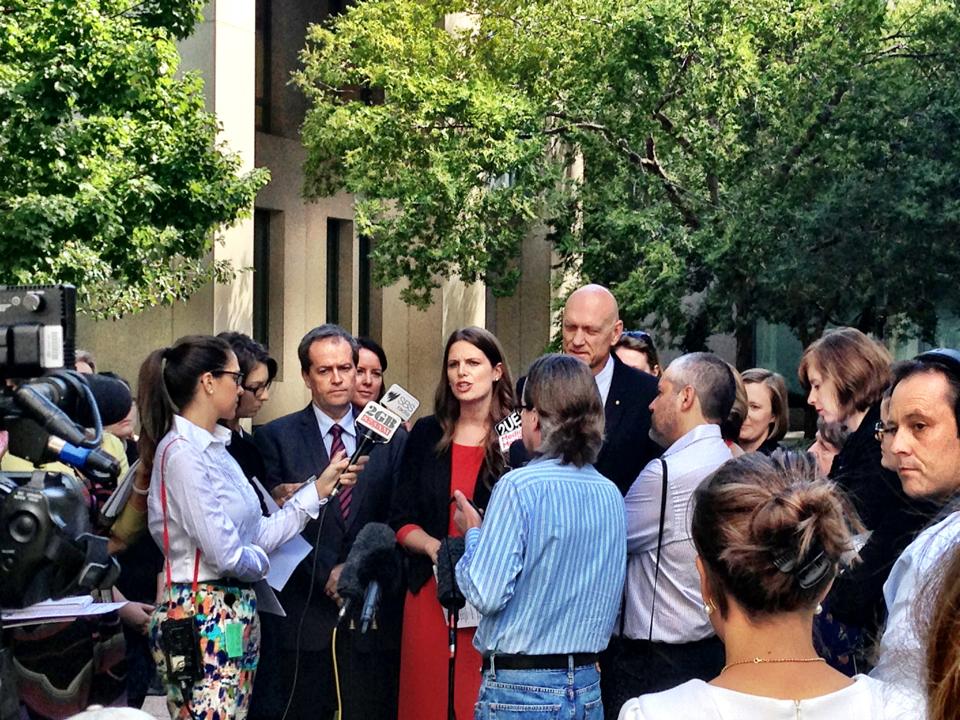
Big Steps Day crowd in Garema Place, Canberra

2014 is a huge year for early childhood education in Australia – so now seems like a good time to ask why Australian advocacy for early learning is not working.

The global profile of early childhood education has probably never been higher. Whether it’s universal access, workforce participation for women and the resultant economic benefits, or the proven link between high quality early learning and addressing structural disadvantage for children, the case to focus policy and budgets on young children is being made all over the world.

Just to pick a few examples, the United Kingdom is having an active political discussion on the merits of universal childcare, which will be one of the key issues of the upcoming 2015 General Election.

President Barrack Obama has also highlighted early childhood education as a priority in his second and final term of office, while former Secretary of State (and very possibly the next President of the US) Hillary Clinton is spearheading a huge advocacy push called Too Small to Fail.

Canadian advocates have been running a long-term, targeted and very savvy campaign targeting local councils and the national Government – The Plan for $10/Day Child Care.

Smart, focused and high-profile campaigns are being successfully run internationally. The same cannot be said for Australia.

This is not to say there are not excellent advocates and advocacy organisations that are operating in Australia – there certainly are.

But in terms of scale, scope and recognition to the general public? Nothing on the scale of any of the international examples.

This is interesting for a number of reasons. Firstly, Australia faces many of the same political and social challenges as the countries listed above – sluggish economies, challenges to workforce participation and rising burden of cost of childcare to families.

We also know from Australian data that 1 in 4 children are starting formal schooling with a developmental delay.

The rising costs of ECEC, issues with availability and a new push for quality are regular items in the media. The conditions are perfect for a clear advocacy campaign to cut through.

But nothing has. There is no clarion call for universal access to early childhood services – individuals are calling for it, but only as individual voices lost in a swirl of op-eds and half-baked ideas about importing nanny-servants.

The Big Steps campaign has enjoyed publicity and even a significant victory – but its target is narrow (professional wages) and comes with the baggage of being a union campaign, fairly or unfairly.

A new player on the block is The Parenthood, a social-media-driven network of families advocating on a number of issues. It’s too soon to effectively judge this group, but it’s important to remember that at this stage The Parenthood (despite some media attention) have not yet demonstrated they have broken through to the wider community.

Their most recent campaign to quarantine preschool funding has only attracted just over 1300 signatures so far. Not insignificant, but not game-changing.

Hard as it may be to admit, the most consistently clear, targeted and successful advocacy on ECEC issues has come from Gwynn Bridge and the Australian Childcare Alliance.

They are the go-to group for the media, have a close relationship with the most senior decision-maker in our sector Assistant Minister Sussan Ley, and have effectively and in all likelihood irrevocably set a significant portion of the sector against quality reforms and the raising of standards for centres.

Like it or not, advocates for high-quality, accessible and child-focused ECEC need to learn from Ms. Bridge and her organisation, and they will need to do it quickly.

The sector has been beset by fragmentation and a lack of collaboration. Reforms in the 1990s and early 2000s turned early learning into a market-based free-for-all. Community organisations who should be natural partners on this issue instead compete for government tenders and grants.

The submissions to the Productivity Commission Inquiry into the sector revealed a frightening lack of consensus amongst early childhood organisations and stakeholders, and more broadly in the community demonstrated the lack of a single “vision” to reach for.

Instead of the community having a smart, simple campaign they could latch on to, we’re stuck with whatever ridiculous thought bubble the latest Think Tank has just thrown up.

The fundamental reason that we don’t have a banner to rally around is that no-one could agree what colour it would be, let alone what would be written on it.

Internationally, Australia is viewed as fairly progressive – we did after all briefly elect an atheist, unmarried woman as our leader.

But everything I know about Australia tells a different story – a country with a deep, long and embedded relationship with conservatism.

The same country – and the same political party – that elected Julia Gillard mercilessly and callously cut her down, with more than a whiff of relaxed sighs when two successive white men in suits (and idiotic grins) took her place.

The main progressive party in this country re-opened Manus Island and signed the PNG re-settlement deal. It has supported ever-encroaching freedom for intelligence agencies to collect information on us.

In the last Parliament, only 48 MPs out of 150 voted for marriage equality. 26 of the “No” votes came from the ALP. To contrast, conservative governments in New Zealand and the United Kingdom have implemented laws allowing for gay marriage.

The case for high-quality, accessible and affordable childcare strikes on a deeply conservative nerve as I have written before. Conservative values say the kids stay at home with Mum. Universal childcare has the potential to undermine the much-hyped about “family unit”, with Mum, Dad and the little kiddies.

Despite a laid-back, “all good” image we project abroad, Australia has demonstrated time and time again that we are conservative nation that occasionally (and reluctantly) dabbles with progressive notions. Early childhood advocates will need to be strategic and persistent to defeat that.

But there is a slight silver lining – when Australia does go progressive, it goes hard. Medicare is a good example. Free, universal healthcare is not going anywhere, no matter how conservative the Government of the day may be.

Progressive wins, when they are completely won, are fully embedded. Universal early childhood education could be the next big win.

I’ve identified the problems – now what are the solutions?

Large early childhood organisations need to come together across the country for large-scale and targeted political advocacy.

Getting those organisations to agree on every point will never happen – so it needs to be around something simple. For me, the focal point has to be the continuation of the NQF in its current form.

Removing the points of contention and coming together around this issue is not impossible, but could have significant impact. A coalition of providers in Australia could be a powerful political force – now we just have to see if they realise it.


Categories
Blog Policy

The twelve days of red tape repeal

20140319-094305.jpg

Hello, dear readers. It’s that magical time of year, Red Tape Repeal Day!

Is there any more wonderful time to gather friends and family close, grab the extra-large ceremonial scissors and go to town on all the red tape you can find.

In the spirit of the season, please join along with me for a non-regulated sing-a-long!

On the first day of red tape repeal the PM repealed for me
Those lefties at the ABC.

On the second day of red tape repeal the PM repealed for me
Childcare quality.

On the third day of red tape repeal the PM repealed for me
Women in cabinet.

On the fourth day of red tape repeal the PM repealed for me
Credit card protections.

On the fifth day of red tape repeal the PM repealed for me
Newtown Year 9!

On the sixth day of red tape repeal the PM repealed for me
Ministerial accountability.

On the seventh day of red tape repeal the PM repealed for me
Aged care safety.

On the eighth day of red tape repeal the PM repealed for me
Indigenous funding.

On the ninth day of red tape repeal the PM repealed for me
Job security.

On the tenth day of red tape repeal the PM repealed for me
Reporting refugees.

On the eleventh day of red tape repeal the PM repealed for me
David Gonski.

On the twelfth day of red tape repeal the PM repealed for me
Being mean to Bolt.

Happy Red Tape Repeal Day, everyone!

Categories
Blog Quality

Premium early learning costs families a lot, but it may ultimately cost the sector even more

fees

It’s time to tackle a topic that has been an undercurrent of this blog for quite some time. Warning to regular readers – this entry will either absolutely infuriate you, or ring true.

The last week or so has seen a number of articles, primarily in Fairfax papers, on the rise of “premium” childcare.

Julia Davison, CEO of not-for-profit group Goodstart Early Learning, said:

…for-profit centres, faced with rising costs, were choosing to set up where they could charge more for ”premium” care.

‘There is much more incentive for for-profit operators to set up in those localities where you can charge a high fee and where you’re going to get a high occupancy than there is for them to set up in middle or lower economic suburbs,” she said.

This has been a steadily growing niche of the market for quite some time. They are in the business of offering “boutique” care for children of high-income families in well-heeled suburbs.

Extra services can include massage for infants, dance classes, yoga – all inclusive in a large fee.

It’s important at this point to be clear that these services are working exactly as the early childhood system in Australia allows them to. Deregulation of the sector throughout the 90s and early 2000s were designed to create exactly this kind of private model – the market has spoken.

The issue of “premium” centres, or indeed the very notion of for-profit early learning for children, is not an legal one, or an economic or financial one.

But is an ethical one.

For me, it comes down to a single question. Does every child in Australia have the right to quality, well-resourced early learning environments, or only those whose parents can afford it?

This is a question that the Australian early childhood sector will have to reflect on, and fast.

I’ve put my cards on the table a number of times, in a number of forums, but I’m happy to state my opinion clearly again now.

Profiting from early learning for Australia’s children is ethically and morally dubious.

There are undoubtedly excellent, passionate and highly-trained educators, managers and professionals working in for-profit spaces. Some of them may be reading this post, and be highly offended.

I regret that result, but I cannot swerve from the overriding position. Quality education is a human right for children, and profiting from that human right skews perspectives.

It is the reason there is a highly organised lobby organisation, the Australian Childcare Alliance, advocating for winding back of quality reforms. They eat into profit margins.

As soon as profit is a motive, it tends to become the dominant motive.

However, as I have already stated, this is the system that we work in. For a number of reasons, community not-for-profits cannot currently provide total coverage of Australia for early learning access.

That is a fact, and it also a fact that private operators meet that need for access.

(It is important at this point to say that there is no reason that these facts must be eternal. At a political level, advocacy must be directed towards appropriate funding of community not-for-profit models to meet that demand. A gargantuan task, but not impossible.)

But the new niche of premium childcare, is in altogether another league. The idea that you can access high-quality, almost “luxury” early learning for your child if you happen to live in a wealthy suburb and earn enough money should ring warning bells.

It strikes right at the heart of what early childhood education should be about – the human rights of the child.

Beyond the ultimate exclusion of children who will simply be unable to attend these services, it entrenches and actively accelerates social inequity and injustice already evident in Australia.

The Early Years Learning Framework has respect for diversity as a foundational principle. The premium model inherently excludes that. Only those from a certain “class” (let’s call this what it is) and wage bracket can attend.

Children only socialising with children who are the most fortunate, and the most well-off. Families doing the same with those families.

But possibly the most concerning of all – educators who only have to work with children from a certain background. My mind spins as I think about how that would affect someone.

Not having to navigate a wide range of diversity. Not having to form respectful and committed relationships to families experiencing hardship and disadvantage. Not putting in the weeks, months and years of effort to support children experiencing vulnerabilities.

That has the potential to skew how you view children and families at a basic level. The repercussions to early childhood practice are far-reaching.

There will be those that say I have put myself and my own practice on an ethical pedestal. It’s extremely easy to cast stones.

I accept the fact that the system is not perfect. I work for a not-for-profit organisation, but despite that there are still those who will not be able to access our services.

I acknowledge that, and commit myself to advocacy to change this inequitable system.

But to be part of an organisation that clearly and unambiguously states “these are the kind of children we want to work with” is mind-boggling to me.

The sector operates within limited funding parameters. Desperately needed funds to support all children are being invested in premium providers.

Premium early learning costs families a lot, but it may ultimately cost the sector even more.

Categories
Blog Policy

Exclusive: new quality ratings now available from Government

seemsfine

It’s not often that we break news here on Lighting Fires, but it is with humble pride that we can exclusively reveal exciting new information from the Assistant Minister for Education Sussan Ley on the ratings system for children’s services.

The Assistant Minister has been valiantly crusading against red tape in children’s services, attempting bravely to bat away the “dead hand of government regulation”.

Services have been lumbered with 50-page – fifty!! – reports outlining their current quality standard, using ridiculous metrics like “evidence” and “observations”.

As the Assistant Minister articulately pointed out:

I think that when you walk into a childcare centre, if you are a qualified assessor, and we’ve got good people in the West, I know, you can feel it, you can see it, you can – you know, you might have to measure some things but you don’t need to get carried away with too much red tape. [Source]

We’re pleased to reveal that here at Lighting Fires we have received a draft copy of the proposed new quality ratings, and the assessment process.

Visits will take a maximum of an hour, or until the cup of tea is finished, whichever comes first.

Centre ratings will henceforth be presented not in a heavy, unreadable 50-page – fifty!!! – document filled with complicated words and tables, but will be scrawled in biro on the back of a napkin.

This report will ideally be presented to the service on the day.

Every service will now recieve one of four ratings:

  1. “Meh”. Bit of work to do, people, maybe get round to that when you get a chance.
  2. Working Towards “Seems Fine”. Look, could things be a bit better? Yeah, probably, but hey, I get you’re busy. Chuck up a few posters or something and you’ll probably do OK.
  3. “Seems Fine”. Had a quick wander around, things feel pretty good.
  4. “Not Too Bad At All”. Hey you’re doing great! Keep up the good work, we won’t bother you for 10-20 years.

Centres who receive a rating of “Not Too Bad At All” will be able to chuck the assessor a twenty and receive a rating of Top Notch.

Families can rest assured that quality will still be assured for children under this new system. Assessors will be thoroughly trained in “getting a feel for the place” and “the vibe”.

Categories
Blog Policy

Will the ghost of the EYQF continue to haunt the Government?

eyqflabor

The Coalition Government has found much to fault the previous Labor Government for, not least in its handling of early childhood education and care.

They’ve managed a tepid and limp hand clap for the creation and implementation of the National Quality Framework, which provides a national minimum standard for this work for the very first time.

Services are however, apparently “drowning in red tape” and quaking in fear from the “dead hand of government regulation”. The way the Coalition tells it, the last six years in ECEC have basically been a horror movie that the public has at last been able to walk out on.

Labor, those socialist fiends, have apparently just been throwing money at problems plaguing the sector – which presumably means that services are drowning in both red tape and money. A weird way to go.

But it appears that nothing has made the now grown-up and serious Government more disappointed than the handling of the Early Years Quality Fund.

“It was unfair,” they cried. “It was inequitable!” they wailed. “It was a lot of money we’d rather not spend on educators!” they murmured quietly on their way back to their offices.

Now, to be fair, it was unfair and it was inequitable. Please see previous blog rants for anything more on that.

But it placed the Government in the tricky position of trying to tight-walk between their burning desire to erase the last six years of history from the books, and the somewhat uncomfortable image of ripping away a small pay increase from people who work with young children.

To address this fairness and inequity, the Government has instead redirected the $300 million fund to “professional development” to the entire sector.

Well, $300 million minus the amount that had already been contracted out to organisations who, when politely asked by politicians on hundreds of thousands of dollars a year (plus entitlements and apparently any large bookshelves they feel they might need) to return the money they were going to give to some of the lowest-paid workers in Australia, shocking said “No”.

According to the Department of Education, money should be rolling out to spend on professional development pretty soon. There is not a lot of information available on requirements, processes or obligations on services concerning the money.

But a more basic question has possibly not been asked – can the Government even do what they are proposing to do?

Let’s have a look at what we know.

The EYQF was legislated – it passed the House of Representatives and the Senate and became law. This means the money allocated for it can only be used for the prescribed, legislated purpose – i.e. professional wages.

From an interview on ABC’s 730 program in December:

SUSSAN LEY: …the special account Labor created only targeted long-day-care centres and only targeted a small proportion of those.

LEIGH SALES: But you’re in charge now. You’ve got the $300 million?

SUSSAN LEY: Well, we are stuck with their legislation and I don’t propose to send the legislation back to the Parliament.

The context of the conversation was that Leigh Sales had suggested to Sussan Ley if the issue was one of equity, why not just redistribute the funding to the entire sector. In this section, Sussan Ley has suggested that this was not possible due to the nature of the legislation.

The actual legislation itself – The Early Years Quality Fund Special Account Bill 2013 – is available here and is pretty clear. It’s a riveting document with an almost spectacular lack of detail, but the key point is Section 7:

Purpose of the Early Years Quality Fund Special Account:


The purpose of the Early Years Quality Fund Special Account is to provide funding to approved centre based long day care services, to be used exclusively for paying remuneration, and other employment-related costs and expenses, in relation to employees in the early childhood education and care sector.

Based on the evidence, it would appear to be legislatively impossible for the Assistant Minister to do as she is proposing, which is to redirect the funding legislated in this Bill.

Yet that appears to be exactly what is occurring, with apparently no objection from either the Opposition or United Voice.

The Bill does state that funds can be used for professional wages and “for other employment-related costs and expenses, in relation to employees in the early childhood education and care sector.” This, however, hardly directly equates to professional development.

I have contacted the Assistant Minister with these questions and, based on my previous communications with her office, will receive a reply from her Department in 2-3 months.

But it perhaps needs to be asked of the other political players in ECEC why this rather substantial question on whether the Government can do what they are proposing to do has not been asked in Parliament.

Editors Note: Grateful thanks are given to Karl Hessian and Lisa Bryant for their research and assistance in this post. You can (and should) follow them both on Twitter by clicking on their names.

Categories
Blog News Policy

Government clarifies position on wages for early childhood educators

Big Steps Day crowd in Garema Place, Canberra

Now that submissions to the Productivity Commission’s Inquiry into Child Care and Early Learning have closed, attention has turned to another big event in early childhood education and care in 2014.

Fair Work Australia will be making a ruling on the wages of educators around the middle of the year. One of the things that will decide the final ruling will be whether the wages of educators are chronically low due to the feminisation of the sector – essentially they are lowly paid as the role has been viewed primarily as women’s work, traditionally done for free.

The previous ALP Government referred the case to Fair Work Australia as part of its response to the Big Steps campaign. They also committed funds to a Pay Equity Unit within FWA to assist with the application.

Throughout last year, and the 2013 election, the Coalition supported the referral of the wages issue to Fair Work Australia. Sussan Ley, the Assistant Minister for Education, said in December “Let’s let the Fair Work Commission do its work and come up with a sustainable increase for everybody.”.

At the time, this was a simple political deflection to avoid being perceived as attacking educators.

Now that the FWA decision is in the not-too-distant future, it appears that the Government may be changing its approach somewhat.

The Australian has reported on a Federal Government submission to FWA, where they have warned that granting wage increases to the sector could have negative flow-on effects to other industries.

From The Australian:

In a submission to the commission lodged late yesterday, the government said the tribunal’s task was to redress any gender-based differences in pay, not “undertake an exercise in comparative wage justice”.

The Government seems to be trying to make the point that FWA is not empowered to compare wages between different sectors or industries, but only to resolve specific gender issues within a specific sector.

This is deliberate attempt to refocus the case in a direction far more likely to lead to a negative verdict.

The evidence is clear and irrefutable that early childhood educators are underpaid primarily due to the feminisation of the sector. On current figures, only 3% of the sector is male.

FWA’s decision that wages were unfairly low for reasons of gender in the social and community sector case was in the context of a sector that employs around 15-20% of men.

On the strength of that alone, the case seems relatively open and shut.

What the Government appears to be trying to do is direct FWA to not compare between the ECEC sector and more diversely-represented sectors (or even male-dominated sectors), as there can only be one conclusion drawn from those comparisons.

Sections of the sector have reacted negatively to the Government’s position. Kate Ellis, the Shadow Minister for Early Childhood, Child Care and Youth, said that “The Abbott Government said to educators time and time again, if you want a pay rise, take it to the Fair Work Commission. But educators never expected their own government would speak out against them getting the wage they deserve. This is nothing but a cruel deception and a tricky political game and the cost is borne on low paid workers.”

It is important to remember, however, that FWA is an entirely independent body and is not directed by the Government.

The Government undoubtedly would prefer that in the current political climate of a “budget emergency”, they are not left footing the bill for a wage increase that could be anywhere up to $2 billion.

The Government are trying to encourage FWA to shift the goalposts into a position more favourable to them – but that is no guarantee that it will happen.

A clear case can be made that a culture of undervaluing the work of women in our society has had the long-term impact of keeping the wages of professional educators and teachers in the ECEC sector artificially low.

All that remains is for that case to be forcefully made, and for FWA to hand down its decision.

Categories
Advocacy Blog

Closing the Gap report highlights the need for a greater focus on Indigenous perspectives in the early years

20140213-092928.jpg
The Prime Minister Tony Abbott handed down the sixth Closing the Gap Report in the House of Representatives yesterday.

While there have been some successes, primarily in child and maternal health, it is clear that Australia is not moving fast enough or smart enough to meet the 2030 targets.

Tony Abbott, who has regularly spent time in Indigenous communities and has connections with community leaders, has stated that he wants Indigenous Affairs to be a priority in his Government.

A worth aim, but it stands at odds with the Government’s funding cuts to legal services.

Meeting with 2030 targets will require a much higher level of investment, as well as a much greater effort to change attitudes and intolerance within the country. This has to start in early childhood.

Angela Webb in The Australian advocates strongly that targeted support needs to be directed into the early years, citing the wealth of evidence that support in this space reaps enormous benefits down the track.

Indigenous children already remain under-represented in early-years services. Yet there are currently only about 300 indigenous community-controlled early-years services across Australia, servicing a population of 146,714 Aboriginal and Torres Strait Islander children from birth to eight years old. This is manifestly inadequate, yet the conversation is not about redressing the vast gap in service coverage but the ongoing survival of the few existing services.

The early childhood education sector has a powerful role to play in addressing Indigenous disadvantage, but it is currently failing to meet that potential. As Webb writes:

At the time of greatest potential to reverse the disadvantage that many indigenous children face, we are letting them down. Funding for indigenous early childhood services, already lagging far behind that for other children, will be cut in June.

The National Quality Framework has included a strong focus on Indigenous perspectives, and is a foundation of the Early Years Learning Framework. However the complexities and challenges of working in this space require significant investment in professional development and training for educators and teachers, which has not been seen as yet.

Quality early learning experiences can support all children to get the best start in life, but given Australia’s past and our responsibility to Australia’s first people, there needs to be a significant and sustained focus on embedding Indigenous perspectives – first with educators, and through them young children and families.

Categories
Advocacy Blog

A game-changing idea for Australia’s children’s education and care sector: partnering with the business community

business-card

The Productivity Commission’s call for public submissions has seen a wide variety of stakeholders put forward their opinions of the children’s education and care sector.

Somewhat surprisingly, the Business Council of Australia strongly and unequivocally “supports the National Quality Framework as a way of raising the quality of education services.”

The submission highlights the potential to redress structural inequality, and for a significant saving as opposed to later remedial measures.

The Business Council obviously supports the strong impact that more accessible and affordable childcare would have on workforce productivity.

It is clear that as well as being primarily an issue of equity and rights, challenges to women’s workforce participation has a significant impact on the national economy.

It also serves to reinforce and embed poor representation of female leadership in Australia’s top businesses.

Paul Howes was recently mocked for attempting to in effect “call a truce” between the business community and unions (and between the ALP and the LNP), but it raises an interesting – and potentially game-changing – idea for Australia’s children’s education and care (CEC) sector.

A partnership between the CEC sector and the Australian business community.

For advocates for universal access, not-for-profit education services to young children, this would seem to be an absolute non-starter. The market model has created the structural divisions currently threatening to halt progress on hard-fought-for quality reforms.

But a partnership (or “grand compact” to borrow from Howes) in this area could have incredible outcomes.

The focus may be different for both sides, but the process and the outcomes serve both sides extremely well. A high-quality and highly-accessible CEC sector could have an enormous contribution to make to Australian society.

This would benefit children and families.

In the current context of budget savings and reduction of Government support to the community sector, imagine a situation where some of Australia’s largest and most profitable organisations agree to pay a voluntary levy to Government to increase federal funding of the CEC sector.

Businesses will already be paying a levy to introduce the Government’s paid parental leave (PPL) scheme. There is an incredibly strong argument to be made that investing that money in quality CEC would deliver far greater outcomes, and therefore be more supportive of business, than a generous PPL.

Research from Early Childhood Australia has indicated that 70% of Australians would prioritise investment in CEC services rather than the PPL.

It would take an exceptional plan, and strong advocacy on the side of community organisations and leaders in the business community, to even approach this vision.

But a partnership of this kind could circumvent the restrictions already placed on the sector by the Government.

Categories
Blog Quality

While for-profit advocates are singing doom and gloom about the NQF, the private sector is investing more and more

g8

Private childcare operator G8 Education has announced another large purchase of long day care centres. Business Spectator is also reporting that “management is likely to announce further acquisitions”.

G8 have been the big private players in early childhood education and care for the last two years, pursuing an aggressive growth strategy and buying out a number of small organisations and individual providers.

Here in the ACT, their presence has grown significantly.

It appears that G8’s success has spurred on other entrepreneurs in the sector. Affinity Education and Stirling Early Education are adopting similar strategies, and willing to invest significant capital in taking over other operations.

This is of course how the sector is supposed to operate. Since the Howard reforms of the late nineties, the market model is how things work.

ABC Learning pursued that strategy, and were hailed as a shining example of how childcare services could be delivered.

Until their spectacular implosion in 2007.

ABC’s collapse should have been the catalyst for a drastic overhaul of how the sector is funded and regulated. Instead the opportunity was missed, and it now appears likely that any lessons from that approach may be forgotten.

It’s tempting to refer to G8 as “The Next ABC”. Their sudden appearance on the scene and sharp rise could easily lead to that conclusion.

That analysis is probably premature however. G8 are certainly, at least at this stage, a much savvier operation than ABC ever were. ABC pursued a relentless and ruthless branding strategy that overwhelmed and hid the structural issues with its business model.

ABC also pursued international success in other markets, which failed almost immediately.

G8’s growth is significant, but it is certainly nowhere near as fast as ABC’s was. ABC benefited from the early stages of the rapid shift of focus from community not-for-profit to private providers. This initial stage was fertile ground for private organisations.

G8 (and their new competitors) do not have quite that advantage. G8 is also in many cases not pursuing a huge rebranding – most centres still operate under individual names. This could of course change at any time.

The overall context though is worth considering. The for-profit community, incorrectly claimed to be represented in their entirety by the Australian Childcare Alliance, have long opposed the National Quality Framework reforms as a direct attack on their profits.

G8’s position on it is unclear, as they have very little publicly available information on their positions on any issues in the sector.

It is telling though that at a time when for-profit advocates are singing doom and gloom about the NQF, and the Federal Government are happily joining the choir, the private sector is investing more and more in this space.

Either the requirements of the NQF are not as debilitating as is regularly claimed, or private investors are assuming there will be significant roll backs of the quality gains.

Rolling back quality to meet the needs of private providers could easily set up a second “boom” in private investment in ECEC.

G8 is still at a very early stage in its operations. Significant change could be ahead in how it does business. It may be premature to call them the next ABC, but in the current political climate the conditions could easily be created for them to become just that.

Categories
Blog Policy

Previous government’s trial program points to the need for facts in the flexibility debate

Should children's education and centres be more flexible with their opening hours?

Less than 100 families have made use of the Labor Government’s flexible childcare trials, according to figures from the Department of Education published in Fairfax papers. The trials were announced in March 2013 by Minister Kate Ellis, apparently as a result of “a clear demand for more flexible child care options”.

The $1.3 million Flexibility Fund was open to children’s services to provide a range of different options for families, including longer opening hours and even overnight or weekend services.

The trial featured a number of Family Day Care providers working with shift-workers in the emergency services sector, as well as a handful of Long Day Care centres trialling extended opening hours.

The report comes in the middle of ongoing media speculation regarding the Government’s planned changes to the children’s education and care sector. They are currently awaiting the outcome of the Productivity Commission Inquiry into the sector before making any changes.

But the Assistant Minister Sussan Ley has repeatedly pointed to a lack of flexibility in the sector to accommodate the needs of modern families. A point hardly backed up by the dismal take-up rate of the flexible options funded by Labor’s trials.

But the political debate around flexibility of children’s services has never been about facts. It seems to have become an assumed “fact” of the sector that it is not meeting the needs of a significant amount of families, but no person, organisation or peak body has actually provided data on this.

Surveys have indicated that anecdotally there are families who are wishing for extended opening hours particularly, but the Department of Education’s analysis suggests this is not a critical issue and that families are only requiring it on an “ad-hoc basis”.

So the assumed “fact” that flexibility is a major and concerning issue needs to be challenged. The results of the trial indicate that it is actually a very minor issue compared to actual availability, and affordability for a number of families.

The issues around shift-workers (particularly those in emergency services) is not just one for the sector – it is one that needs be addressed as an Australian community.

Simply extending operating hours to meet the needs of every single person who requires it is a ridiculous solution to this issue.

There first needs to be some facts on the table on how many families this is affecting, and then a discussion about a holistic approach to addressing it.

The business community needs to be a large part of the discussion. The community sector is often expected to twist and bend itself to meet the needs of business – are there any discussions taking place about business being more flexible to the needs of young families?

The failure of the Flexibility Fund should encourage policy makers to look at these issues holistically, and not as isolated “problems” that can be “fixed” with a targeted program.