Categories
Blog News Policy

Government clarifies position on wages for early childhood educators

Big Steps Day crowd in Garema Place, Canberra

Now that submissions to the Productivity Commission’s Inquiry into Child Care and Early Learning have closed, attention has turned to another big event in early childhood education and care in 2014.

Fair Work Australia will be making a ruling on the wages of educators around the middle of the year. One of the things that will decide the final ruling will be whether the wages of educators are chronically low due to the feminisation of the sector – essentially they are lowly paid as the role has been viewed primarily as women’s work, traditionally done for free.

The previous ALP Government referred the case to Fair Work Australia as part of its response to the Big Steps campaign. They also committed funds to a Pay Equity Unit within FWA to assist with the application.

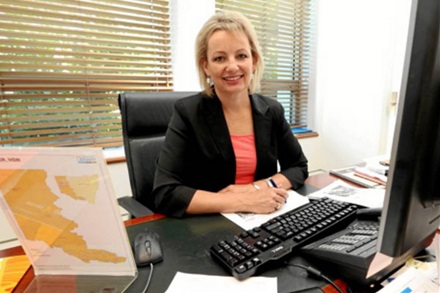
Throughout last year, and the 2013 election, the Coalition supported the referral of the wages issue to Fair Work Australia. Sussan Ley, the Assistant Minister for Education, said in December “Let’s let the Fair Work Commission do its work and come up with a sustainable increase for everybody.”.

At the time, this was a simple political deflection to avoid being perceived as attacking educators.

Now that the FWA decision is in the not-too-distant future, it appears that the Government may be changing its approach somewhat.

The Australian has reported on a Federal Government submission to FWA, where they have warned that granting wage increases to the sector could have negative flow-on effects to other industries.

From The Australian:

In a submission to the commission lodged late yesterday, the government said the tribunal’s task was to redress any gender-based differences in pay, not “undertake an exercise in comparative wage justice”.

The Government seems to be trying to make the point that FWA is not empowered to compare wages between different sectors or industries, but only to resolve specific gender issues within a specific sector.

This is deliberate attempt to refocus the case in a direction far more likely to lead to a negative verdict.

The evidence is clear and irrefutable that early childhood educators are underpaid primarily due to the feminisation of the sector. On current figures, only 3% of the sector is male.

FWA’s decision that wages were unfairly low for reasons of gender in the social and community sector case was in the context of a sector that employs around 15-20% of men.

On the strength of that alone, the case seems relatively open and shut.

What the Government appears to be trying to do is direct FWA to not compare between the ECEC sector and more diversely-represented sectors (or even male-dominated sectors), as there can only be one conclusion drawn from those comparisons.

Sections of the sector have reacted negatively to the Government’s position. Kate Ellis, the Shadow Minister for Early Childhood, Child Care and Youth, said that “The Abbott Government said to educators time and time again, if you want a pay rise, take it to the Fair Work Commission. But educators never expected their own government would speak out against them getting the wage they deserve. This is nothing but a cruel deception and a tricky political game and the cost is borne on low paid workers.”

It is important to remember, however, that FWA is an entirely independent body and is not directed by the Government.

The Government undoubtedly would prefer that in the current political climate of a “budget emergency”, they are not left footing the bill for a wage increase that could be anywhere up to $2 billion.

The Government are trying to encourage FWA to shift the goalposts into a position more favourable to them – but that is no guarantee that it will happen.

A clear case can be made that a culture of undervaluing the work of women in our society has had the long-term impact of keeping the wages of professional educators and teachers in the ECEC sector artificially low.

All that remains is for that case to be forcefully made, and for FWA to hand down its decision.

Categories
Advocacy Blog

Closing the Gap report highlights the need for a greater focus on Indigenous perspectives in the early years

20140213-092928.jpg
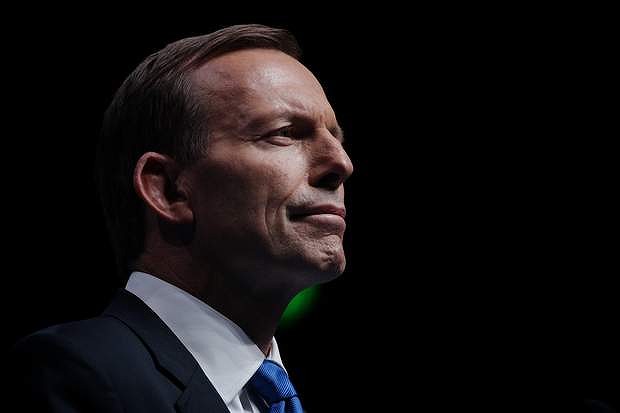
The Prime Minister Tony Abbott handed down the sixth Closing the Gap Report in the House of Representatives yesterday.

While there have been some successes, primarily in child and maternal health, it is clear that Australia is not moving fast enough or smart enough to meet the 2030 targets.

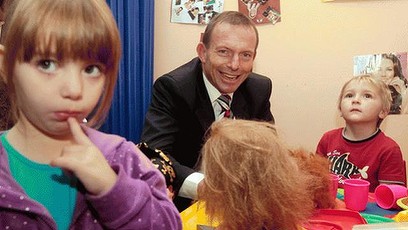
Tony Abbott, who has regularly spent time in Indigenous communities and has connections with community leaders, has stated that he wants Indigenous Affairs to be a priority in his Government.

A worth aim, but it stands at odds with the Government’s funding cuts to legal services.

Meeting with 2030 targets will require a much higher level of investment, as well as a much greater effort to change attitudes and intolerance within the country. This has to start in early childhood.

Angela Webb in The Australian advocates strongly that targeted support needs to be directed into the early years, citing the wealth of evidence that support in this space reaps enormous benefits down the track.

Indigenous children already remain under-represented in early-years services. Yet there are currently only about 300 indigenous community-controlled early-years services across Australia, servicing a population of 146,714 Aboriginal and Torres Strait Islander children from birth to eight years old. This is manifestly inadequate, yet the conversation is not about redressing the vast gap in service coverage but the ongoing survival of the few existing services.

The early childhood education sector has a powerful role to play in addressing Indigenous disadvantage, but it is currently failing to meet that potential. As Webb writes:

At the time of greatest potential to reverse the disadvantage that many indigenous children face, we are letting them down. Funding for indigenous early childhood services, already lagging far behind that for other children, will be cut in June.

The National Quality Framework has included a strong focus on Indigenous perspectives, and is a foundation of the Early Years Learning Framework. However the complexities and challenges of working in this space require significant investment in professional development and training for educators and teachers, which has not been seen as yet.

Quality early learning experiences can support all children to get the best start in life, but given Australia’s past and our responsibility to Australia’s first people, there needs to be a significant and sustained focus on embedding Indigenous perspectives – first with educators, and through them young children and families.

Categories
Blog Policy

Previous government’s trial program points to the need for facts in the flexibility debate

Should children's education and centres be more flexible with their opening hours?

Less than 100 families have made use of the Labor Government’s flexible childcare trials, according to figures from the Department of Education published in Fairfax papers. The trials were announced in March 2013 by Minister Kate Ellis, apparently as a result of “a clear demand for more flexible child care options”.

The $1.3 million Flexibility Fund was open to children’s services to provide a range of different options for families, including longer opening hours and even overnight or weekend services.

The trial featured a number of Family Day Care providers working with shift-workers in the emergency services sector, as well as a handful of Long Day Care centres trialling extended opening hours.

The report comes in the middle of ongoing media speculation regarding the Government’s planned changes to the children’s education and care sector. They are currently awaiting the outcome of the Productivity Commission Inquiry into the sector before making any changes.

But the Assistant Minister Sussan Ley has repeatedly pointed to a lack of flexibility in the sector to accommodate the needs of modern families. A point hardly backed up by the dismal take-up rate of the flexible options funded by Labor’s trials.

But the political debate around flexibility of children’s services has never been about facts. It seems to have become an assumed “fact” of the sector that it is not meeting the needs of a significant amount of families, but no person, organisation or peak body has actually provided data on this.

Surveys have indicated that anecdotally there are families who are wishing for extended opening hours particularly, but the Department of Education’s analysis suggests this is not a critical issue and that families are only requiring it on an “ad-hoc basis”.

So the assumed “fact” that flexibility is a major and concerning issue needs to be challenged. The results of the trial indicate that it is actually a very minor issue compared to actual availability, and affordability for a number of families.

The issues around shift-workers (particularly those in emergency services) is not just one for the sector – it is one that needs be addressed as an Australian community.

Simply extending operating hours to meet the needs of every single person who requires it is a ridiculous solution to this issue.

There first needs to be some facts on the table on how many families this is affecting, and then a discussion about a holistic approach to addressing it.

The business community needs to be a large part of the discussion. The community sector is often expected to twist and bend itself to meet the needs of business – are there any discussions taking place about business being more flexible to the needs of young families?

The failure of the Flexibility Fund should encourage policy makers to look at these issues holistically, and not as isolated “problems” that can be “fixed” with a targeted program.

Categories
Blog Policy

Where will the Government be heading on early childhood education?

ac-abbott-defcon-20130826061341936952-620x0

The due date for submissions to the Productivity Commission’s Inquiry into Childcare and Early Learning has now passed, and the Commission now begins the process of preparing a draft report for the Federal Government. This draft report will be available in early July.

It is worth discussing the likely paths that the Federal Government will take when the Commission delivers its final report at the end of October.

The National Quality Framework (NQF) was a national push to set baseline standards for children’s education and care. It was a Federal Labor initiative but was signed up to, and continues to be implemented by, State and Territory Governments of both sides of politics.

It set significant new standards for qualification requirements, ratios and supporting children’s learning to be phased in between 2012 and 2020.

Despite some showing some limited support during the 2013 election campaign, the Government has generally attacked the quality reforms as being an unnecessary regulatory burden and described centres as drowning “in a sea of red tape”.

The Assistant Minister for Education Sussan Ley has directly linked the implementation of the NQF to a sharp increase in fees for families.

The biggest political issue in the children’s education and care sector is affordability. Between June 2012 and June 2013 there was a 45c rise in the average hourly fee for children’s services in Australia, on top of similar increases in the preceding years.

When in Opposition, the Coalition used the fee increases to consistently attack the Labor Government.

It is clear from the most recent data that the out-of-pocket spend for families remained at a relatively low level of 8-9% of total income across all income brackets, due to Labor’s increase in the Child Care Rebate from 30% to 50%.

But due in part the byzantine nature of the subsidy system and an effective political campaign of negativity from the Opposition, the narrative on runaway fee increases struck a chord with families.

The Coalition has strived to continue that narrative in Government, firmly placing the current issues of affordability onto the Labor Party.

The Government will surely be aware however that this will only work for a short period of time. Politically, this issue will soon be owned solely by them.

The Government has so far resisted committing to any specifics on changes to the childcare sector, stating that they are waiting for the Productivity Commission to provide their final report.

But when it comes, the Government will need to provide a clear and detailed response to the issues facing the sector.

The key funding lever for the Government is the Child Care Benefit and Child Care Rebate subsidies (both introduced by the Howard Government).

They may seem completely unconnected, but recent refusals by the Government to provide industry assistance to Holden and SPC Ardmona may actually provide us with some insight into their thinking on the CCB/CCR subsidy.

The decision to deny assistance packages to those companies has demonstrated that the Government is prepared to make tough decisions on spending taxpayer money to support businesses.

The childcare sector is currently a majority private enterprise, with private operators making over two-thirds of the sector. The rest are run as not-for-profit community services.

The CCB/CCR subsidy essentially acts as indirect industry assistance to the operators of children’s services. Approximately $5 billion a year is spent on that subsidy – a not insignificant amount of money. Is it possible that the Government would consider lowering that amount of subsidy?

This would come at a huge political cost. In the June quarter 2013 over 742,000 families accessed some form of formal childcare.

Having spent their time drawing attention to the affordability issue as a political weapon, the onus is now on the Government to take steps to address it.

To complicate matters, they have instructed the Productivity Commission that any suggestions they put forward must be within “current funding parameters”. This leaves them with only a few options.

Either the CCB/CCR subsidy is lowered, a politically “courageous” decision as Sir Humphrey might put it, or the quality standards currently being implemented by the National Quality Framework are drastically rolled back.

Given the political considerations, the second option is far more likely. Which puts a lot of the Government’s statements in the media into context.

The focus on “over-regulation” and “red tape” in the media since the implementation on the NQF, and its intense focus over recent weeks, can be seen as laying groundwork for a large-scale downgrading of those reforms.

They can be sold not as a cut on quality outcomes for children, but as a cut on red tape.

This would be a disastrous outcome for Australia’s children. Advocates for quality education and care have stressed the importance of taking early learning seriously as in investment in Australia’s future prosperity.

It would be shame indeed if political expediency hampers a once-in-a-generation opportunity for the Productivity Commission Inquiry to recommend sweeping structural reforms to quality and affordability – without choosing one over the other.

Categories
News Policy

Affordability the battleground for 2014

The June 2013 quarterly from the Department of Education on ECEC will be available later today [UPDATE: is now available here], and the political brawl of affordability has already begun according to Judith Ireland.

The Education Department’s June 2013 quarter report on childcare and early learning, released on Monday, shows the average fee, per hour, of long day care was $7.50 between April and June last year, when Labor was still in power – up from a $5 average in the September quarter of 2007, at the end of the Howard government.

”Childcare now costs the average parent about an extra $70 per week per child than it did before Labor took office – for the exact same number of hours,” Assistant Education Minister Sussan Ley said. ”That’s extremely concerning.”

Sussan Ley and the Government are of course delighted with these figures and we will no doubt be hearing a lot of them over the next few months as the Productivity Commission does its work.

Kate Ellis has of course hit back at the claim, accusing the Government of being “sneaky” with the figures (but with no further details, at least in the media at the moment).

Labor raised the Child Care Rebate from 30% to 50%, and have always used this as their standard defence against political attack on this issue. It seems unlikely that this will work this time.

As Sam Page from Early Childhood Australia points out:

Early Childhood Australia chief executive Samantha Page said with wages making up about 80 per cent of long day care costs, wage increases over the six-year period would account for a ”fair proportion” of the cost change. But she said Labor had not adequately funded a 2012 national quality framework, that included reforms such as standardising child-to-staff ratios.

Labor’s failure to adequately prepare for the implementation of the National Quality Framework, and the resultant impact on operational costs for centres and therefore fees, is now reaping the obvious political dividends.

As I’ve written before, the National Quality Framework was a significant and critical reform that was carried out by Labor. But Ministers Kate Ellis and Peter Garrett both seemed completely oblivious to the broader landscape of ECEC.

Raising the CCR was supposed to be their cover for affordability and cost-of-living attacks from the then-Opposition. But as was inevitable, this encouraged a huge uptake in the usage of children’s services, long day care in particular. This pushed up waiting lists, particularly in the 0-2 age range, leading to regular media reports on inaccessibility.

The new qualification standards by themselves were always going to see fee increases for a sector that has always struggled to recruit and retain qualified staff. The signature failure of the NQF implementation was the seeming desire of the ALP Government to pretend there ever was a staffing problem (until in an election year it became politically convenient to finally realise). A funding and training package for this issue, that covered the entire sector, should have been rolled out in parallel with the NQF.

The ALP will spend 2014 being hit repeatedly over the head with the accessibility and affordability issue. They spent their time in Government pretending that quality wouldn’t cost anything. Will they spend their time in Opposition developing an early childhood education policy that can structurally address these issues?

The Government will of course continue their attacks – but this potentially leaves them with a very tricky problem.

Going on and on about affordability particularly rather implies that they think something should be done about it. At this stage they are refusing to commit to anything before the outcome of the Productivity Commission report.

But by raising this as a regular issue for the public, the Government will at some stage be held responsible for it. They will have to look at measures to improve affordability. But this Government is determined to be seen as economic conservatives – it seems unlikely that further increases to the CCR or CCB would be on the cards.

But what are their options? In their terms of reference the Productivity Commission has been instructed that any recommendations must be “within current funding parameters”.

This leaves the troubling conclusion that the only way to reduce fees for families is to roll back quality standards, particularly qualification requirements and ratios.

If that’s the case, we’re looking at the groundwork for that announcement today.

Categories
Advocacy News

ECA release pre-Budget submission

Early Childhood Australia have publicly released their pre-Budget submission to the Federal Government for the 2014/2015 Budget.

There is good evidence to suggest that early intervention and prevention programs in the areas of
maternal, child and family health; early childhood education and care; and family support programs
can improve outcomes for children, particularly those from disadvantaged backgrounds.

ECA makes this submission to the 2014–15 Budget in the context of the Productivity Commission’s
ongoing Inquiry into Child Care and Early Childhood Learning. ECA has welcomed this root and
branch review of the system. It will enable a thorough look at how the system can best meet
Australia’s needs into the future and there are a number of areas that genuinely need reform.

ECA’s submission features 2 priorities 9 recommendations to the Government as they consider their Budget for the upcoming financial year.

Overall, it is fantastic to see ECA advocating strongly for the full implementation of the National Quality Framework in the face of a concerted campaign by private operators (which ECA also represent) to see it rolled back.

The submission also focuses strongly on the needs of those children and families experiencing the greatest disadvantage and vulnerabilities.

ECA also manages the vital National Quality Standard Professional Learning Program, which has had its funding removed by the Federal Government. It’s a critical resource for the sector at a time when professional standards must rise, so I sincerely hope that ECA and the sector’s advocacy on this sees the program fully restored.

Categories
Advocacy News

Listening to the voices of children

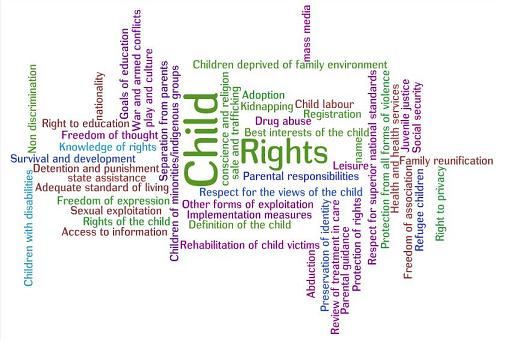
From April 2014, children from a number of countries will be able to directly take reports of human rights abuses to the United Nations. But not Australian children. Paula Gerber, Associate Professor of Human Rights Law at Monash University, explains.

Australia ratified the convention in 1990 and has also ratified both of its other Optional Protocols, one on child soldiers and the other on the sale of children into prostitution and child pornography. But can we expect Australia to ratify this latest protocol?

The answer is probably “eventually”. In other words, we shouldn’t hold our breath. Although Australia, under the Hawke government, was quick to ratify the Convention on the Rights of the Child, it has been less keen to submit itself to the complaints procedures under various UN human rights treaties.

 Since the famous Toonen decision in 1994, which found Tasmania’s laws criminalising homosexuality to be a breach of human rights, Australia has been found to have violated the human rights of complainants on at least 33 occasions.

Australia’s history with the United Nation Convention on the Rights of the Child (UNCROC) is complex. Despite ratifying the Convention in 1990, it has been slow to adopt many of the Optional Protocols.

Gerber explains that the UN Committee that oversees the UNCROC has regularly been critical of Australia’s approach to supporting children’s rights. Right now, Australia is actively placing children in danger in immigration detention. We are also receiving horrific stories from the Royal Commission into child abuse on organisational and systemic failings in our support systems for children.

As one of the most prosperous and secure nations on Earth, Australia is in a position to be a standard-bearer for children’s rights. It remains to be seen when, or even if, this will ever be the case.

Categories
Blog Policy

EYQF ends, as it was always going to, in complete farce

Ending months of speculation, Assistant Minister for Education Sussan Ley today announced that the Government would seek to redirect $300 million committed to the Early Years Quality Fund into “professional development” for the entire sector.

“…this new programme will specifically target professional development opportunities that will provide improved access to childcare and early learning career paths for educators.

“This will in turn help retain staff in the sector and meet the improved education standards required under the National Quality Framework.

“This is shaping up to be the biggest public investment in professional development in the childcare sector’s history. I encourage all operators to recognise this once in a generation opportunity to improve the skills of some of our lowest paid workers.”

An ignoble end to an inequitable and hastily cobbled-together election year throw-of-the-dice.

I have advocated against this fund since it was first publicly announced in April. At the time, I stated:

I believe that this funding package has the potential to disastrously undermine the Early Childhood Education sector and the campaign for professional wages.

So here we find ourselves. It gives me no pleasure whatsoever to be proved right.

An independent report from PricewaterhouseCoopers has slammed the Fund. This will undoubtedly be read by supporters of the fund as unfair and political.

It’s worth pointing out, however, that PricewaterhouseCoopers (PwC) have had an ongoing commitment to examining and reporting on the early childhood education and care sector, and have been overwhelmingly progressive. They even advocated to Government a “Gonski-style” funding model of ECEC, where children are funded at a base level and loadings are applied for children experiencing vulnerabilities.

Hardly a Conservative mouthpiece.

The report accuses the Government and United Voice of using the Fund as a thinly-veiled means to drive up union membership. Hardly a huge scandal that a Union would seek to increase its membership, but the use of taxpayer funds to do so is obviously of concern.

From my point of view, I believe that the Union have in the majority of cases acted in the best interests of some of the lowest-paid people in this country.

It is however, absolutely true that in some cases the “marketing” of the EYQF was handled badly by United Voice. PwC claim to have evidence of union delegates harassing services to become members, or they would not receive money from the Fund.

I will not give specific details, but I can confirm from my own experience that in some cases that absolutely did happen.

(Not, I hasten to add, in the ACT where the United Voice branch has always worked collaboratively and effectively with the ECEC workforce).

Some in the sector have raised the point that surely it’s good if more educators join the Union? Absolutely. But holding a bucket of money over their heads and essentially telling them “join us or you don’t get it” is immoral and disgusting behaviour.

The structural issues with the sector mean that Union membership is not going to follow the same trajectory as teachers, or nurses. The overwhelming influence of market forces, and a much lower level of community respect means that there is not going to be some huge upsurge in membership.

Particularly when a Labor Government announces a fund that will only to go to less than half of the sector, and is clearly aimed at keeping private operators out.

Not only that, but then splitting the fund into two buckets (at the very last minute) was an absolutely outrageous and incomprehensible decision. Making an already inequitable policy even more inequitable? That takes a level of political incompetence I can barely conceive of.

And this is the fundamental problem with the entire Fund, and why it was always going to end in this farce. No matter what the intention, no matter what the strategy, no matter what the “long-term plan”, funding only 40% of the sector was a despicable and grossly unfair policy decision.

At the centre of all these policy discussions are lowly-paid educators, the majority of whom will now be rightly furious. They have spend the last 7 months being systematically treated like fools, by Labor and Liberal politicians.

From my point of view (for what it’s worth), all of the contracts, conditional or otherwise, should have been honoured by Tony Abbott. That was the election commitment.

The Government will spend the money anyway, on some nebulous “professional development” fund. No further details, of course. I particularly like the notion that the Government would quite like those will be getting money through EYQF contracts to pay it back, pretty please. That should go extremely well.

I actually completely agree with taking the entire $300 million and spending it on the entire sector. It’s what should have been done in the first place.

But the new Government has demonstrated that, just as with the previous Government, they are prepared to play low politics with ECEC.

The focus now has to shift to the Productivity Commission Inquiry, and the Wage Equity Case.

Let the EYQF stand as a reminder to advocates for the sector to be careful what you wish for – and to remember that forgoing our principles of equity because a small bucket of money appears will always end as the Fund has ended today. In embarrassing farce.

Categories
Advocacy Blog

Letter to Sussan Ley, Assistant Minister for Education

In the light of recent public statements on potential changes to the National Quality Framework, I have written to the Assistant Minister for Education Sussan Ley. I would strongly recommend that advocates for quality children’s education and care do the same. Contact details are here.

To the Honourable Sussan Ley MP,
Assistant Minister for Education

Minister, my name is Liam McNicholas. I am an early childhood teacher working in the Australian Capital Territory.

I have been extremely concerned to read and hear your recent official statements on the early childhood education and care sector. I undertake my role because of the incredible potential to postively affect the lives of children. Not just in the time they are with me and my colleagues, but their entire lives.

An ever-growing body of research consistently demonstrates that there is no more important time in the development of a human being than their first five years. Australia’s early childhood education and care sector has an incredible potential to address inequality for children, and set them up for their future success.

But there is also potential to have negative impacts.

Early childhood educators have some of the worst wages in this country. Turnover of educators is extremely high. There are not enough educators to properly support children, particulary the youngest infants.

Services are not directly funded by the Federal Government, so must always struggle to find a balance between charging enough to do our jobs properly and ensure it is accessible to all families.

In a system with these pressures, the potential for children to be harmed is high. Not just physical or mental harm, but in such a crucial period of their development if there are negative impacts on a child it could follow them their entire life.

It is clearly cruical that we get this work right.

The National Quality Framework has been a successful project in ensuring that there is a national standard on quality for all children accessing an ECEC service. It also holds those services accountable.

It is extremely concering to hear you, and your colleagues, describe it as “drowning in red tape” or a “bureaucratic nightmare”.

Really, Minister? Keeping children safe is too much of a “nightmare” for the services and people you are speaking to?

I’ve worked in the ECEC sector for 12 years. I have always worked for community not-for-profit operations, as I believe this is the only current ethical way to support children’s learning and wellbeing in the sector.

I have been a teacher, a Centre Director and an Area Manager. Regulations are not burdensome, they are the framework that supports us to do our job well.

It forces those in the for-profit sector who would rather just make a quick buck to meet a minmum standard.

My suggestion to you when you meet with people in the sector who complain about “red tape” is to suggest they find another job to do. No-one is forcing them to stay.

If meeting 58 standards is too much like hard work, find something easier to do. Find something that won’t directly impact on the lives of Australia’s youngest citizens.

This work is crucial. It should be hard.

I implore you to show leadership in your new role, Minister. Consult and engage with a wider group of people than the private sector, who do not have the best interests of children at heart – only their profits.

I implore you to stop using easy, damaging and false language like “drowning in red tape”. Are you seriously of the belief that people and organisations working with young children shouldn’t have to fill in a bit of paperwork?

The ratio and qualification requirements at the foundation of the NQF are essential to the ongoing quality improvements in the sector. I will be advocating strongly that they are carried out, and indeed extended.

My motivation for that advocacy is the best interests of children.

I ask you to question what the motivations of those who would halt or wind back the National Quality Framework are.

I doubt children are in there. I am sure dollar signs are.

You have a leadership role in our sector Minister Ley, and I would welcome any opportunities to engage with you on this critical issue.

Yours sincerely

Liam McNicholas

Categories
News Policy

Upcoming changes to ECEC regulations

The Assistant Minister for Education Sussan Ley has issued a press release foreshadowing changes to the National Quality Framework regulatory system.

“The Coalition has a clear position supporting high-quality child care, but it needs to be delivered in a fairer way that doesn’t make it unaffordable and inaccessible for parents and providers,” Ms Ley said.

“The child care industry has said loud and clear that Labor’s increased red tape and regulations are some of the main reasons forcing them to raise fees and we’re listening.

“These changes will be a significant first step in improving the implementation of the National Quality Framework.

There is so much that is alarming in this short press release, it’s hard to know where to begin.

As I have said again and again, the issue of “red tape” is only an issue for people who don’t take their jobs seriously.

 “Currently all operators have to undergo assessment in seven ‘quality areas’ that require compliance with 18 ‘standards’ and 58 ‘elements’ just to receive a quality rating—it’s a bureaucratic nightmare,” Ms Ley said.


Assistant Minister Ley talks about the 58 elements that services have to be assessed against as a “bureaucratic nightmare”. This is absolute nonsense, and needs to be called out as such. The examples of the United States and Ireland demonstrate that a system without oversight directly harms children.

“But if it wasn’t complex enough, none of these regulations are individually weighted to represent their importance, meaning one minor issue could deliver a poor rating across the board.”

I agree that there is a discussion that needs to be had about the assessment and rating process. For many centres it is inequitable. But the standards themselves are great – in fact, the bar should be raised higher in many of them.

No specific changes are mentioned in the press release, but merely promises to “streamline” processes.

It is intimated in the release that there could be changes to qualification requirements and ratios.

Advocates for quality education and care should be concerned. Watch this space.