Categories
News

Can ECEC close the gap for Indigenous children?

Over at The Conversation, Brad Farrant has looked at the latest COAG report on the National Education Agreement objectives.

“In order to provide due recognition and respect for Indigenous culture our measures, policies and practices must also be sensitive and responsive. We need to ensure that our early childhood development and education programs are culturally appropriate and ready for all children. This effort could also profit from having a close look at what is driving the success in other countries such as Norway.

We know what needs to be done in the area of early childhood education. But unfortunately, we are seeing government policies go in the opposite direction.”

As with a number of reports recently (including Australia’s Welfare 2013, from the Australian Institute of Health and Welfare), the COAG report points to some gains across broad objectives.

But, as ever, Indigenous children are still well behind their peers. Farrant argues that greater investment in early education is the best way to close this gap.

COAG’s next meeting will be the first test of the new Government’s attitude to the early education sector.

Categories
News

Hillary Clinton launches “Too Small to Fail”

Former US Secretary of State Hillary Clinton has launched a new US-based early learning advocacy initiative.

Too Small to Fail will promote scientific research about early childhood development with the goal of reaching as many American parents and business leaders as possible and motivating them to act.

“One of the best investments we can make as a nation is to give our kids the ingredients they need to develop in the first five years of life,” Secretary Clinton said.  “We will help bring together the tools that will give children the chance to succeed by the time they’re five, so that when those kids get to school, they’re able to compete, they are more able to pursue their own dreams.  That’s what excites me aboutToo Small to Fail.”

You can also check out a video launching the initiative here.

Categories
News

Private operators back with “red tape” scaremongering

The for-profit operators are back with more ridiculous claims of being “drowned in paperwork”.

Australian Childcare Alliance acting president Judith Atkinson said: “There is an extraordinary amount of paperwork and I think a lot of resources are directed away from the actual engagement of children because of this.”

Child Care South Australia president Kerry Mahony said paperwork had increased dramatically since the National Quality Framework was introduced by the Federal Labor Government in January.

“Centres are drowning in red tape, there’s a terrifying amount of paperwork that has to be done and it distracts from your prime function as a child care worker,” he said.

“When you’ve got 1072 pages of new legislation and there are 70 specified failures that could result in a fine of some sort, staff are very worried about doing something wrong.

“It creates a lot of fear.”

There doesn’t seem much point going in-depth into this nonsense again here, as I have already tackled this before, but it is always worth reiterating a few key points.

The Australian Childcare Alliance and Child Care South Australia are not acting out of concern for children or families, but their own profits.

They have both advocated for loose regulation and lower requirements to work directly with children, directly putting children at risk.

I don’t know how many times I have to say this, but the sector is certainly not “drowning in red tape”.

Yes, Mr. Mahoney, there are national regulations. This is the safety, wellbeing and education of Australia’s young children at stake.

If you and those you advocate for don’t want to do any paperwork to ensure that a minimum standard in those areas is assured, get out of my sector and make way for someone who takes this job seriously.

Categories
News

Early childhood out of the Ministry

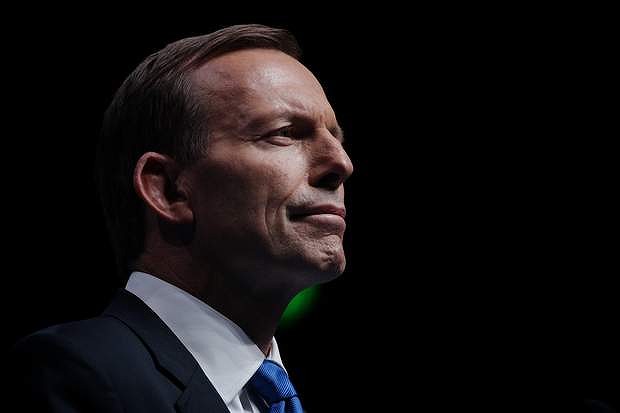
Tony Abbott has announced the make-up of the Ministry in his new Government, and Early Childhood hasn’t made the cut.

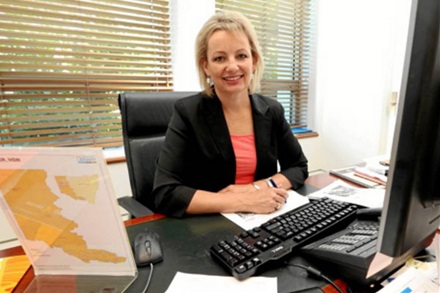
Sussan Ley, the previous Shadow Minister for Childcare and Early Learning, is now the Assistant Minister for Education.

The Labor Government appointed the first ever Cabinet Ministers for Early Childhood in 2010.

Categories
News

Seeking teachers overseas

ECEC organisations around Australia are seeking qualified teachers from overseas, according to news.com.au.

ACECQA will also invite selected universities and colleges in New Zealand, the UK and Ireland to apply to have their early childhood degrees, diplomas or certificates recognised in Australia.

The spokeswoman said 775 foreign childcare workers had applied to have their overseas qualifications recognised in 2012/13 – with 38 per cent from the UK and Ireland, and 22 per cent from New Zealand.

Only 412 applicants were approved, 73 were rejected, and the rest would be assessed this year.

Australian Childcare Alliance secretary Frank Cusmano, representing privately-owned childcare centres, said a shortage of university-trained teachers meant many centres would not be able to comply with new rules requiring them to employ one by January next year.

“There are a lot of exemptions that have been asked for, and received,” he said.

The qualification requirements, particularly around early childhood teachers, have been a source of contention across the sector.

You can read my thoughts on the requirements here. I am entirely supportive of having the highest qualified teachers working with our youngest children, but without targeted and funded support it is unachievable.

This will continue to be the case until teachers who choose to work in the early years are given the same respect, the same recognition and – yes – the same pay as every other teacher in this country.

Categories
News

ACECQA’s “National Excellence” Tour

Last week, ACECQA announced that they would be touring the country and holding “family roundtables”, beginning in South Australia.

Ms [Rachel] Hunter [ACECQA Board Chair] said it was also important to include families in the quality improvement journey.

“We will be holding family roundtables in cities and towns to talk to families about the NQF reforms and what they mean for them and their children,” she said.

“This is a new concept for ACECQA and will involve families sharing with us how they want to be informed and engaged in quality education and care.”

ACECQA today released a 13-part video series about the NQF to help families better understand the reforms. The videos are available on Youtube and the ACECQA website.

I cannot help but think that this kind of tour, particularly the focus on families, might have been far more worthwhile in 2011 and 2012.

Getting families on board with the quality reforms should have been a foundational focus.

Categories
News

Addressing inequality

Interesting piece in the New York Times by James J. Heckman, Professor of Economics the University of Chicago, on early childhood education for all.

Everyone knows that education boosts productivity and enlarges opportunities, so it is natural that proposals for reducing inequality emphasize effective education for all. But these proposals are too timid. They ignore a powerful body of research in the economics of human development that tells us which skills matter for producing successful lives. They ignore the role of families in producing the relevant skills They also ignore or play down the critical gap in skills between advantaged and disadvantaged children that emerges long before they enter school.

While education is a great equalizer of opportunity when done right, American policy is going about it all wrong: current programs don’t start early enough, nor do they produce the skills that matter most for personal and societal prosperity.

America has an ingrained distrust against the State interfering in the lives of children and families, which is part of why their “daycare” system is so dysfunctional.

But there is a growing discussion and debate in the US about the importance of early childhood education, particularly following President Obama’s recent focus on ECE.

With Australia still facing structural funding issues with ECE, and a strong focus on testing and outcomes in the school system, a focus on addressing inequality and giving young people the skills and resilience to become successful could be very powerful.

The article is part of the New York Times’ series The Great Divide, which focuses on inequality in various forms. Well worth following.

Categories
News

Wage rises for educators now in doubt

The AFR is reporting that the incoming Abbott Government will be “redistributing” funds from the Early Years Quality Fund and a similar wage-increase fund in the aged care sector.

The Coalition may reallocate the childcare fund, which was set up to distribute any taxpayer-subsidised pay rises for childcare workers.

It is unclear whether any childcare workers had received the wage top-up already because the Labor government was late to release the eligibility rules for the two-year wages subsidy, which was due to end in 2015.

The Coalition’s childcare policy states it would honour any contracts already made and the remaining funds would be kept in the government’s childcare budget.

It is entirely unclear what this will actually mean. No money has started rolling out to services, although some contracts have been signed.

Some services had received “conditional approval”, and the incoming Government has not made clear whether they will be honoured.

UPDATE: Early Childhood Australia have released a statement calling on the incoming Government to honour the funding commitments in the EYQF. The statement is worth reading in full, and highlights the inequities and divisions inherent in the Fund.

In order to be eligible for the fund, organisations were required to have an Enterprise Agreement (EA) in place with their employees. The creation of ‘haves’ and ‘have-nots’ did not sit well with a sector that takes its ethics and commitment to social equity very seriously.  There was considerable dissension and concern in the early childhood sector, as demonstrated by the submissions to the Senate Inquiry Submissions on the Legislation.


Categories
News

ACECQA Conference 2013

Today is the first day of the ACECQA 2013 Conference. For those of you on Twitter, I’d recommend following along using the hashtag #nqfcon2013.

If you’re an educator, teacher or otherwise involved in children’s education, I would strongly recommend signing up to Twitter and getting involved. It’s a great way to “meet” fellow professionals and contribute to the broad discussions around children’s learning and wellbeing.

If you do, don’t forget to say hello to me: @liammcnicholas.

Categories
News

Survey: Families prioritise spending on ECEC over PPL

Goodstart Early Learning has released the results of a survey conducted throughout June that sought opinions from Australian families on the early childhood education and care sector.

Goodstart chief executive Julia Davison said paid parental leave was not the main driver when it came to women’s participation in work. “Access to affordable quality childcare needed to be the second big leg of work and family policy alongside paid parental leave,” Ms Davison said.

“International research cited in a recent report by the Grattan Institute suggests that government support for childcare has about double the impact on female workforce participation as spending on paid parental leave. We would like to see the next government prioritising new investment into early learning and childcare so that parents do not end up wearing the additional cost of the quality reforms.”

Ms Davison said new investment should be an additional term of reference for the Coalition’s proposed Productivity Commission review of the sector. “Our government’s education spending priorities of inadequate investment in children’s early years do not reflect the priorities of Australian families and run counter to international best practice and research,” she said.