Categories
Blog Policy

Where will the Government be heading on early childhood education?

ac-abbott-defcon-20130826061341936952-620x0

The due date for submissions to the Productivity Commission’s Inquiry into Childcare and Early Learning has now passed, and the Commission now begins the process of preparing a draft report for the Federal Government. This draft report will be available in early July.

It is worth discussing the likely paths that the Federal Government will take when the Commission delivers its final report at the end of October.

The National Quality Framework (NQF) was a national push to set baseline standards for children’s education and care. It was a Federal Labor initiative but was signed up to, and continues to be implemented by, State and Territory Governments of both sides of politics.

It set significant new standards for qualification requirements, ratios and supporting children’s learning to be phased in between 2012 and 2020.

Despite some showing some limited support during the 2013 election campaign, the Government has generally attacked the quality reforms as being an unnecessary regulatory burden and described centres as drowning “in a sea of red tape”.

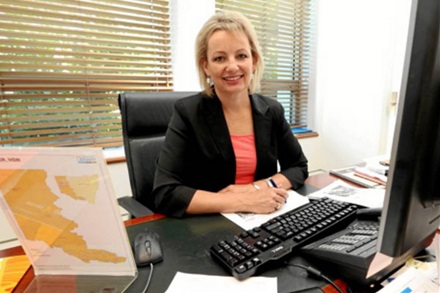
The Assistant Minister for Education Sussan Ley has directly linked the implementation of the NQF to a sharp increase in fees for families.

The biggest political issue in the children’s education and care sector is affordability. Between June 2012 and June 2013 there was a 45c rise in the average hourly fee for children’s services in Australia, on top of similar increases in the preceding years.

When in Opposition, the Coalition used the fee increases to consistently attack the Labor Government.

It is clear from the most recent data that the out-of-pocket spend for families remained at a relatively low level of 8-9% of total income across all income brackets, due to Labor’s increase in the Child Care Rebate from 30% to 50%.

But due in part the byzantine nature of the subsidy system and an effective political campaign of negativity from the Opposition, the narrative on runaway fee increases struck a chord with families.

The Coalition has strived to continue that narrative in Government, firmly placing the current issues of affordability onto the Labor Party.

The Government will surely be aware however that this will only work for a short period of time. Politically, this issue will soon be owned solely by them.

The Government has so far resisted committing to any specifics on changes to the childcare sector, stating that they are waiting for the Productivity Commission to provide their final report.

But when it comes, the Government will need to provide a clear and detailed response to the issues facing the sector.

The key funding lever for the Government is the Child Care Benefit and Child Care Rebate subsidies (both introduced by the Howard Government).

They may seem completely unconnected, but recent refusals by the Government to provide industry assistance to Holden and SPC Ardmona may actually provide us with some insight into their thinking on the CCB/CCR subsidy.

The decision to deny assistance packages to those companies has demonstrated that the Government is prepared to make tough decisions on spending taxpayer money to support businesses.

The childcare sector is currently a majority private enterprise, with private operators making over two-thirds of the sector. The rest are run as not-for-profit community services.

The CCB/CCR subsidy essentially acts as indirect industry assistance to the operators of children’s services. Approximately $5 billion a year is spent on that subsidy – a not insignificant amount of money. Is it possible that the Government would consider lowering that amount of subsidy?

This would come at a huge political cost. In the June quarter 2013 over 742,000 families accessed some form of formal childcare.

Having spent their time drawing attention to the affordability issue as a political weapon, the onus is now on the Government to take steps to address it.

To complicate matters, they have instructed the Productivity Commission that any suggestions they put forward must be within “current funding parameters”. This leaves them with only a few options.

Either the CCB/CCR subsidy is lowered, a politically “courageous” decision as Sir Humphrey might put it, or the quality standards currently being implemented by the National Quality Framework are drastically rolled back.

Given the political considerations, the second option is far more likely. Which puts a lot of the Government’s statements in the media into context.

The focus on “over-regulation” and “red tape” in the media since the implementation on the NQF, and its intense focus over recent weeks, can be seen as laying groundwork for a large-scale downgrading of those reforms.

They can be sold not as a cut on quality outcomes for children, but as a cut on red tape.

This would be a disastrous outcome for Australia’s children. Advocates for quality education and care have stressed the importance of taking early learning seriously as in investment in Australia’s future prosperity.

It would be shame indeed if political expediency hampers a once-in-a-generation opportunity for the Productivity Commission Inquiry to recommend sweeping structural reforms to quality and affordability – without choosing one over the other.
Categories
Advocacy News

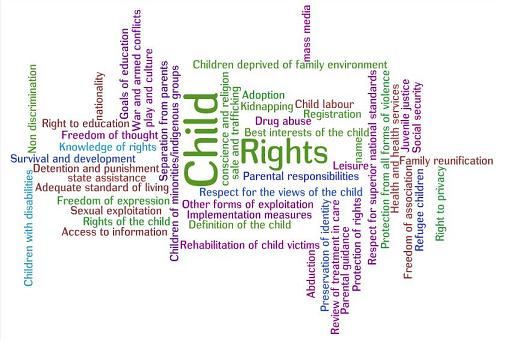
UN takes on the Vatican over children’s rights

Can-1-Vatican-2

The United Nation Committee on the Rights of the Child has strongly questioned the Vatican’s commitment to children’s rights, as reported in The Guardian [The linked report may contain details that could cause distress].

In particular, the committee slammed the practice of moving priests found to have abused children from parish to parish or to other countries “in an attempt to cover up such crimes”. Last month a Vatican delegation in Geneva for questioning by the panel accepted criticisms of this practice and said it no longer went on.

But the committee nonetheless noted: “The practice of offenders’ mobility, which has allowed many priests to remain in contact with children and to continue to abuse them, still places children in many countries at high risk of sexual abuse, as dozens of child sexual offenders are reported to be still in contact with children.”

The Committee not only questions the Vatican’s response to the abuse of children, but more generally the Church’s teachings on abortion and homosexuality.

It is great to see that, finally, the Vatican is being held to account for the systemic failure to protect children.

The Committee will undoubtedly come under fierce criticism for its direct assessment of the Vatican’s appalling failings in this area. But religion has shielded the abuse of children, some of whom experiencing vulnerabilities and disadvantage that the Church should have been protecting, for far too long.

Categories
Advocacy Blog

Imagine: a vision for early childhood education in Australia

20140204-110110.jpg

Submissions to the Productivity Commission Inquiry into Childcare and Early Learning have now closed. The public submissions currently available are a mixed bag – calls for quality reform balanced by companies advertising their products, individuals saying that Mums should just stay at home with their kids and many pushes to extend subsidies to nannies.

But if you only read one submission, make it the incredible submission from Community Child Care Co-Operative NSW.

Simply titled “Imagine”, it takes the audacious strategy of challenging the terms of reference of the inquiry and asking the Commission to instead consider child-focused reforms.

No family in Australia is told that there is no place for their child in a school, and neither should they be told that there is no place for their child in an early education and care service.

As well as succinctly analysing the current structural issues facing the sector, the submission articulates clear steps forward to resolve them.

Critically, it directly challenges the market-based model that now dominates the sector. This is significant and necessary advocacy from CCCCNSW.

This is a must-read for anyone in the ECEC sector.

Categories
News Policy

Affordability the battleground for 2014

The June 2013 quarterly from the Department of Education on ECEC will be available later today [UPDATE: is now available here], and the political brawl of affordability has already begun according to Judith Ireland.

The Education Department’s June 2013 quarter report on childcare and early learning, released on Monday, shows the average fee, per hour, of long day care was $7.50 between April and June last year, when Labor was still in power – up from a $5 average in the September quarter of 2007, at the end of the Howard government.

”Childcare now costs the average parent about an extra $70 per week per child than it did before Labor took office – for the exact same number of hours,” Assistant Education Minister Sussan Ley said. ”That’s extremely concerning.”

Sussan Ley and the Government are of course delighted with these figures and we will no doubt be hearing a lot of them over the next few months as the Productivity Commission does its work.

Kate Ellis has of course hit back at the claim, accusing the Government of being “sneaky” with the figures (but with no further details, at least in the media at the moment).

Labor raised the Child Care Rebate from 30% to 50%, and have always used this as their standard defence against political attack on this issue. It seems unlikely that this will work this time.

As Sam Page from Early Childhood Australia points out:

Early Childhood Australia chief executive Samantha Page said with wages making up about 80 per cent of long day care costs, wage increases over the six-year period would account for a ”fair proportion” of the cost change. But she said Labor had not adequately funded a 2012 national quality framework, that included reforms such as standardising child-to-staff ratios.

Labor’s failure to adequately prepare for the implementation of the National Quality Framework, and the resultant impact on operational costs for centres and therefore fees, is now reaping the obvious political dividends.

As I’ve written before, the National Quality Framework was a significant and critical reform that was carried out by Labor. But Ministers Kate Ellis and Peter Garrett both seemed completely oblivious to the broader landscape of ECEC.

Raising the CCR was supposed to be their cover for affordability and cost-of-living attacks from the then-Opposition. But as was inevitable, this encouraged a huge uptake in the usage of children’s services, long day care in particular. This pushed up waiting lists, particularly in the 0-2 age range, leading to regular media reports on inaccessibility.

The new qualification standards by themselves were always going to see fee increases for a sector that has always struggled to recruit and retain qualified staff. The signature failure of the NQF implementation was the seeming desire of the ALP Government to pretend there ever was a staffing problem (until in an election year it became politically convenient to finally realise). A funding and training package for this issue, that covered the entire sector, should have been rolled out in parallel with the NQF.

The ALP will spend 2014 being hit repeatedly over the head with the accessibility and affordability issue. They spent their time in Government pretending that quality wouldn’t cost anything. Will they spend their time in Opposition developing an early childhood education policy that can structurally address these issues?

The Government will of course continue their attacks – but this potentially leaves them with a very tricky problem.

Going on and on about affordability particularly rather implies that they think something should be done about it. At this stage they are refusing to commit to anything before the outcome of the Productivity Commission report.

But by raising this as a regular issue for the public, the Government will at some stage be held responsible for it. They will have to look at measures to improve affordability. But this Government is determined to be seen as economic conservatives – it seems unlikely that further increases to the CCR or CCB would be on the cards.

But what are their options? In their terms of reference the Productivity Commission has been instructed that any recommendations must be “within current funding parameters”.

This leaves the troubling conclusion that the only way to reduce fees for families is to roll back quality standards, particularly qualification requirements and ratios.

If that’s the case, we’re looking at the groundwork for that announcement today.

Categories
Advocacy News

Inquiry into children in immigration detention

child detention

The Australian Human Rights Commission will hold a National Inquiry into Children in Immigration Detention this year. It is the first such Inquiry in ten years.

Today, however there are approximately 1,000 children in closed immigration detention. This is a higher number than at any point during the period covered by the last inquiry, and the Commission’s monitoring work reveals that key concerns remain. With this increase in child detainees, it is time to look at this issue again.

This inquiry will be able to discover what has changed in the ten years since the last investigation, and find out whether Australia is meeting its obligations under the Convention on the Rights of the Child.

The treatment of children in our immigration detention system has been viewed critically by the United Nations.

The Inquiry will look at a broad scope of issues affecting children in detention, including the affects of lengthy detention, provision of services and the experiences of children separated from their families.

The Inquiry will also consult with Megan Mitchell, the National Commissioner for Children, on implications for Australia’s adherence to the United Nations Convention on the Rights of the Child.

Categories
News Quality

Can the US make much-needed changes to its ECE sector?

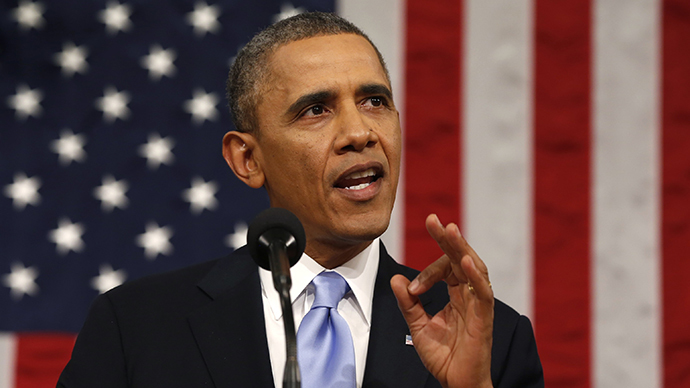
Laura Bornfreund and Conor Williams have examined President Obama’s second-term focus on early childhood education in The Atlantic.

While early education’s policy reality hasn’t lived up to the last five years’ rhetoric, there is some evidence of a silver lining. Think of it like a rail system: it’s as though we’ve spent half a decade designing and laying new high-speed rails linking sparkling, as-yet unused train stations. We’ve invested in shiny, state-of-the-art engines. But we haven’t yet bought fuel or enough cars to serve all of the system’s young “passengers.”

President Obama has another two years of office left, and is facing incredible political hurdles. It remains to be seen if anything more can be achieved on this issue – which is a shame, as it can and must be a vital part of addressing rising inequality in that country.

It stands in contrast to Australia, where in 2014 we could actually be moving backwards on higher standards and greater outcomes for children’s learning and wellbeing.

Categories
Advocacy News

ECA release pre-Budget submission

Early Childhood Australia have publicly released their pre-Budget submission to the Federal Government for the 2014/2015 Budget.

There is good evidence to suggest that early intervention and prevention programs in the areas of
maternal, child and family health; early childhood education and care; and family support programs
can improve outcomes for children, particularly those from disadvantaged backgrounds.

ECA makes this submission to the 2014–15 Budget in the context of the Productivity Commission’s
ongoing Inquiry into Child Care and Early Childhood Learning. ECA has welcomed this root and
branch review of the system. It will enable a thorough look at how the system can best meet
Australia’s needs into the future and there are a number of areas that genuinely need reform.

ECA’s submission features 2 priorities 9 recommendations to the Government as they consider their Budget for the upcoming financial year.

Overall, it is fantastic to see ECA advocating strongly for the full implementation of the National Quality Framework in the face of a concerted campaign by private operators (which ECA also represent) to see it rolled back.

The submission also focuses strongly on the needs of those children and families experiencing the greatest disadvantage and vulnerabilities.

ECA also manages the vital National Quality Standard Professional Learning Program, which has had its funding removed by the Federal Government. It’s a critical resource for the sector at a time when professional standards must rise, so I sincerely hope that ECA and the sector’s advocacy on this sees the program fully restored.

Categories
Advocacy News

Listening to the voices of children

From April 2014, children from a number of countries will be able to directly take reports of human rights abuses to the United Nations. But not Australian children. Paula Gerber, Associate Professor of Human Rights Law at Monash University, explains.

Australia ratified the convention in 1990 and has also ratified both of its other Optional Protocols, one on child soldiers and the other on the sale of children into prostitution and child pornography. But can we expect Australia to ratify this latest protocol?

The answer is probably “eventually”. In other words, we shouldn’t hold our breath. Although Australia, under the Hawke government, was quick to ratify the Convention on the Rights of the Child, it has been less keen to submit itself to the complaints procedures under various UN human rights treaties.

 Since the famous Toonen decision in 1994, which found Tasmania’s laws criminalising homosexuality to be a breach of human rights, Australia has been found to have violated the human rights of complainants on at least 33 occasions.

Australia’s history with the United Nation Convention on the Rights of the Child (UNCROC) is complex. Despite ratifying the Convention in 1990, it has been slow to adopt many of the Optional Protocols.

Gerber explains that the UN Committee that oversees the UNCROC has regularly been critical of Australia’s approach to supporting children’s rights. Right now, Australia is actively placing children in danger in immigration detention. We are also receiving horrific stories from the Royal Commission into child abuse on organisational and systemic failings in our support systems for children.

As one of the most prosperous and secure nations on Earth, Australia is in a position to be a standard-bearer for children’s rights. It remains to be seen when, or even if, this will ever be the case.

Categories
Advocacy News

UNICEF release State of the World’s Children Report

UNICEF has released its annual “State of the World’s Children Report”.

Thirty years have passed since The State of the World’s Children began to publish tables of standardized global and national statistics aimed at providing a detailed picture of children’s circumstances.

Much has changed in the decades since the first indicators of child well-being were presented. But the basic idea has not: consistent, credible data about children’s situations are critical to the improvement of their lives – and indispensable to realizing the rights of every child.

Data continue to support advocacy and action on behalf of the world’s 2.2 billion children, providing governments with facts on which to base decisions and actions to improve children’s lives. And new ways of collecting and using data will help target investments and interventions to reach the most vulnerable children.

As usual, the report includes some incredible statistics on children’s development, education and how their rights are being upheld (or otherwise).

The site includes some fantastic interactive explorations of the numbers that make up the global picture for children. Some of the incredible statistics include:

  • 1 in 5 children die before the age of 5 in Sierra Leone;
  • In half of the world’s countries, 80% of children 2–14 years old have been subjected to violent discipline

The report is interesting to read alongside “Children’s Chances: How Countries Can Move From Surviving to Thriving”, which also presents a wealth of data on how countries are progressing with children’s rights.

Categories
Blog

Lighting Fires is back for 2014!

Welcome back to Lighting Fires for 2014!

Thanks to all those who shared, commented and engaged in discussions on the blog (and on Twitter and Facebook). It’s been great fun exploring the political and policy dimensions of early childhood education in Australia.

I’m excited to keep up with the writing this year, as 2014 is going to a seminal year for the sector. 2014 will see:

  • The Productivity Commission report into Childcare and Learning;
  • The ACECQA Review; and
  • The Wage Equity Case for Fair Work Australia.

There has never been a more important time for the sector to be united and professional in its advocacy for children and their human rights to education.

I’m looking forward to being part of the many conversations that will be happening this year. Please subscribe to the blog to keep up with my posts, and please follow me on my second home – Twitter! You can find me @liammcnicholas.

I also have a Facebook page this year, so please join the conversation there as well.

I’d also love to open up the blog to other commentators, advocates and educators in the sector. If you’d like to post an article or opinion on the site, please contact me at liam.mcnicholas@gmail.com.

Here’s to a big year for ECEC in 2014!