Categories
News

Seeking teachers overseas

ECEC organisations around Australia are seeking qualified teachers from overseas, according to news.com.au.

ACECQA will also invite selected universities and colleges in New Zealand, the UK and Ireland to apply to have their early childhood degrees, diplomas or certificates recognised in Australia.

The spokeswoman said 775 foreign childcare workers had applied to have their overseas qualifications recognised in 2012/13 – with 38 per cent from the UK and Ireland, and 22 per cent from New Zealand.

Only 412 applicants were approved, 73 were rejected, and the rest would be assessed this year.

Australian Childcare Alliance secretary Frank Cusmano, representing privately-owned childcare centres, said a shortage of university-trained teachers meant many centres would not be able to comply with new rules requiring them to employ one by January next year.

“There are a lot of exemptions that have been asked for, and received,” he said.

The qualification requirements, particularly around early childhood teachers, have been a source of contention across the sector.

You can read my thoughts on the requirements here. I am entirely supportive of having the highest qualified teachers working with our youngest children, but without targeted and funded support it is unachievable.

This will continue to be the case until teachers who choose to work in the early years are given the same respect, the same recognition and – yes – the same pay as every other teacher in this country.

Categories
News

Addressing inequality

Interesting piece in the New York Times by James J. Heckman, Professor of Economics the University of Chicago, on early childhood education for all.

Everyone knows that education boosts productivity and enlarges opportunities, so it is natural that proposals for reducing inequality emphasize effective education for all. But these proposals are too timid. They ignore a powerful body of research in the economics of human development that tells us which skills matter for producing successful lives. They ignore the role of families in producing the relevant skills They also ignore or play down the critical gap in skills between advantaged and disadvantaged children that emerges long before they enter school.

While education is a great equalizer of opportunity when done right, American policy is going about it all wrong: current programs don’t start early enough, nor do they produce the skills that matter most for personal and societal prosperity.

America has an ingrained distrust against the State interfering in the lives of children and families, which is part of why their “daycare” system is so dysfunctional.

But there is a growing discussion and debate in the US about the importance of early childhood education, particularly following President Obama’s recent focus on ECE.

With Australia still facing structural funding issues with ECE, and a strong focus on testing and outcomes in the school system, a focus on addressing inequality and giving young people the skills and resilience to become successful could be very powerful.

The article is part of the New York Times’ series The Great Divide, which focuses on inequality in various forms. Well worth following.

Categories
Blog

What does the Coalition’s ECEC policy mean for the sector?

On the second-to-last day of the 2013 Election campaign, the Coalition announced their early childhood education and care policy: The Coalition’s Policy for Better Child Care and Early Learning.

Rather surprisingly, given Sussan Ley’s statements in The Australian, the Coalition will seek to pause many of the most important reforms of the National Quality Framework for Early Childhood Education and Care.

With regards to staffing ratios:

The Coalition will work with State and Territory governments to review the implementation
of staff to child ratios to assess whether their implementation can be slowed to give the
sector enough time to absorb the changes and ensure continuity of service.

The Coalition are also targeting the new qualification requirements:

Given the concerns of the child care sector, the Coalition supports a review of child care
qualifications. We will seek the cooperation of the States and Territories to pause the
requirement that all staff should be qualified until the Australian Children’s Education
Quality and Care Authority has undertaken a full review of early childhood qualifications.
Given the shortage of ECTs, the Coalition believes that it makes sense to put on hold the
requirement for centres with more than 25 children to employ an ECT. We will delay this
requirement until a full review has been undertaken, and in the meantime look at possible
ways to encourage more people, particularly in rural and regional areas where shortages
are most noticeable, to study early childhood teaching.

The reforms to educator-to-child ratios and qualification requirements are rightly held up as key improvements to the sector. Research and practical experience from around the world has shown that these are crucial to quality outcomes for children.

It is important to remember that as the NQF is a product of the Council of Australian Governments (COAG), any changes to the Framework will require the support of the States and Territories (which is acknowledged in the policy document).

I will be honest – I am conflicted about this policy announcement. Anyone expecting instant disapproval and blind support for the Labor Government’s implementation of the NQF reforms had probably better stop reading now.

I am completely supportive of the reforms – I have argued publicly that they do not actually go far enough.

I also completely dismiss the talk of “administrative” problems and the burden of red tape that the Coalition speak of – strict, clear and enforceable regulations are absolutely essential to ensure children’s health and safety. To put it bluntly, any ECEC organisation that cannot handle the “regulatory burden” shouldn’t be in business.

But…

I am forced to conclude that as things currently stand, the Coalition is not wrong to suggest that aspects of the NQF are put on hold.

This is not to say that Tony Abbott’s approach to ECEC is correct. The Coalition have no plan to address the structural issues they have identified, and will palm everything off to a Productivity Commission enquiry.

But this was inevitable, and it is entirely the fault of the Labor Government – specifically Ministers Kate Ellis and Peter Garrett.

As I have written before, the ECEC sector as a whole was never going to be ready to implement even the beginning of the qualification requirements by 2014.

The Government has entirely failed to ensure that the NQF would be embedded and immune from this inevitable announcement by the Coalition.

The NQF should have been accompanied with significant funding and support to the sector, and a long-term campaign to gain public support for the benefits of early childhood education.

Instead, we got a “Early Childhood Workforce Strategy” – an insulting 22-page pamphlet (I refuse to call it a document) that would have been laughed out of any sector or industry that the Government actually took seriously.

Families received the odd brochure or postcard, buried under an avalanche of Government advertising detailing how much money they were spending on rebates.

A bizarre and divisive fund for professional wages was delivered at the last-minute, which has only served to deepen the divisions and frustrations of the sector.

The Government’s implementation approach to the NQF seemed to be tossing it to the sector, and then wandering off with a quick “let us know how you get on”. Even with two years to meet the initial qualification requirements in 2014, huge swathes of the sector were never going to get there.

The best analogy I can think of is like asking a straight-jacketed person to do the Dance of the Sugar Plum Fairy – it was never going to go well.

Structural and foundational work needed to be done before these reforms could really flourish – the low wages and professional standing of the educators in the sector; the incompatibility of ECEC with for-profit providers; lack of targeted funding to support children and families with vulnerabilities, and the educators who work with them – just to name a few.

The straight-jacket holding the sector wasn’t removed – the Government didn’t even seem to notice that there were issues.

From that point of view, it is simple to argue that the reforms should be put on hold.

The Government has gifted the Coalition a major goal on ECEC. Their failure to invest the necessary funding and support into the sector has allowed the Coalition to persuasively argue that the reforms are not really that great and are actually making things worse.

As an advocate for the human right of each child in Australia to a quality education, and the potential power of our sector to raise children out of inequality and vulnerability, I am furious with the Government.

The National Quality Framework should have been the turning point the sector so badly needs. Many people reading this will cast me as now advocating against the reforms – to be clear, this is completely not the case.

Do I want to see the reforms to be slowed, or wound back? Absolutely not.

But there is little point in pushing ahead with the 2014 requirements that are simply impossible for the sector to meet. What is the point in having the requirements if half the sector is on waivers?

The mismanagement of the NQF implementation may hamper our fight for recognition and structural reform for years. What a legacy.

Categories
Blog

Universal ECEC is not “Boys Vs. Girls”

An interesting article from Lucy Powell in The Guardian UK on the failure of the UK Government to invest in their childcare sector. It makes some good points, particularly the evidence that the huge investment required to truly have universal access for all children would be of long-term benefit to the country.

It’s time for government to stop tinkering and take childcare seriously. We see business case after business case for boys’ toys like planes and trains – high-speed rail and airport expansion. Government should develop the case for childcare as a key economic driver to get women – and it is still mainly women – back into work and earning their full potential to benefit not only families but also the country.

The case for free universal childcare should be seriously explored. The IPPR has shown that universal childcare – 25 hours of free childcare for children from one to four – would pay a return to the Exchequer of £20,050 over four years in terms of tax revenue minus the cost of childcare for every woman who returns to work full time after a year of maternity leave. Childcare investment would not only get our economy moving, it would also help the development of young children and begin to level the playing field between poorer children and their peers when they start school.

Powell does unfortunately couch the article primarily in terms of economic outcomes – the needs of children are only lightly touched on. I also question the reducing of traditional infrastructure investment as “boy’s toys” – quality infrastructure is also vital in lifting families out of vulnerable circumstances.

It serves no-one to reduce the argument to “Boys Vs. Girls”, or infrastructure vs. childcare. Investment is needed in both, and universal access to early education and care would significantly redress the gender imbalances in families that Powell rightly points out still exists.

Categories
News

NSW educators rally over Government funding plans

Early childhood educators in NSW have rallied outside State Parliament to protest the NSW Government’s planned changes to funding early childhood education.

Leanne Gibbs helped organise a rally of childcare workers held outside State Parliament this morning.

“What essentially we’re asking for is a proper model of funding that ensures that children have access and that means three-year-olds as well,” Ms Gibbs said.

“We’re looking for a visionary approach to policy in this state and to funding early childhood education, so we want to see more money going into the childhood sector.

“We’re looking at a sector that could become unviable.”

Source: ABC News Online

You can check out more information on the proposed policy at http://www.earlyeducation.org.au.

Categories
News

Education and care Vs. economic imperatives


Interesting piece from Yvonne Haigh up at The Conversation that explores the tension between a “caring” society and the political desire to be seen as “strong” on the economy. She touches on ECEC policies:

The Labor government introduced the National Quality Framework (2012) to ensure quality of educative and care services and it tinkered with rebates and family benefits to the tune of A$7,500 rebate for many families per child. But this does not cover the total costs for children attending day-long or out-of-school child care.

The Coalition has proposed a Productivity Commission inquiry into child care: one that takes into account costs, rebates and subsidies but does not target funding for child care centres.

As proposed solutions, these positions reinforce the tension between policies that “care” and enhancing the economic bottom line. The Coalition’s paid parental leave policy has been criticised for reinforcing inequality and discrimination against women; the Labor Party’s approach has been criticised for excluding superannuation. In both positions, the importance of care is lost in the rhetoric that focuses on time periods and amounts of financial assistance.

The article is worth a read, and also touches on disability, aged care and family policy.

Categories
News

Coalition now supporting the NQF?

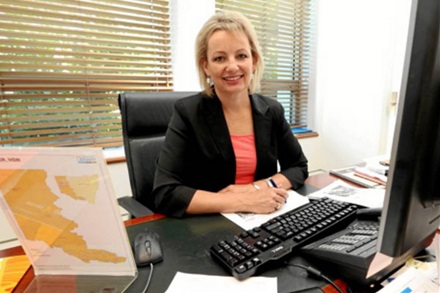
Sussan Ley, the Coalition’s spokesperson for childcare and early learning, has signalled that if elected her party will ensure the implementation of the National Quality Framework.

The Coalition has promised if it wins the election to convene a meeting with state and territory ministers to fine-tune the NQF to remove excessive regulation, but will maintain the quality aspects of the reforms to a sector dominated by low-paid female workers.

“Rollback of the reforms is not a term I have ever used and, by law, any slowdown would be a decision for the state and territory governments, individually or collectively,” opposition childcare spokeswoman Sussan Ley told The Australian.

“If we’re elected, we will sit down with state and territory ministers to work out what aspects of the NQF could work better than they are at present,” she said.

“In particular, we will focus on where excessive regulation adds to compliance and cost but not to quality.”

Source: The Australian

This is a fairly significant backdown after years of dramatic recitations of “the dead hand of government red tape”. The Coalition will also apparently accept the verdict of Fair Work Australia on any wage increases for educators. Taking Ms Ley at face value, this is good news for the sector.

It is important to remember, however, that the Coalition has been feeling political pressure on childcare and early learning, and the Australian has been very accommodating to their views on government regulation.

Also importantly, in the article Ms Ley claims that she has never stated that the Coalition would “roll back” reforms. This is disingenuous at best, and an outright falsehood at worst.

A good comparison on Ms Ley’s apparent change of heart can be found be reading this article “Coalition plans for childcare rollback” from 2012.

Ms Ley told The Australian the regulation was killing the sector and must be abandoned.

“Family daycare is becoming incredibly inflexible under the National Quality reforms,” she said. “I’m really feeling the frustration of the sector because every childcare roundtable I attend brings forward more examples of the dead hand of government regulation in a sector that absolutely doesn’t need it.

Categories
Blog

What if children were “the red line”?

A slight detour for this blog, but something struck me over the weekend as I watched and read some of the horrific reports coming out of Syria.

“Another grim milestone has been reached in the two-and-half-year conflict that has gripped Syria, with the United Nations announcing 1 million children have now fled over the border to escape the relentless violence.

The UN agencies for refugees and children, UNHCR and UNICEF, also estimate another 2 million children are internally displaced within Syria and at least 7,000 have been killed.”

Source: http://www.abc.net.au/news/2013-08-23/1-million-children-flee-syria-bloody-conflict/4906314

The UN has also estimated that 6000 children have died in the conflict.

Over the last few days, the international community has responded to reports that the Syrian Government has used chemical warfare on its own citizens.

Many in international governments and the media have described this as a “red line” which, if proved to have been crossed, could be the impetus for military force to be used by the United States and other powers.

I have only an amateur’s interest in geopolitics and the policy decisions of military engagements – but a question struck me as these reports were coming.

What if children were “the red line”?

What if, as an international community, the “line” is crossed when children are massacred, or displaced, or tortured?

What would this mean for international relations? This is a rhetorical question, I don’t have the answers – I would love to hear what people think. Please comment below!

I will just add this. Air strikes and military engagements (including drone strikes) in Iraq and Afghanistan, by our partners and allies and in our name as Australians, have been responsible for potentially thousands of child deaths.

Nelson Mandela once said: “There can be no keener revelation of a society’s soul than the way in which it treats its children”.

Categories
Blog

Election 2013 – ECEC

We’re now into week three of the 2013 Election campaign. Early childhood education and care issues have bubbled into  few announcements and press releases, but as usual has not been a key priority for any of the major parties.

Labor has committed to continuing the work of the National Quality Framework reforms, but has not announced any measures to support the sector to meet the unrealistic qualification requirements due to commence in 2014. Labor will also continue to support the pay equity case at Fair Work Australia, and money from the Early Years Quality Fund has already begun to roll out.

The Coalition will instigate a Productivity Commission into childcare affordability. Beyond that, no idea.

The Greens have announced $200 million “expanding and upgrading existing community childcare facilities”. The Greens have also committed to the NQF.

All in all, a disappointment. Politically, we are miles and miles away from where we should be as a sector.

At the moment I’m reading “Children’s Chances: How Countries Can Move from Surviving to Thriving” by Jody Heymann. It’s a great, recently-published and up-to-date analysis of data from almost every country in the world. It looks at a variety of metrics on children’s chances to survive and thrive, and has a couple of great chapters on education.

It highlights to importance of early childhood education on long-term outcomes for children. In Australia, the policy debate is still stubbornly framed around waiting lists, fees and council zoning issues.

As I have been saying despairingly to my colleagues over the last few weeks, the real driver of policies for children in this country is workplace flexibility. Ponder that and become depressed.

Until we can get the conversation back to children, and the potential benefits of investment on the early years, nothing is going to change.

Categories
Blog

Sloan’s bizarre rant exposes broader conservative disdain for ECEC

What began as a short, strange and fairly callous blog post by Judith Sloan on “dim-witted” educators from “second-rate universities” has reached national attention thanks to the author’s appearance on ABC’s Q&A.

It hardly seems worth going into Sloan’s lack of apology, or indeed evidence for her assertion. The point of the article, assuming it had one, was surely to generate publicity for Sloan herself – wholly successfully.

I posted a fairly light-hearted and “snarky” response to the blog on Friday night, which was written less out of frustration with her view of my work than by confusion as to the frankly bizarre content.

But it’s worth taking a slightly more serious look at her published thoughts, as they showcase the fairly common conservative or right-wing perspective on early childhood education.

Sloan’s inclusion of the term “Stalinist straight jacket” is telling. The notion of universal access early childhood education (ECE) for all children is a direct attack on conservative “family values”.

The conservative argument is essentially that the best place for a child, any child, is in a stable home with Mum and Dad (certainly not two Dads, or two Mums, but we’ll save that for another entry).

Anything outside of that, particularly when it is run or funded by Government, is a left-wing form of social engineering, designed to produce Little Leftists. Coincidentally, the “second-rate Universities” Sloan casually mentions are also often accused of being Socialist-factories.

Now the view that children are better off with a loving Mother and Father (and more usually the Mother) is a deceptively simple one, and any arguments for and against are usually run with high emotions on both sides.

Proponents of universal access to ECE argue that it provides a level playing field for all children, regardless of their socio-economic backgrounds. These two viewpoints represent the nerve that Sloan hit on (with no regard to subtlety).

Those who argue, like myself, for universal access to high-quality ECE programs with highly qualified teachers and educators are usually hit back with the same arguments.

“So you’re saying that you can only be a good parent if you have a degree?” “So you’re saying if I don’t send my child to childcare I’m making them stupid?”.

To be clear, as I so often have to be, I am certainly not saying either of those things. Do I believe that high-quality ECE can be of benefit in the long-term to children? Yes.

But I never attended childcare when I was a young child. I still did well in school, have a University degree (admittedly not from one that would meet with Judith Sloan’s approval) and have a great job in a sector I love.

My parents had no degrees in early childhood education, but helped set my brother and I up to work hard in our studies (primary, secondary and tertiary) and in our work.

However, I was extremely fortunate to have two well-educated, stable and loving parents with no mental health issues or disabilities. I was given every chance to be successful.

But we are part of a society where not every child has those same opportunities. Some children will grow up in challenging and disruptive environments, where their parents are suffering immense challenges of their own.

Advocating for universal access to ECE is about ensuring that any child, no matter the circumstances of their home life, can be given the same head start I was given.

Such a system would mean that any child could even have the opportunity to attend a first-rate, Judith Sloane-approved University!

Individually-focused learning through fun and play, targeted work on social skills and developing a love of learning can be of immeasurable benefit to young children. These are the focuses of the “Stalinist” National Quality Framework (NQF) for Early Childhood Education and Care.

The main document we use to support children’s learning, the Early Years Learning Framework, actually encourages children’s learning to be unique, individual and contextual to each child and their community. It asks educators to consider diverse perspectives when supporting children’s learning.

About as far away you can get from teaching every child to think and act the same. It almost makes me wonder whether Sloan bothered to check it out all.

The NQF is also there to ensure children’s health and safety – surely a reasonable ask when you consider that the latest figures show that over a million children are now in some form of ECE program.

Ireland’s loose system of regulation and minimal oversight has resulted in terrible outcomes for children, and is rightly coming under increased scrutiny.

Considering that we have a similar system of lowly-paid, overworked and as evidenced so clearly by Sloan also a disrespected workforce of educators and teachers, tight regulatory controls are an absolute necessity to ensure children are safe.

ECE is not about replacing parents. It’s about recognising that supporting young children to reach their potential can have significant benefits to society as a whole, including lifting families out of generational disadvantage.

These arguments will never convince conservatives like Sloan, who instinctually see any Government work with children as the worst form of socialism.

But for people like myself, dim-witted or not, our work with children is vitally important. All children deserve the best possible start in life, and I will continue to advocate for the work do.

This article was originally published on the New Matilda website.