Categories
Blog Policy

Terms of reference should be sounding alarm bells

On Sunday November 17, the Federal Government formally launched and announced the terms of reference for the Productivity Commission’s  “Inquiry into Child Care and Early Childhood Learning”.

Throughout the Labor Government’s six-year term in office, the Coalition opposition regularly attacked their changes to the early childhood education and care (childcare) sector

Labor convinced all states and territories to sign up, through COAG, to the National Quality Framework (NQF) for early childhood education and care (ECEC). This was a significant achievement, and was an attempt to unify disparate and complicated state-based regulation and oversight.

The principle objectives of the NQF were a concern for the heavyweight players in the ECEC sector, the for-profit private operators. Lower staff-to-child ratios and higher qualification requirements for early childhood educators would directly eat in to their potential profits.

The Coalition gladly took up the banner for the private operators, running ridiculous lines on “the burden of red tape” and “the dead hand of Government regulation”.

For those who take early childhood education seriously, and not as an excuse to make a quick buck, the NQF has drastically streamlined and reduced regulation and paperwork.

This is clearly evident to those of us who managed services in the wildly divergent and complicated system of the National Childcare Accreditation Council, pre-2012.

As promised in the lead up to the 2013 Election, the newly elected Coalition Government will be tasking the Productivity Commission to look into the state of ECEC in Australia. It will report back in October 2014.

Despite assurances from the Government that they support the objectives of the NQF in regards to children’s learning, the Government’s stated intentions in the terms of reference should be ringing major alarm bells for families, educators and early childhood education advocates.

The terms of reference and scope of the inquiry clearly demonstrate that the Government is only viewing the ECEC sector through the very narrow and damaging prism of workforce participation and economic imperatives.

They state it clearly themselves: “We want to ensure that Australia has a system that provides a safe, nurturing environment for children, but which also meets the working needs of families.”

The current Government longs for the days when “daycare” was provided by “nice old ladies” for the love of it.

With the greatest of respect to nice old ladies, those days are over.

Early childhood education and care is about more than a “safe, nurturing environment”. It is a place where children can learn and play socially and safely, developing the skills that will set them up for success in future learning.

Where early childhood education and early learning are mentioned at all in the Government’s announcement, it is far down the list on priorities.

To take a brief look at the section ‘the current and future need for childcare’, “hours parents work” ranks No. 1 on the list.

The “needs of vulnerable or at-risk children”? No. 11.

Could there be a clearer indication of this Government’s priorities?

The Government has also tasked the Productivity Commission to only offer recommendations “within current funding parameters”, effectively ruling out any increase in funding to the sector.

With a sector beset by wages and conditions that should be a national scandal, working with children at the most important stage of their development, this is unacceptable.

The Government’s repeated mantra on “red tape” is also a huge concern. Clear regulation and oversight is essential to the safety and wellbeing of children.

You need only look at systems in the United States and Ireland to see where a desire to not have “unnecessary bureaucracy” has directly endangered the safety, or even the lives, of children.

The inquiry will also be examining the ability of the ECEC sector to meet the “needs of today’s families and today’s economy”.

I am always interested in how it is the community who has to be more “flexible” to business interests.

I’m not sure where the Government’s entreaties to the business community to be more “flexible” to the needs of families are.

Yes, the growing amount of shift and casual work is undoubtedly causing issues for some families (although, as is always the case with this argument, no-one actually has any data to prove it).

But why do we automatically leap to the assumption that the community systems around that issue must change and adapt? Why is there not a national discussion on the business community’s role in supporting families?

The Government’s determination to work within the current market-based system is disappointing, but unsurprising. This was a key “win” for the Howard Government, turning over the education and wellbeing of Australia’s children to profiteering private operators.

The deference to market-based solutions to community and social issues is so stupid as to be hardly worth rebutting.

All that needs to be said is that if the market was capable of providing this “service” to the community in an adequate and cost-effective way, why on earth are there two generous and expensive subsidies available to families (the Child Care Benefit and the Child Care Rebate)?

The inquiry does have the potential to identify systemic issues with the sector, which advocates have been identifying for decades.

Any reasonable examination of the current structure of ECEC can only discover that it is fundamentally flawed. This could be extremely positive for the sector, as the Government can hardly ignore the report it asked for.

The Coalition (and even the Labor Government, who lacked the imagination to fundamentally shake-up the system) have always viewed turning the sector over to the private providers as positive.

It is entirely likely that the Productivity Commission will actually report that it was a huge error that has fundamentally disadvantaged children, families and the community for years.

There will already be a million eyes rolling as they read this, but the fundamental question needs to be asked. Do we want to live in an economy? Or do we want to live in a society?

So ECEC can increase workforce participation. Great. To what end?

This may come as a shock, but I don’t carry out my work as a teacher with children to incrementally increase Australia’s GDP output.

I can think of a number of reasons why ECEC is vital to our community: setting children up to succeed in school and life; lifting children and families out of generational vulnerability; closing the gap between Indigenous and non-Indigenous people.

Preparing children to be good little contributors to the economy is not high up on my list.

Sunday’s announcement needs to be a clarion call to arms for early childhood education advocates. The lines have been drawn.

Categories
Advocacy Blog

Early childhood education: the next great Australian project?

I was fortunate enough to attend a breakfast event at Parliament House this morning, hosted by Goodstart Early Learning and Early Childhood Australia.

As well as featuring MPs (including the Assistant Minister for Education Sussan Ley), Professor Frank Oberklaid spoke on the importance of investment in public policy aimed at the early years.

As the Founding Director of the Centre for Community Child Health at The Royal Children’s Hospital in Melbourne, Professor Oberklaid is an expert on the development of young children – particularly their brains.

He made a strong argument for a greater, bipartisan focus on funding investments in early years programs, particularly early childhood education and care.

As all the most recent research tells us, children exposed to vulnerable situations will start life on the back foot – and will most likely never escape that handicap.

Yet the evidence also shows that quality early childhood programs can help to close that gap, at a significantly lesser cost than trying to close it later in life.

I was particularly struck by Professor Oberklaid’s challenge to view investment in the early years as Australia’s “next Snowy Mountain” project. This chimes with my own frustrations on current public policy in the early years, which is more “fiddling around the edges” of existing systems.

It would be incredible to see a bipartisan commitment to undertaking the big reforms that are needed – not to change the odd regulation, or add another bit here, but to fundamentally alter how we support young children and families in Australia.

Categories
News Policy

Terms of reference out for Productivity Commission inquiry

The Federal Government today formally announced the “terms of reference” and scope for next year’s Productivity Commission into “Child Care and Early Childhood Learning”.

The Government is delivering on its priority commitment to task the Productivity Commission with an inquiry into how the child care system can be made more flexible, affordable and accessible.

The Inquiry will identify how the current system can be improved to make it more responsive to the needs of parents.

We want to ensure that Australia has a system that provides a safe, nurturing environment for children, but which also meets the working needs of families.

Our child care system should be responsive to the needs of today’s families and today’s economy, not the five-day 9am-5pm working week of last century.

I’ll have a longer article up on this later this week, but this should be sounding alarm bells for all advocates for early childhood education.

The announcement makes clear that workforce participation and economic imperatives are the focus for this Government.

The sector will need to be putting up some strategic and sustained advocacy in the face of this.

Categories
News

Can ECEC close the gap for Indigenous children?

Over at The Conversation, Brad Farrant has looked at the latest COAG report on the National Education Agreement objectives.

“In order to provide due recognition and respect for Indigenous culture our measures, policies and practices must also be sensitive and responsive. We need to ensure that our early childhood development and education programs are culturally appropriate and ready for all children. This effort could also profit from having a close look at what is driving the success in other countries such as Norway.

We know what needs to be done in the area of early childhood education. But unfortunately, we are seeing government policies go in the opposite direction.”

As with a number of reports recently (including Australia’s Welfare 2013, from the Australian Institute of Health and Welfare), the COAG report points to some gains across broad objectives.

But, as ever, Indigenous children are still well behind their peers. Farrant argues that greater investment in early education is the best way to close this gap.

COAG’s next meeting will be the first test of the new Government’s attitude to the early education sector.

Categories
Blog

Navigating partisans, politicians and dimwits: Advocacy, Australian-style!

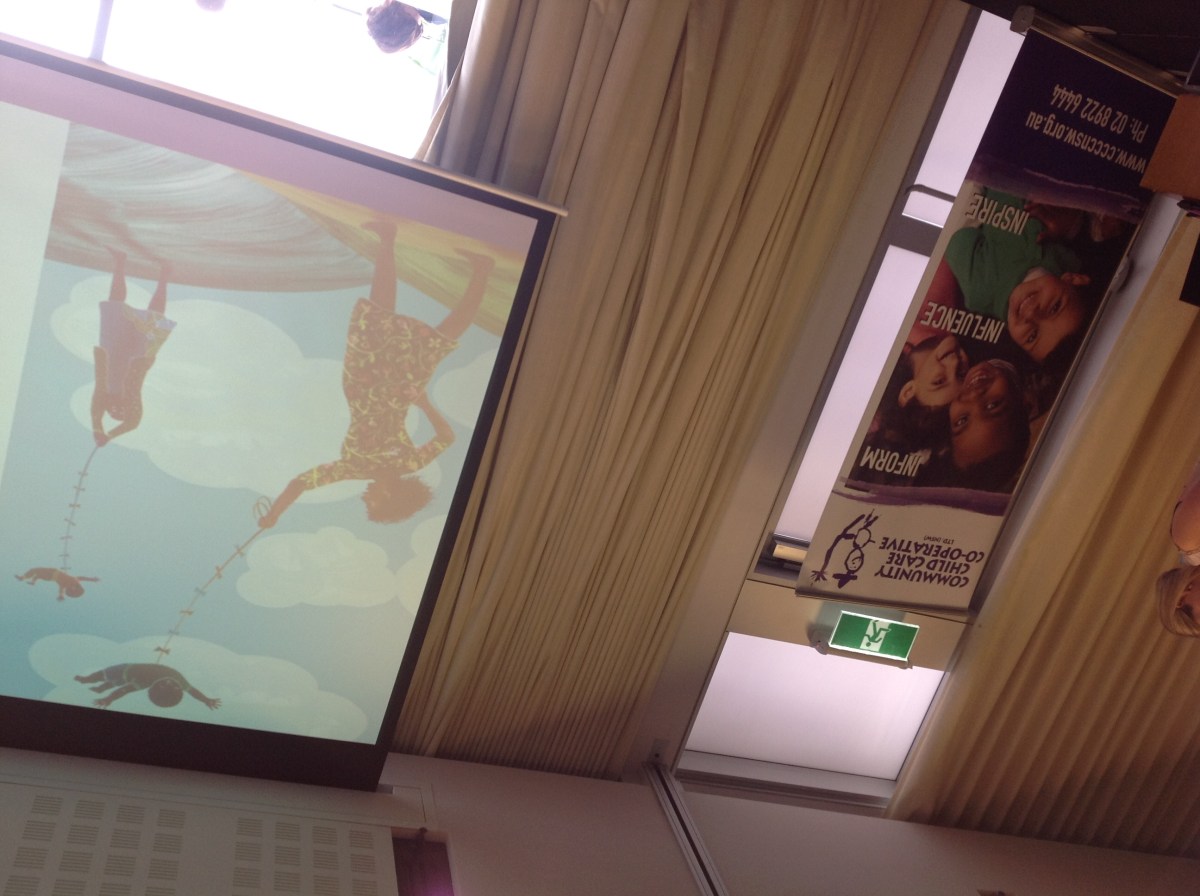
It was a huge honour to be invited to speak at Community Child Care Co-operative’s 35th Birthday event, alongside such incredible early childhood “rockstars” as Alma Fleet, Eva Cox, Lisa Bryant, Anthony Semann and more. For those on Twitter, check out the hashtag #CCCCis35 to check out some of the incredible moments from the day.

The post below is my prepared presentation at the event – there were some minor changes on the day which reflected what I had heard and been inspired by in the previous presentations.

I would also like to acknowledge the traditional custodians of the land on which we gather today, the Cadigal People of the Eora Nation. I would also like to acknowledge the traditional custodians of the land I call home and work from, the Ngunnawal People.

I’d like to wish Community Child Care Co-operative a very Happy 35th Birthday! It is a great honour to be invited by them to speak with you today. As CCCC has been such a positive and powerful force for advocacy in NSW and around Australia, to be invited to speak on that topic is somewhat nerve-wracking!

It is also a huge privilege to be speaking alongside such incredible educators, activists and leaders in the sector. I’ve worked with some of you professionally in the past, some of you I’ve followed through your writing, and some of you I’ve had long arguments with on Twitter.

It was particularly exciting to meet the wonderful Lisa Bryant (@lisajbryant) in person today, who has been a regular social media sparring partner! The early childhood community on social media is growing each day, which can only be a fantastic development.

The ability of social networking and online forums, such as Early Childhood Australia’s NQS Forum, are invaluable to the ongoing discussions, disagreements and arguments that will be shaping the future of our sector.

The late Christopher Hitchens once said that “Time spent arguing is, oddly enough, almost never wasted.”

So I’d like to take this opportunity to thank those in this room that I have spent valuable time “discussing” the finer points of early childhood policy with.

My talk today is focused on policy and politics – hopefully it will be a little more interesting than that sounds!

I set up my blog to explore the nexus between children, policy and politics – obviously particularly focused on the early childhood education and care sector.

As a sector, I don’t think we’ve successfully explored or acted in that space. With my usual arrogance and desire to hear my own voice, I figured I’d have a go.

This is not to denigrate the exceptional work of advocates and activists in this room, or advocacy organisations like CCCCNSW, who do incredible work.

But we need to acknowledge that our advocacy has not been as successful, or as strategic, as we need it to be.

Galling though it may be, we also need to acknowledge that the private operators do advocacy better.

They’re kicking our backsides. The Australian Childcare Alliance has a full-time lobbyist at Parliament House.

They’ve cultivated a close relationship with the new Assistant Minister for Education, Sussan Ley. A close-enough relationship that there is a more-than-passing resemblance to each other’s press releases.

The political agenda on children’s early education in this country is shaped by that advocacy.

So I have worked to focus my advocacy on policy, and politics.

My drive for advocacy has grown as my career has grown. My first love is working directly with children, but my career has slowly moved me away from day-to-day work with them. First as a Centre Director, and now as the ACT Territory Manager for Goodstart Early Learning.

The face-to-face work with children is crucial, it’s everything – and I salute those of you here today who are still in those roles.

From the first time I took on a Director’s role, I felt a powerful responsibility to advocate for the work of those in my team who were doing that tricky and complex work every day as Team Leaders, or assistant educators.

For me, this started with the Big Steps campaign. Although Directors are certainly not paid enough for the work they do, I felt that the privilege of the higher pay-rate, the ability to manage my own time, the greater ability with which I could access professional development and networking opportunities, conferred on me an ethical responsibility to advocate.

This has been particularly clear to me in my current role as an Area Manager – particularly in the new world of the National Quality Framework.

The Framework ask a lot of Centre Directors – they are legally responsible for their centres, with all the pressures and challenges that entails.

Those of us in roles such as mine, without legislative responsibilities and with no direct day-to-day, ongoing work with children, are in what my Manager and professional mentor gleefully describes as “made-up jobs”.

I am not in the ECEC National Law. The Government has not deemed my job to be essential to the successful education and care of Australia’s children.

I’m going to assume there are people in similar positions in the room today – don’t worry, I won’t make you put your hands up!

What I would ask you to do is to reflect critically on your roles – my challenge to you is if you are not advocating tirelessly for those who are carrying out the day-to-day teaching and education with children, you are not doing your job.

I am fortunate to work with an incredible team of Centre Directors in the ACT, and I’d like to just acknowledge their professionalism and work in their communities of children, families and educators.

I reflect every day on the privileges that my “made-up” job entails me, and if I cannot justify my work to that group of incredible women at the end of the day – then it’s not worth me being there.

For me, this means that above and beyond my day-to-day work, of which advocacy is certainly a part, it also means advocating above and beyond my 38 hours a week.

Anything less I could not ethically justify.

My particular focus with advocacy is politics. Political advocacy has always been one of the most common, and most effective, forms of advocacy as it is targeted at those who actually make the decisions.

My interest in politics stemmed largely from growing up as a teenager in the Howard years. I don’t want to get into a big discussion around Right vs. Left, but those 11 years left a deep impression on me and many in my generation.

The issue that particularly engaged me was refugee policy.

It seemed incredible to me, as a naive sixteen-year old, that we could actually make laws and decisions that treated people so cruelly.

That women and men working comfortably in offices in one of the most prosperous nations on Earth could sign documents and make telephone calls that would directly imperil the lives of people fleeing persecution that I could not even imagine.

Now, being from Canberra for the last 15 years, it’s very easy to reduce politics to bureaucracy – to people passing paper around with little-to-no impact on the real lives of people.

Our politics and policies on refugees and asylum seekers helped me realise that politics and policy have a direct impact on every one of our lives, whether we know it or not.

Just as those decisions can directly impact people fleeing persecution from outside Australia, decisions made in Canberra have a direct and deep impact on the work we do, and the communities we do it in.

They are the frameworks we put around our society.

The connection with early childhood policy took a bit longer to come to me, but since then it has informed my work as a professional in this sector.

It particularly “clicked” for me when I came to a single, clear realisation about our work.

Children’s education and care policy in this country is not about children.

It is about workforce participation.

The childcare sector in Australia is entirely set up, resourced and funded to ensure that families are at work and contributing to the economy.  This fact informs every part of our sector, every challenge and every frustration.

Australia’s entire policy focus on early childhood education, on both sides of politics, Labor and Liberal, and even in far-left parties like the Green, has nothing to do with children.

This almost made sense in the 1970s, when getting women into the workforce wasn’t just a social and moral challenge, but a practical one.

Women with children were expected to remain at home.

The strides that have been made in gender equality since then are due in no small part to the creation of a formal, regulated and affordable childcare sector.

Greater numbers of women in the workplace have forced organisations to slowly (in some cases, extremely slowly) adapt to the 21st Century.

The childcare sector played a large role in that, and is overwhelmingly positive. But more than 40 years later, the paradigm needs to shift.

It’s no longer enough for us to accept that the early childhood education and care sector is just there to “babysit” children so their parents can contribute to the economy.

The latest figures from DEEWR tell us that for the first time in Australia’s history, over a million children are now in some form of ECEC. This is a staggering amount, and represents a major challenge for Australian society.

At the beginning of my talk I mentioned our friend Judith Sloan. It’s important to analyse her perspective on ECEC beyond her ridiculous comments about “dimwits”.

Her article points to the underlying tension of our work. The notion of universal access early childhood education for all children is a direct attack on conservative “family values”.

The conservative argument is essentially that the best place for a child, any child, is in a stable home with Mum and Dad (certainly not two Dads, or two Mums, but we’ll save that for another time).

I never attended childcare when I was a young child. I still did well in school, have a University degree (admittedly not from a Uni that would meet with Judith’s approval) and have a great job in a sector I love.

My parents had no degrees in early childhood education, but helped set my brother and I up to work hard in our studies (primary, secondary and tertiary) and in our work.

My story would provide “evidence” for conservatives that access to early childhood programs is unnecessary and a waste of taxpayer money.

However, I was extremely fortunate to have two well-educated, stable and loving parents with no mental health issues or other vulnerabilities.

I was given every chance to be successful, even before I was in school.

But we are part of a society where not every child has those same opportunities. Some children will grow up in challenging and disruptive environments, where their parents are suffering immense challenges of their own.

Advocating for universal access to ECE is about ensuring that any child, no matter the circumstances of their home life, can be given the same head start I was given.

So I believe that we are getting near a crossroads – I would actually like us to be at that crossroads now, but unfortunately I think we’re a way off even from that.

Brain research consistently tells us that the first five years are absolutely crucial. Long-term studies like the Australian Early Development Index and the Longitudinal Study of Australian Children also point to those formative years as the building blocks for later life.

With a million children now accessing some form of childcare in those foundational five years, it is no longer good enough for our sector to just be about workforce participation.

We have the incredible opportunity to be improving children’s lives right here and now, and in so doing drastically lower their risk of experiencing vulnerability throughout the rest of their lives.

Children who struggle early will continue to struggle, and will find it harder to engage in formal learning and study, increasing the challenges they will face in employment and housing.

These foundational years all take place before children set foot in a school – and yet our entire education focus for children, from a policy and political perspective, only really begins in Year 1 of school.

So is Australia ready to leave behind the paradigm of workforce participation, and adopt a truly child-centred approach to ECEC?

Yes, the majority of states and territories have some form of funded preschool, but it’s telling that over the last 2-3 years of public debate around David Gonski’s school reforms, preschool and long day care was conspicuously absent.

I’ll be blunt – that our sector was not represented in those policy discussions points to a significant failure on our part, and the need to significantly raise our levels of advocacy.

This was our chance to raise our voices – the challenges we as a society will be helping children to face throughout their childhood years can, and MUST, be addressed in early childhood.

And yet, nothing.

I look at the recent election, and the only time early childhood education and care was mentioned was in terms of fees, waiting lists, planning permits and workforce participation.

Again, this represents a significant failure of our advocacy.

I’m sorry to be the person at the birthday party who brings the tone down, and I understand I won’t be getting many invites to other parties after today!

But if we are to take our advocacy leadership seriously, we need to acknowledge our challenge.

There are advocates in this room who have done incredible work, who have spoken and written and banged their fists on tables around the country. CCCC has done incredible work.

But despite all of that, we have not shifted majority opinion. We have not changed enough minds.

The debate in Australia, beyond these walls today, is not about universal access. It’s not about children’s rights. It’s not about the potential for ECEC to lift children out of structural disadvantage.

It’s about fees. It’s about freezing the CCR. It’s about “flexible opening hours”.

As leaders in our sector, and as advocates for children, we have to do better. It is unacceptable to do anything less.

We know the importance of what we do. We know the challenges, we know the structural inequities that stand in our way. It’s no use convincing the people in this room.

Our advocacy has to go beyond that.

We also know that if we are serious about improving outcomes for children; if we are serious about upholding children’s rights and their voice in our society; then we have to be the ones who are raising our voices.

If people aren’t listening, it’s our job to make them listen. Are we using every opportunity to raise the profile of our work, demonstrate our professionalism and inform people of our potential?

Are we creating opportunities to do those things?

So that is our challenge. I am not doing enough. None of us are.

Until we are having debates in cafes and offices around the best way to fund true universal access to early childhood education for children, we aren’t doing enough.

Until a journalist in a national, televised debate asks a candidate running for Prime Minister what their plans are to use ECEC to improve outcomes for children at a foundational level, we have not done enough.

Until the right of children to fully and freely participate in quality early learning programs is a national priority, and embracing that is a cornerstone of our education, family and health policies, we have not done enough.

So, enjoy the day and particularly enjoy the cocktail party tonight. Because tomorrow, we’ve got some work to do.

I’ve talked a lot about what we’re not getting right, despite the hard work of people in this room today. What are my thoughts on the next steps?

Above all, be fearless. Have arguments. Speak your truth.

Through my limited reach as a writer and participant on social media, I have forcefully and doggedly argued views that have infuriated and aggravated friends and colleagues.

A big one was the Early Years Quality Fund.

A fund that would only reach 40% of the sector, would only last two years and would be awarded on essentially a “first-come, first-served” basis?

This was a deeply flawed funding model, and in my view offensive to me, and those I work with.

I publicly stated that I could not ethically support this Fund, and criticised United Voice for agreeing to it.

In the lead-up to the election, I also publicly voiced my criticism of the Labor Government for their implementation of the National Quality Framework.

This was at a time when the sector was being encouraged to almost band together and cheerlead for Labor.

My firm belief is that the Labor Government categorically failed to implement the NQF in a way that would ensure its survival and growth.

It was a once-in-a-generation chance to change the conversation on Childcare. Labor didn’t do it well enough.

Overlaying the requirements of the National Quality Framework without a plan to address the structural inequities of the system, including the sexist discrimination of low wages, was always going to be problematic.

Are they to be commended for at least attempting? Yes, but I cannot and will not allow partisanship to silence criticism where it is due.

The case for early childhood education reform is a generally “progressive” issue. But this does not mean that advocates for early childhood should just support and “cheerlead” for Labor.

As has been shown all too clearly with refugee policy, Labor is in many ways only a progressive party by comparison with the Coalition.

To put it clearly, blindly supporting Labor without criticism as the only progressive party in town means that if you are, you are now supporting sending pregnant women legally seeking asylum to a tent in Papua New Guinea.

It amazed me the amount of my progressive friends and colleagues who had joined the campaign for Labor, who were suddenly quiet about the issue of asylum seekers after the PNG “solution”.

They had been extremely happy to loudly berate and criticise the Liberal Party, quite rightly, for their policies.

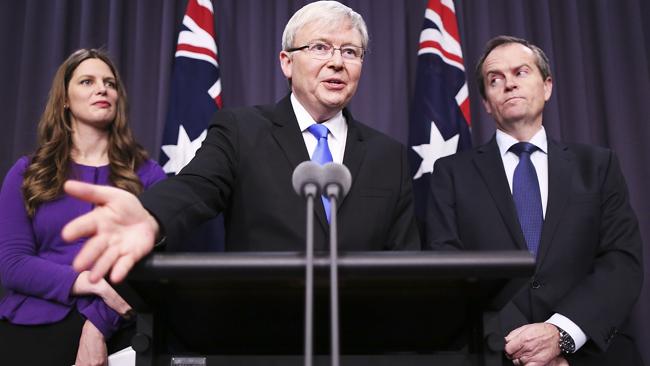
Labor supporters who had criticised the undermining of Julia Gillard by Kevin Rudd and his supporters, suddenly donning Kevin 13 shirts after a quick change-up in the Labor leadership team quite soon before an election.

If the price of joining up with a political party is silence, it is too high.

Advocates should be fearless and furious with criticism. Advocacy should be targeted at politicians, without being tied to a single party.

Advocacy should be about our sector, not political victories for others.

I don’t like to give advice, but I would urge my colleagues in advocacy to remember that.

The issues surrounding our sector – feminism, contested rights between children and parents, the role of education in the social good – demand that we be strategic and smart with our advocacy.

Tying ourselves to a political party or a political ideology is a bad idea.

Another bad idea is to paraphrase Mark Twain, but as he very nearly said: “Loyalty to progressing the early childhood education sector: ALWAYS. Loyalty to government, when it deserves it.”

Advocacy is not just writing, not just attending rallies or forums. The Early Years Learning Framework encourages educators and teachers to look at every moment with a child, or group of children, as an opportunity to learn.

In exactly the same way, every moment in our day-to-day work is an opportunity to advocate for our professionalism, and the professionalism of the sector as a whole.

Every time you greet a family at the door, we could be advocating. Every time we have a pedagogical discussion with an educator, we could be advocating.

But I firmly believe we also have an obligation, and imperative, to advocate at that wider level – at the level of policy.

The Italian pedagogue and President of Reggio Children Carla Rinaldi encourages advocates to be a “megaphone for children’s voices”.

Aim it at Parliament House.

What made you angry? What frustrated you? When was your voice silenced? What made you want to yell at the TV screen, or your computer?

Write about it. Get it out there. Contact your local MP.

But do not fall victim of the “us versus them”, or “Left vs. Right”, or “Labor vs. Liberal”. As soon as we subsume our advocacy to that of a political ideology, we are no longer advocating. We’re advertising.

It can seem like a huge and uphill battle when you look at where the national discussion now.

Imagine having an election fought on the principles of children’s human rights and the magnifying and uplifting power of early childhood education.

It seems like at the moment as a people we are more focused on having cheap, available childcare.

But, fellow advocates, just remember, as Jon Stewart said, “You have to remember one thing about the will of the people: it wasn’t that long ago that we were swept away by the Macarena.”

Thank you very much.

Thanks again to Community Child Care Co-operative for inviting me to speak. You can check out their website at http://ccccnsw.org.au/.
Categories
Blog

EYQF conditional funding withdrawn

The new Assistant Minister for Education, Sussan Ley, appears to have confirmed that conditional funding to increase wages under Labor’s Early Years Quality Fund will not be delivered.

The Education Department letter – obtained by The Australian – was sent on Friday, before the Abbott government’s month-long review reports on whether it can claw back $300 million allocated by Labor for pay rises in the industry, to compensate for its increased quality reforms.

Assistant Education Minister Sussan Ley has set a deadline of the end of this month for the independent report.

“If your organisation has not yet implemented wage increases or otherwise has not yet fulfilled the conditions of the commonwealth’s offer of funding, that offer of funding is hereby revoked,” the letter says.

“Your organisation should do nothing further to commit itself to wage increases in the expectation that EYQF (Early Youth [sic] Quality Fund) funding will be made available for those wage increases.”

An inevitable result. I publicly attacked the EYQF when it was first announced, and have done so ever since. It was, and is, appalling public policy.

It is important, vitally important, to remember that advocacy for our sector should not be tied to a single campaign, a single announcement, or a single political party.

The EYQF was a political victory for United Voice, not for the sector.

It was a last-ditch and desperate attempt by the out-going Labor Government to attempt to wedge the Coalition on childcare issues.

If the then-Government had taken the issue of professional wages seriously, they had six years in Government to do something about it. A fund that would apply to 40% of the sector, announced at the eleventh hour, was a joke.

So now we have early childhood centres who have, in good faith, applied for funds under the EYQF who will miss out. Threats of a class action are just threats at this stage, and I can’t anticipate that anyone in the ECEC sector will have the funds to launch a long and expensive court case.

The ECEC sector should immediately dismiss the EYQF, and union members should strongly advocate that only a solution that applies to the entire sector, without strings, should ever be agreed to on their behalf again.

Roll on the Pay Equity case at Fair Work Australia.

Categories
Blog

What is Labor’s legacy on ECEC?

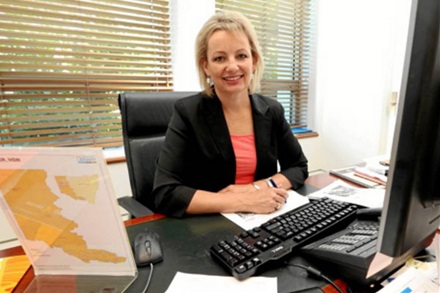
New governments mean new ministers. For the ECEC sector, that’s Sussan Ley. She was previously Shadow Minister for Childcare and Early Learning, and is now the Assistant Minister for Education, with responsibility for childcare and early learning.

During the campaign, the Coalition released their childcare and early learning policy on the Thursday night before polling day. For this they were rightly criticised.

The policy itself includes a proposal to review and potentially pause some of the foundational requirements of Labor’s National Quality Framework reforms.

This has divided the sector. Some fear that quality standards will stall and potentially be turned back, while others support the review due to immense difficulties meeting Labor’s new requirements.

The review will be particularly welcomed by the for-profit operators in the sector, who extensively lobbied the Coalition in opposition to scale back the reforms.

It is therefore interesting to note that one of Ley’s first acts in her new role was to attend Child Care Queensland and Australian Childcare Alliance’s annual conference — two organisations that represent a significant part of the private sector.

The Coalition have also hinted that the two-year commitment to increase early childhood educator’s wages under Labor’s Early Years Quality Fund may not be honoured.

No more detail about the Government’s plans for the sector is forthcoming, so it seems worthwhile at this time to focus on the last six years and reflect on what Labor’s legacy on early education and care will be.

The statistics alone are significant — over a million children are now in some form of formal childcare. This can be attributed in large part to the increase of the Child Care Rebate from 30 per cent to 50 per cent of out-of-pocket expenses, sparking a huge increase in enrolments.

Their signature legacy in this area will of course be the National Quality Framework (NQF). Agreed by COAG and introduced at the beginning of 2012, the NQF was a significant undertaking – bringing together diverse, uneven and outdated regulatory standards across the states and territories and unifying them under a single framework.

For the first time in Australia, there is now a single standard that every Long Day Care, School Age Care, Family Day Care and Preschool service have to meet — and be regularly assessed to ensure they are meeting it.

That it took this long for a minimum standard to be set for the wellbeing and safety of children in formal childcare was a national disgrace.

A last-minute measure to address the appallingly low wages for early childhood educators, the Early Years Quality Fund, proved to be divisive and inequitable, actually contributing to issues within the sector rather than solving them.

The Labor government did however commit to supporting a wage equity case at Fair Work Australia within two years, with a focus on gender being the primary cause of the low wages (similar to the Social and Community Services Award case).

Labor should be commended for convincing the Coalition State Governments to sign on to at COAG, but the implementation of the reforms have been patchy.

The structural issues facing the sector were, and are, huge. The only thing larger was the capacity of governments, Labor and Liberal, to cheerfully ignore them.

The collapse of ABC Learning in 2008 should have been the catalyst for the newly-installed Rudd government to address the inherent contradictions in having early learning and care for children farmed out to private operators, and then spending billions of dollars to families to subsidise families using those private businesses.

This recipe has created low wages and a lack of professional recognition for the educators who actually do the work, and has allowed the private for-profit sector to set the agenda on early learning.

Over 70 per cent of the sector is now privately operated, putting profits ahead of the benefit of children.

For-profit advocacy groups, such as the Australian Childcare Alliance, have successfully pushed the case with the then-Opposition Coalition Government that the sector is “drowning in red tape”, a blatant lie.

Instead of having the vision to tackle the for-profit operators, the Labor Government essentially continued on with business as usual, continuing to spend billions on rebates instead of investing directly into the sector.

Had it done so, the NQF could have been rolled out and implemented smoothly, protecting the scheme from being dismantled, the likely result under the Coalition.

The childcare sector as a whole was never going to be ready to implement even the beginning of the qualification requirements by 2014. As has been recently reported, organisations are having to seek qualified teachers overseas due to a systemic shortage of locals.

The NQF should have been accompanied with significant funding and support to the sector, and a long-term campaign to gain public support for the benefits of early childhood education.

The conversation should have been shifted from just workplace productivity or economic imperatives, but for the capacity for accessibly, high quality early learning to tackle disadvantage and inequity and invest in Australia’s future.

Labor has gifted the Coalition a major goal on childcare. Their failure to invest the necessary funding and support into the sector has allowed the Coalition to persuasively argue that the reforms are a burden, and are actually making things worse.

The NQF should have been the turning point the sector so badly needs. It should have fundamentally and permanently altered the national perspective on early childhood education in Australia.

But, as with so much of Labor’s time in government, this strong vision was hampered by an inability to actually implement the reforms on the ground.

Instead, it seems likely that for-profit advocacy and a new government happy to buy the line that the NQF is unnecessary bureaucracy will see the prospects for young children severely diminished.

Labor’s mismanagement of the NQF implementation may hamper our fight for recognition and structural reform for years. What a legacy.

This article was originally published on the New Matilda website on 26 September 2013.

Categories
News

Early childhood out of the Ministry

Tony Abbott has announced the make-up of the Ministry in his new Government, and Early Childhood hasn’t made the cut.

Sussan Ley, the previous Shadow Minister for Childcare and Early Learning, is now the Assistant Minister for Education.

The Labor Government appointed the first ever Cabinet Ministers for Early Childhood in 2010.

Categories
News

Addressing inequality

Interesting piece in the New York Times by James J. Heckman, Professor of Economics the University of Chicago, on early childhood education for all.

Everyone knows that education boosts productivity and enlarges opportunities, so it is natural that proposals for reducing inequality emphasize effective education for all. But these proposals are too timid. They ignore a powerful body of research in the economics of human development that tells us which skills matter for producing successful lives. They ignore the role of families in producing the relevant skills They also ignore or play down the critical gap in skills between advantaged and disadvantaged children that emerges long before they enter school.

While education is a great equalizer of opportunity when done right, American policy is going about it all wrong: current programs don’t start early enough, nor do they produce the skills that matter most for personal and societal prosperity.

America has an ingrained distrust against the State interfering in the lives of children and families, which is part of why their “daycare” system is so dysfunctional.

But there is a growing discussion and debate in the US about the importance of early childhood education, particularly following President Obama’s recent focus on ECE.

With Australia still facing structural funding issues with ECE, and a strong focus on testing and outcomes in the school system, a focus on addressing inequality and giving young people the skills and resilience to become successful could be very powerful.

The article is part of the New York Times’ series The Great Divide, which focuses on inequality in various forms. Well worth following.

Categories
News

Wage rises for educators now in doubt

The AFR is reporting that the incoming Abbott Government will be “redistributing” funds from the Early Years Quality Fund and a similar wage-increase fund in the aged care sector.

The Coalition may reallocate the childcare fund, which was set up to distribute any taxpayer-subsidised pay rises for childcare workers.

It is unclear whether any childcare workers had received the wage top-up already because the Labor government was late to release the eligibility rules for the two-year wages subsidy, which was due to end in 2015.

The Coalition’s childcare policy states it would honour any contracts already made and the remaining funds would be kept in the government’s childcare budget.

It is entirely unclear what this will actually mean. No money has started rolling out to services, although some contracts have been signed.

Some services had received “conditional approval”, and the incoming Government has not made clear whether they will be honoured.

UPDATE: Early Childhood Australia have released a statement calling on the incoming Government to honour the funding commitments in the EYQF. The statement is worth reading in full, and highlights the inequities and divisions inherent in the Fund.

In order to be eligible for the fund, organisations were required to have an Enterprise Agreement (EA) in place with their employees. The creation of ‘haves’ and ‘have-nots’ did not sit well with a sector that takes its ethics and commitment to social equity very seriously.  There was considerable dissension and concern in the early childhood sector, as demonstrated by the submissions to the Senate Inquiry Submissions on the Legislation.